December 7, 2020 — New research* from Zegami, an Oxford based medical image analysis platform, reveals that 29% of people say they have a known and diagnosed medical condition but since the Coronavirus crisis started they have avoided seeing a doctor or visiting hospital because they are worried about contracting COVID-19. In terms of gender, one in three women (34%) and one in four men (24%) admit to this.
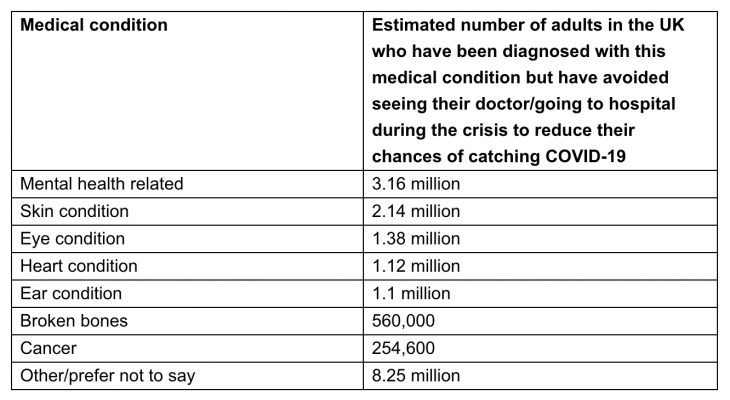
Zegami, which has recently developed a system to analyze large numbers of mammograms and identify abnormalities, which is the first stage of breast cancer screening, says its research reveals that as many as 254,000 people with cancer may have avoided seeing their doctor or visiting hospital because of fears around COVID-19.
Zegami’s research also found that 16% of people believe they have developed a medical condition since the coronavirus crisis started but decided not to see a doctor, again because of fears about COVID-19. Some 101,000 people believe their condition could be cancer.
In terms of those people who have known diagnosed medical conditions and have avoided seeking medical help during the crisis, 21% said it was for mental health issues, followed by 14% who said they have skin conditions and 9% who have eye health issues. Some 7% said it was related to their heart conditions, and 2% to cancer.
Of those people who believe they have developed medical conditions during the crisis but have not sought a medical diagnosis for fear of catching COVID-19, 22% say it is linked to their mental health, followed by 13% who say it is a skin condition. Some 7% fear they have developed a heart condition during the crisis, and 1% - nearly 101,000 people - think they may have cancer.
Roger Noble, CEO and founder of Zegami said: “Our findings are very alarming. The NHS is currently running a high profile campaign urging people to get medical help if they think they have developed any medical conditions during the crisis, and to keep to any health appointments they have for existing conditions. Its Help Us Help You access campaign is backed by celebrities including TV chefs Gordon Ramsay, Nadiya Hussein, and actress Emma Thompson, and we fully support this.”
Zegami’s newly developed system for analyzing large numbers of mammograms and identifying abnormalities uses the recently announced Medical Imaging Server for DICOM from Microsoft. The system also allows scientists to develop machine learning models to automate this analysis, making it faster and more accurate.
Initial mammogram data for the system has been sourced from The Cancer Imaging Archive (TCIA) and consists of 3,486 DICOM (Digital Imaging and Communications in Medicine) images, which while anonymized, includes pathology data, allowing this to be factored into the analysis. One example of the analysis is a map of the "calcification" breast cancer abnormalities - the system highlights regions distinctly containing examples with little light areas, which are typically the benign (without a callback) instances.
*Zegami commissioned the market research company Consumer Intelligence to survey 1,021 people from across the UK. They represented the UK’s demographic profile. Interviews were conducted online between 13 and 16 November 2020.
For more information: www.zegami.com
 October 09, 2026