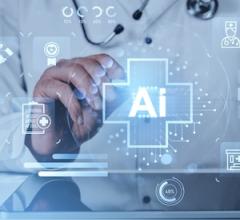
Artificial intelligence (AI) is a technology that can replicate human cognitive functions. Like in other fields, it is bringing a rapid transformation in healthcare due to the huge influx of healthcare data, advancements in analytics techniques, and innovation in clinical research and big data analytics. Currently, AI tools are being used in the diagnosis, treatment and predicting outcome in many medical areas such as cancer, neurology and cardiology. They find application in risk modeling of diseases, improving diagnostic and staging investigation accuracy, predicting response to therapy, radiation treatment planning and more.
The role of artificial intelligence in medicine is only continuing to expand. The AI in medicine market is estimated to reach $18.1 million by 2025 from $719 million in 2017, thereby growing at a CAGR of 49.6 percent from 2018 to 2025 according to the research firm Allied Market Research.1 The factors propelling the market include a lack of skilled healthcare professionals, enhanced processing power of AI systems leading to improving the efficiency of drug discovery and management of clinical trials, growth in importance of precision medicine and rise in funding for the R&D activities of the use of AI technology in the field of medicine.
In order to bring better health outcomes for people all over the world and solve complex clinical conditions, many companies are making significant investments in AI to offer solutions in the space. For instance, Siris Medical Inc. recently unveiled its updated PlanMD 2.0 software for radiation oncologists to make better treatment decisions. Nvidia announced it plans to expand its Clara Platform to drive rapid adoption of AI in medical imaging. Intel and GE Healthcare formed a partnership to provide diagnostic alerts to patients with some medical conditions using medical imaging. Siemens Healthineers launched its software assistant for radiology called the AI-Rad Companion Chest CT at the Radiological Society of North America’s (RSNA) 2018 meeting.
New Solutions for Better Treatment Decisions
In January 2019, Siris Medical, a leader in AI in radiotherapy treatment decision support, launched its PlanMD 2.0, an updated version of the first AI-powered decision support software. The solution enables radiation oncologists to make better decisions related to treatment by making use of patient data and artificial intelligence. It allows a complete and clear view of editing contours in real time without re-optimizing or re-planning. A precise contour exploration functionality of the solution allows deeper insights into the impacts of contouring changes on a dose. Marc Nash, M.D., chief medical officer of Siris Medical and a University of California, San Francisco (UCSF)-trained, board-certified radiation oncologist said, “While the underlying prediction algorithms have performed well from the very beginning, it is only through extensive input from practicing radiation oncologists that we can truly ensure the ease of use and rapid results that busy clinicians demand. We are proud to count some of the nation’s leading cancer centers and radiation oncologists as our customers, and their feedback has helped us build an even better, easier-to-use clinical decision support tool to help physicians in their battle against cancer.”
AI-assisted Radiology
Nvidia, the computer game company, plans to accelerate the adoption of AI in medical imaging by expanding its Clara Platform. The company released its Clara Software Development Kit (SDK) that comprises a cluster of accelerated libraries, engines to perform advanced operations and can offer remote access to visualizations for patients. The vendor is collaborating with several companies in the healthcare space including medical imaging companies, research centers, startups and more. Besides their expanded offerings in radiology software, Nvidia also inked two deals with the aim of driving the adoption of AI technology in the field.
Solutions Using Medical Imaging
In January 2019, Intel and GE Healthcare formed an alliance to launch a new AI tool to provide physicians with automated diagnostic alerts for some conditions almost immediately after medical imaging is performed. The new solution makes use of the Intel Distribution of OpenVINO toolkit to help accelerate and smoothen patient care. With the tool, X-ray technologists, critical care teams and radiologists are quickly notified to review critical findings that may speed up diagnosis of patients.
Radiology Software
Siemens Healthineers’ AI-Rad Companion Chest CT makes use of CT images of the chest to differentiate between several parts in that body area. It then highlights them and assesses abnormalities in the lungs, heart, aorta and coronary arteries. Featuring specialized algorithms trained by Siemens scientists on extensive clinical datasets, the new solution converts its findings into structured, reproducible and quantitative reports and allows radiologists to get quicker insights into images through automation. The algorithms that the software is built with offer segmentation, measurement and highlighting to support quantitative and qualitative analysis.
Sharmistha Sarkar has always had a keen interest in reading and writing. Though an engineering graduate, she forayed into the field of writing due to her love for words and the urge to do something different. Allied Market Research has given her the chance to gain knowledge about different subjects as a senior content writer.
Related AI Content
VIDEO: Editor’s Choice of the Most Innovative New Artificial Intelligence Technologies at RSNA 2018
VIDEO: Technology Report: Artificial Intelligence
How to Market Healthcare Artificial Intelligence Software
Reference:
1. Artificial Intelligence in Medicine Market, https://www.alliedmarketresearch.com/artificial-intelligence-in-medicine-market. Accessed Aug. 26, 2019.


 October 07, 2026