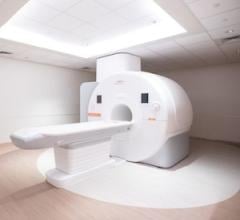
Oct. 8, 2026 — DeepHealth, Inc., a wholly owned subsidiary of RadNet, Inc., has announced new findings published in European Radiology supporting that AI applications within DeepHealth’s Prostate MR Solution1 could help clinicians decide more confidently which men may need a prostate biopsy, particularly when MRI findings are uncertain.2
Prostate cancer is the second most commonly diagnosed cancer among men worldwide, with an estimated 1.55 million new cases in 2024.3 MRI helps clinicians assess whether prostate cancer may be present, but some findings remain uncertain.4 A biopsy involves collecting small tissue samples to check for cancer and, if found, assess its grade. While biopsies are essential for diagnosis, they are invasive and can sometimes find no cancer or only low-grade disease that may not need treatment.4,5 Reducing unnecessary biopsies can spare some men related risks and help focus care on those most likely to benefit.
Study Analyzed Prostate MRI Exams
The international, multicenter study retrospectively analyzed prostate MRI exams performed between 2014 and 2025 in Germany, the Netherlands and the United States. The study included 787 men already undergoing clinical evaluation for suspected prostate cancer, of whom 380 had clinically significant disease. Scans were acquired on equipment from five different manufacturers, supporting the vendor-neutral performance of DeepHealth’s AI across diverse imaging environments. The study found that an approach combining radiologists’ MRI assessments with AI risk classification could have avoided 149 biopsies (18.9%) in this biopsied population, while still maintaining 98.4% sensitivity of identifying clinically significant prostate cancer.2
DeepHealth’s Prostate MR Solution integrates automated lesion detection and risk classification, intelligent gland segmentation with PSA density calculation and PI-RADS-compliant reporting into one seamless platform. The solution integrates with more than 11 fusion biopsy systems to eliminate manual data transfer and support radiologists at every critical decision point.
“These findings show how AI applications within our Prostate MR Solution can support clinicians at one of the most consequential decision points in prostate care,” said Niccolò Stefani, M.D., Business and Product Leader, Clinical AI, DeepHealth. “Our aim is to help care teams make more informed decisions about the next step for each patient. As part of our broader clinical AI portfolio, our Prostate MR Solution is designed to bring additional insight into the clinical workflow, with clinical judgment at the center.”
“When an MRI finding is uncertain, deciding whether to recommend a biopsy can be difficult,” said Francesco Giganti, M.D., Professor of Radiology at University College London and senior author of the study. “Our findings suggest that AI could provide another piece of evidence to help clinicians make that decision. The opportunity is to use DeepHealth’s Prostate MR Solution to better identify which men may benefit from a biopsy, with the final medical decision remaining with the clinical team.”
The Prostate MR Solution is part of DeepHealth’s broader Radiology AI Suite, which brings together clinical AI, intelligent workflow and performance analytics capabilities across breast, neurological, thoracic, musculoskeletal, thyroid, prostate, abdominal and pelvic imaging. By connecting these capabilities on a single platform, DeepHealth can help imaging organizations bring AI into everyday care and support clinicians across the imaging workflow, strengthening diagnostic confidence and operational efficiency.
Read the study in European Radiology.
References
-
DeepHealth Prostate MRI Solution is CE Mark Class IIb (EU MDR). FDA 510(k) cleared (US). DeepHealth Prostate MR Solution comprises multiple applications including DeepHealth Prostate AI and DeepHealth Viewer. DeepHealth Viewer is manufactured by eRAD, Inc. and distributed by DeepHealth, Inc.
-
Guenzel K, Poirot MG, van Loon A, et al. Multicentre evaluation of artificial intelligence risk classification for detection of clinically significant prostate cancer on biparametric MRI. European Radiology. 2026.
-
International Agency for Research on Cancer. Global Cancer Observatory: Prostate cancer fact sheet. GLOBOCAN 2024.
-
European Association of Urology. EAU Guidelines on Prostate Cancer. 2026. Chapter 5: Diagnostic Evaluation. Available at: https://uroweb.org/guidelines/prostate-cancer/chapter/diagnostic-evaluation. Accessed Sept.29, 2026.
-
American Cancer Society. Tests for Prostate Cancer. Available at: https://www.cancer.org/cancer/types/prostate-cancer/detection-diagnosis-staging/how-diagnosed.html. Accessed Sept. 29, 2026.


 October 07, 2026