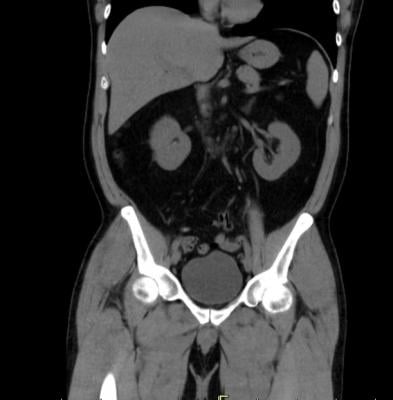
April 17, 2017 — A new study led by UC San Francisco has found that radiation doses can be safely and effectively reduced – and more consistently administered – for common computed tomography (CT) scans by assessing and comparing doses across hospitals, and then sharing best practices for how much radiation to use.
While there has been a steady rise in the use of CT in the United States over the last decade, doses of radiation vary substantially between hospitals, with few concrete standards on best dose levels. As a result, medical experts have difficulty determining the “right” dose of radiation that balances diagnostic accuracy, while minimizing the radiation exposure that increases cancer risk for patients. Without a consistent standard, each institution generally makes independent decisions about what dose to use.
A new project at the five academic medical centers of the University of California introduced a feedback system for radiologists on their doses and sought to study its effectiveness in reducing excess radiation exposure. The program consisted of auditing radiology professionals at each medical center and providing feedback on how these doses compared to those used at the other medical centers, while systematically sharing best practices. Included in the project were section chiefs of radiology, medical physicists and radiology technicians.
The project resulted in substantially lower radiation doses for chest and abdominal scans, as well as more consistent radiation doses for head scans, according to the study which appears April 10 in JAMA Internal Medicine.
“We estimate that if the improvements we saw were applied to all abdominal CT scans performed in the U.S., this would result in the reduction of approximately 12,000 cancers annually,” said senior author Rebecca Smith-Bindman, M.D., a professor in the UCSF departments of radiology, and of epidemiology and biostatistics, and the Philip R. Lee Institute of Health Policy Studies. Smith-Bindman also directs the Radiology Outcomes Research Laboratory.
“Reducing unnecessary and inconsistent radiation doses is an extremely important process for improving patient safety,” she said. “We found that providing detailed and comparative feedback, and sharing best practices on how each institution was able to optimize their dose, leads to lower and more consistent CT doses. In short, it makes no sense for each institution to have to reinvent the wheel regarding how to optimize doses – this project focuses on helping the leaders at each institution learn from each other.”
For more information: www.jamanetwork.com/journals/jamainternalmedicine

 October 07, 2026