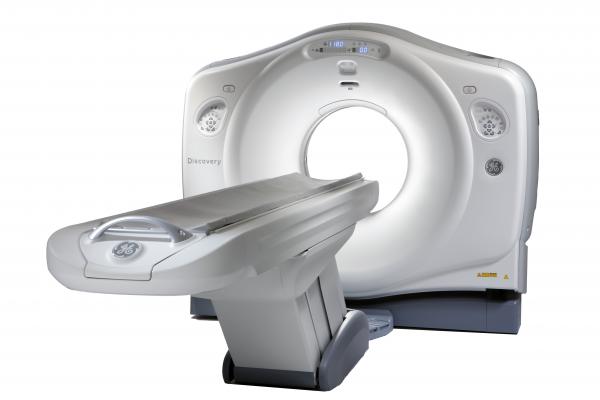
August 17, 2015 — GE Healthcare has become the first company with a low dose computed tomography (CT) lung cancer screening option that is cleared by the U.S. Food and Drug Administration (FDA) for lung cancer screening.
Both the U.S. Preventive Services Task Force (USPSTF) and the Centers for Medicare and Medicaid Services (CMS) recommend the use of low dose CT lung cancer screening for high-risk individuals. Additionally, Medicare has approved insurance reimbursement for its beneficiaries who are eligible for the use of low dose CT lung cancer screening in high-risk patients. Early detection from an annual lung cancer screening with low dose CT in high-risk persons can prevent a substantial number of lung cancer–related deaths.
“Bringing low dose CT screening to patients at a high risk for lung cancer will reduce death from the most deadly cancer worldwide,” said Ella Kazerooni, M.D., chair of committee on lung cancer screening, American College of Radiology. “Performing low dose CT with attention to high image quality at the lowest radiation exposure to detect early cancer is at the core of a successful screening program, and requires collaboration with imaging partners to bring technology to bear for this purpose. The FDA’s clearance of these CT scanners for this purpose illustrates that commitment.”
Physicians using low dose CT for lung cancer screening will now have access to the benefits from a screening indication, including GE Healthcare’s new low-dose screening reference protocols. These new protocols are tailored to the CT system, patient size, and the most current recommendations from a wide range of professional medical and governmental organizations. Now, qualified GE Healthcare CT scanners can be confidently used by physicians within their FDA-cleared indications for use, delivering low dose, short scan times, and clear and sharp images for the detection of small lung nodules. These nodules are critical in identifying lung cancer at its earliest stages when it is the most treatable and curable.
The landmark National Lung Screening Trial (NLST) was conducted at 33 medical institutions with over 53,000 older, otherwise healthy patients at high-risk due to smoking history. Half of the participants were screened using low dose CT, the other half were screened using chest X-ray. The trial demonstrated that the use of low dose CT screening decisively reduced the mortality rate from lung cancer by 20 percent compared to use of chest X-ray. The NLST also revealed a significant 6.7 percent reduction in the rate of death from any cause using low dose CT screening.
All new 64-slice and greater CT scanners, and virtually all of the 16-slice CT scanners that GE Healthcare sells are qualified systems and will include the screening option. The solution is also available to thousands of qualified GE scanners currently in use. The new protocols are able to utilize GE technologies such as ASiR, ASiR-V and Veo that are designed to reduce image noise, which is undesirable for physicians looking for small nodules.
For more information: www.gehealthcare.com

 October 07, 2026