June 29, 2021 — UPMC Hillman Cancer Center will be the first cancer center in the eastern United States, and one of just a handful in the country, to offer the most advanced radiotherapy system for treating patients.
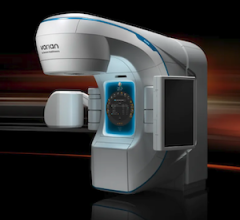
The RefleXion X1 is the world’s first biology-guided radiotherapy (BgRT) machine that’s expected to improve treatment and expand options for patients with metastatic disease, where few treatments are currently available.
The RefleXion X1 is the first system to incorporate three existing modalities – positron emission tomography (PET), computed tomography (CT) and radiation therapy – in one device. This enables physicians to use the cancer itself to guide radiation delivery in real time. Prior to treatment, patients are given a small amount of a radioactive PET tracer that is preferentially absorbed by tumors. The tracer produces emissions that are immediately detected by the RefleXion X1 PET scanner, which then directs the radiation to each tumor to destroy it.
“Although PET has been part of cancer staging and assisting in diagnosis for many years, it has never before been used to guide radiation delivery in real time,” said David Clump, M.D., Ph.D., medical director at the Mary Hillman Jennings Radiation Oncology Center, radiation oncology co-leader of the Head and Neck Program at UPMC Hillman Cancer Center and assistant professor of radiation oncology at the University of Pittsburgh School of Medicine. “The BgRT PET tracer is designed to create a motion management solution that allows us to follow a tumor during treatment to precisely deliver radiation therapy, even when the tumor may be in rapid motion due to internal physical processes such as breathing.”
The RefleXion X1 is also the first system designed to treat multiple tumors in a single session, which should one day make it an option for more patients with Stage 4 metastatic cancer.
“Current technology cannot easily treat more than one to two tumors at a time, and radiotherapy for patients with metastatic disease provided today is mostly palliative to reduce pain,” said Robert Ferris, M.D., Ph.D., director of UPMC Hillman Cancer Center. “This new technology expands the role of radiotherapy for metastatic cancer and could improve immunotherapy treatment for patients by overcoming historical limitations of conventional radiotherapy.”
A leader in adopting technologies that transform patient care, UPMC was a pioneer in diagnostic PET-CT and PET-CT planning, stereotactic radiosurgery, stereotactic body radiotherapy and robotic surgery. The RefleXion X1 represents the next generation of cancer therapy by combining many of these modalities to provide a dynamic treatment plan for the patient.
“Because of the vast and integrated UPMC Hillman Cancer Center network, the RefleXion technology will benefit many patients across all of the regions we serve,” said Stanley M. Marks, M.D., chairman of UPMC Hillman Cancer Center. “This is an emerging field, and we are excited to be among the first in the country to offer it to our patients.”
“We look forward to working with the clinicians and staff at UPMC Hillman Cancer Center to bring our BgRT technology to the East Coast,” said Todd Powell, president and CEO of RefleXion. “UPMC Hillman’s pioneering research into treating multiple tumors with radiotherapy demonstrates an unwavering commitment to patient care and to advancing radiotherapy as a whole.”
Installation of the RefleXion X1 machine, which will be located in the UPMC Shadyside Hospital Department of Radiation, should begin this summer with patient treatments available in late 2021.
The RefleXion X1 is currently approved for treating patients using conventional stereotactic body radiotherapy, intensity modulated radiation therapy and stereotactic radiosurgery. The BgRT feature is under investigational use until it receives official approval from the U.S. Food and Drug Administration.
For more information: hillman.upmc.com

 October 07, 2026