October 6, 2016 — Toshiba America Medical Systems Inc. announced it will be displaying a wide array of diagnostic imaging technologies at the 2016 Radiological Society of North America (RSNA) annual meeting, Nov. 27-Dec. 2 in Chicago.
Regarding computed tomography (CT) technology, Toshiba is highlighting its latest features that improve resolution while keeping radiation dose as low as possible. Toshiba’s Forward projected model-based Iterative Reconstruction SoluTion (FIRST), a clinically viable model-based iterative reconstruction technique, is now indicated for imaging of body parts, including cardiac and musculoskeletal (MSK). FIRST improves image quality with significant noise reduction while lowering radiation dose and drastically cutting the time needed for model-based CT image reconstruction. Toshiba will also showcase its efficient Pure ViSION CT detector that results in 40 percent better light output for better use of X-ray photons. Pure ViSION technology is available on the entire line of Aquilion systems, the detector featuring 0.5 mm slices.
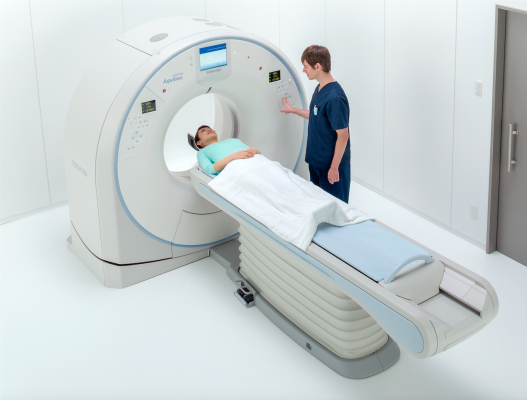
In addition, Toshiba is showcasing its 16-detector row system that combines premium CT technology with the economic advantage of an entry-level system. The Aquilion Lightning is ideal for routine volumetric scanning and features what Toshiba calls the industry’s thinnest slices, at 0.5 mm, a wide 78 cm bore and a small installation and cost footprint. With premium features found in high-end Aquilion scanners, including the PureViSION Detector technology and AIDR 3-D Enhanced dose reduction technology, the system ensures customers do not need to compromise quality to meet their business goals, while reducing their total cost of ownership and helping them to meet XR-29 compliance standards. In addition, the inclusion of Adaptive Diagnostics technologies, including Single Energy Metal Artifact Reduction (SEMAR) and SureSubtraction means complex scans are simplified and outcomes are more consistent.
For more information: www.medical.toshiba.com

 October 07, 2026