February 24, 2009 - Researchers are testing the use of positron emission tomography (PET) for dose painting, but have found the technique is limited by PET’s spatial resolution, according to researchers from the Catholic University of Louvain, Brussels, Belgium (Radiother. Oncol. doi: 10.1016/j.radonc.2008.11.014).
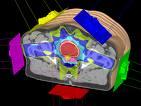
The theory is to use PET with a radiotherapy plan that takes account of tumor physiology, and to use PET to "paint" the dose to regions of intense activity or radiation resistance. PET is used in combination with intensity-modulated radiotherapy (IMRT) with an appropriate functional imaging modality.
The use of PET for dose painting relies on a perfect correlation between the observed PET signal and the underlying biology of interest. To test this, Nicolas Christian and colleagues imaged 15 tumor-bearing mice with PET following injection of the radiotracer 2-fluoro-2-deoxyglucose (18F-FDG). The mice were also imaged with MRI and then assessed using autoradiography.
The PET and autoradiography images however did not always match, particularly in tumor sub-volumes with high 18F-FDG-activity. This mismatch is significant because a biological image-guided IMRT plan would most likely increase the dose to these sites. The larger the tumor volume and the lower the activity threshold, then the better the match.
"Unfortunately, we do not yet have access to spatial image resolution that is good enough to be able to visualize what is going on at the microscopic level. We may make fairly large mistakes in the dose distribution by relying on what we see on the PET," said Vincent Grégoire, professor in radiation oncology at the Catholic University of Louvain and corresponding author for the paper.
Grégoire noted that if a PET system with a higher resolution were developed, the technique may be viable. The researchers are instead examining whether alternative radioisotope tracers could provide a better way of finding specific sites in the tumor where the dose should be increased, such as clusters of hypoxic cells. The researchers still want to investigate the concept of PET-based dose painting.
Source: Medical Physics Web
For more information: medicalphysicsweb.org

 October 07, 2026