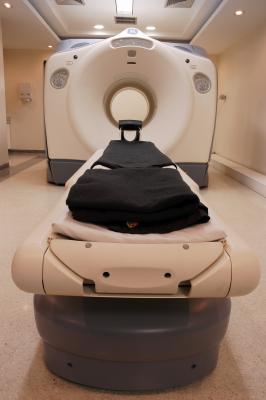
June 5, 2013 — Highly educated individuals with mild cognitive impairment that later progressed to Alzheimer’s disease cope better with the disease than individuals with a lower level of education in the same situation, according to research published in The Journal of Nuclear Medicine. In the study, “Metabolic Networks Underlying Cognitive Reserve in Prodromal Alzheimer Disease: A European Alzheimer Disease Consortium Project,” neural reserve and neural compensation were both shown to play a role in determining cognitive reserve, as evidenced by positron emission tomography (PET).
Cognitive reserve refers to the hypothesized capacity of an adult brain to cope with brain damage in order to maintain a relatively preserved functional level. Understanding the brain adaptation mechanisms underlying this process remains a critical question, and researchers of this study sought to investigate the metabolic basis of cognitive reserve in individuals with higher (more than 12 years) and lower (less than 12 years) levels of education who had mild cognitive impairment that progressed to Alzheimer’s disease, also known as prodromal Alzheimer’s disease.
“This study provides new insight into the functional mechanisms that mediate the cognitive reserve phenomenon in the early stages of Alzheimer’s disease,” said Silvia Morbelli, M.D., lead author of the study. “A crucial role of the dorso-lateral prefrontal cortex was highlighted by demonstrating that this region is involved in a wide fronto-temporal and limbic functional network in patients with Alzheimer’s disease and high education, but not in poorly educated Alzheimer’s disease patients.”
In the study, 64 patients with prodromal Alzheimer’s disease and 90 control subjects — coming from the brain PET project of the European Alzheimer Disease Consortium — underwent brain 18F-FDG PET scans. Individuals were divided into a subgroup with a low level of education (42 controls and 36 prodromal Alzheimer’s disease patients) and a highly educated subgroup (40 controls and 28 prodromal Alzheimer’s disease patients). Brain metabolism was compared between education-matched groups of patients and controls, and then between highly and poorly educated prodromal Alzheimer’s disease patients.
Higher metabolic activity was shown in the dorso-lateral prefrontal cortex for prodromal Alzheimer’s disease patients. More extended and significant correlations of metabolism within the right dorso-lateral prefrontal cortex and other brain regions were found with highly educated than less educated prodromal Alzheimer’s disease patients or even highly educated controls.
This result suggests that neural reserve and neural compensation are activated in highly educated prodromal Alzheimer’s disease patients. Researchers concluded that evaluation of the implication of metabolic connectivity in cognitive reserve further confirms that adding a comprehensive evaluation of resting 18F-FDG PET brain distribution to standard inspection may allow a more complete comprehension of Alzheimer’s disease pathophysiology and possibly may increase 18F-FDG PET diagnostic sensitivity.
“This work supports the notion that employing the brain in complex tasks and developing our own education may help in forming stronger ‘defenses’ against cognitive deterioration once Alzheimer’s knocks at our door,” said Morbelli. “It’s possible that, in the future, a combined approach evaluating resting metabolic connectivity and cognitive performance can be used on an individual basis to better predict cognitive decline or response to disease-modifying therapy.”
For more information: jnm.snmjournals.org

 October 06, 2026