November 21, 2023 — Soccer fans exhibit different patterns of brain activation while watching a match that may trigger positive and negative emotions and behaviors, according to research being presented next week at the annual meeting of the Radiological Society of North America (RSNA). The researchers say the implication of these findings could extend beyond sports to fanaticism in other areas, such as politics.
"This study aims to shed light on the behaviors and dynamics associated with extreme rivalry, aggression and social affiliation within and between groups of fanatics," said the study's lead author, Francisco Zamorano Mendieta, Ph.D., researcher in the Department of Imaging at Clínica Alemana de Santiago, and associate professor at Facultad de Ciencias para el Cuidado de la Salud, Universidad San Sebastián, Santiago, Chile.
Rivalries run deep in the history of sports, and fans can be very protective of their "home" team and favorite players. These same fans run the gamut of emotions watching their team succeed or fail over the course of a game or match, cheering when they score or raging at a bad call. Soccer fans are known for their team loyalty and enthusiasm, particularly in Europe and South America.
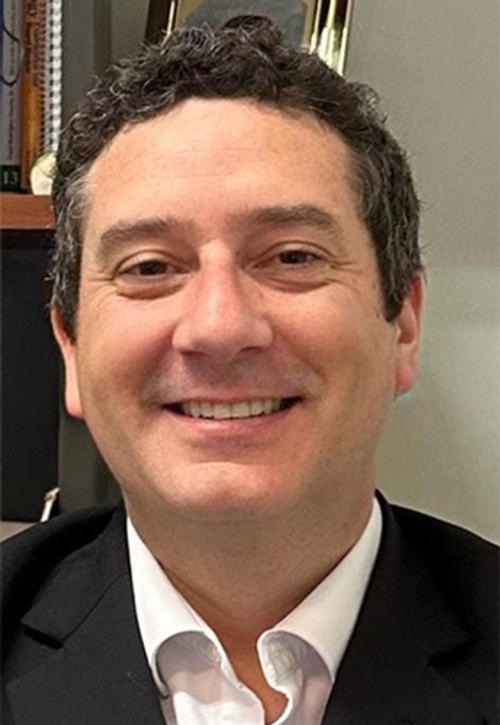
Francisco Zamorano Mendieta, Ph.D.
To gain some insight into the brain mechanisms behind the behaviors of the fans, Dr. Zamorano and colleagues recruited 43 healthy male volunteers who support Chilean football teams for a functional MRI (fMRI) study.
The study involved football fans from the two most popular Chilean soccer teams, considered archrivals. Participants were divided into two groups, 22 supporters of one team and 21 supporters of the rival team. Participants completed a survey to determine a soccer fanaticism score and underwent psychological evaluations.
All participants were presented with a compilation of matches containing 63 goals. While the participants viewed the match compilation, their brain activity was measured using fMRI, a noninvasive imaging technique that detects changes in the brain's blood flow.
The fMRI results showed that brain activity changed when the fan's team succeeded or failed.
"When their team wins, the reward system in the brain is activated," Dr. Zamorano said. "When they lose, the mentalization network can be activated, taking the fan to an introspective state. This may mitigate some of the pain of the loss. We also observed inhibition of the brain hub that connects the limbic system with frontal cortices, hampering the mechanism that regulates cognitive control and increasing the probability to fall into disruptive or violent behavior."
According to Dr. Zamorano, the findings may shed light on social dynamics in all walks of life.
"People inherently crave social connections, be it through membership in a running club, participation in a book discussion group, or engagement in virtual forums," he said. "While these social bonds often form around shared beliefs, values and interests, there can also be an element of persuasive proselytism, or 'group think,' which may give rise to unreasoned beliefs and societal discord."
Dr. Zamorano believes that the zealousness found among some sports fans can serve as a compelling example of intense emotional investment, occasional aggressive behavior and impaired rationality.
"Understanding the psychology of group identification and competition can shed light on decision-making processes and social dynamics, leading to a fuller comprehension of how societies operate," he said.
Dr. Zamorano noted that research in fanaticism and partisanship necessitates robust scientific frameworks but added that arenas like political stances, electoral loyalties, ethnicity, spirituality and identity issues are frequently mired in controversy, complicating efforts to pinpoint the neurological foundations of extreme allegiance.
"Sports fandom, on the other hand, presents a unique opportunity to analyze how intense devotion affects neural activity in a less contentious context, particularly by highlighting the role of negative emotions, the related inhibitory control mechanisms and possible adaptative strategies," he said.
Co-authors are José María Hurtado, Ph.D., Patricio Carvajal-Paredes, Ximena Stecher Guzman, M.D., Patricia Soto-Icaza, Ph.D., Cesar Salinas, V. López, M.D., Ph.D., Waldemar Méndez, Pablo Billeke, M.D., Ph.D., and Claudio Silva, M.D.
For more information: www.rsna.org
Find more RSNA23 conference coverage here
Related fMRI content:
Functional MRI Provides Encouraging Results in Unresponsive COVID-19 Patient
New MRI Technique Captures Brain Changes in Near-real Time
Machine Learning Uncovers New Insights Into Human Brain Through fMRI

 October 23, 2026