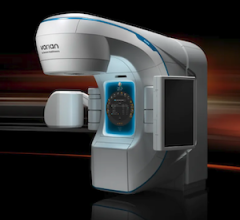
June 19, 2017 — The Henry Ford Cancer Institute is the first in Michigan – and first in the world – to offer patients advanced radiation therapy with the ViewRay MRIdian Linac system. The system uses a U.S. Food and Drug Administration (FDA)-approved real-time magnetic resonance imaging (MRI) and linear accelerator delivery for more precise and accurate radiation treatment.
The ViewRay MRIdian Linac is the world's first and only FDA-approved commercially available linear accelerator-based MRI-guided radiation therapy system that can image and treat patients simultaneously, according to Viewray. The FDA approved the company's next-generation model for use in February.
The same model is being installed at the Cancer Institute at Henry Ford Medical Center-Cottage in Grosse Pointe Farms. It will be ready for treating patients in July 2017.
Benjamin Movsas, M.D., chair of the Department of Radiation Oncology at the Cancer Institute and a national expert, said the system offers "game-changing technology" in radiation therapy.
"This is the future in our field," Movsas said. "This technology will allow us to optimize in real-time the delivery of radiation."
Movsas said while the system will be used to treat all types of cancers anywhere in the body, it is especially beneficial for tumors where there is typically movement during treatment, including tumors in the liver, pancreas, adrenal and lung. Other types of cancer this advanced system will deliver a new level of care to include breast, prostate, kidney and gynecologic cancers, among others.
Indrin Chetty, Ph.D., division head of Physics in Radiation Oncology, said the MRIdian Linac system further enhances radiation therapy with:
- Personalized treatment. By continuously observing and assessing the patient's tumor and internal organs, clinicians can tailor treatment to each individual;
- Precision and accuracy. High-quality images and continuous soft-tissue imaging are provided while the radiation beam is on; and
- Real-time imaging. When clinicians can clearly see the target and watch where the radiation is being delivered, they are better able to adapt to changes in the patient's anatomy.
Over the years, technology has improved the accuracy of radiation treatment while protecting surrounding healthy tissue. However, trying to accommodate for the natural movement of a tumor and the body's internal organs during treatment has been elusive.
The ViewRay system combines the effectiveness of MRI, which produces high-quality images of organs and structures inside the body, with a linear accelerator to map out a therapy plan and deliver radiation at the intended target, while allowing for refinements to be made in real-time during treatment. The result is a more accurate, precise treatment.
For more information: www.viewray.com

 October 07, 2026