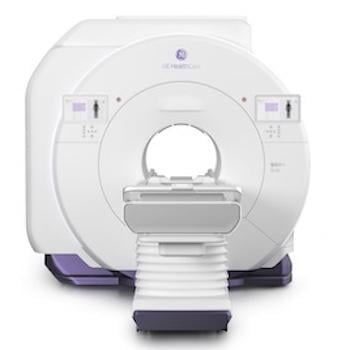
Feb. 19, 2026 — GE HealthCare recently announced 510(k) clearance of three new magnetic resonance (MR) innovations with the U.S. Food and Drug Administration (FDA): SIGNA Sprint with Freelium1, a 1.5T sealed magnet MRI system; SIGNA Bolt2, an advanced 3T MRI scanner; and SIGNA One3, an AI-driven ecosystem of workflow solutions designed to help reduce inefficiencies and support MRI exams from plan to scan and beyond.
The new MRI systems and technology combat some of the most complex challenges facing the radiology landscape from a rising demand in procedures caused by a growing aging population, increase in disease incidences, workforce burnout and sustainability expectations.
“Achieving FDA clearance of our next-generation SIGNA MRI technology underscores our commitment to expanding access to high-quality imaging and elevating the standard of care for patients everywhere,” said Kelly Londy, President and CEO, MR at GE HealthCare. “As MRI demand continues to rise across clinical areas, providers need solutions that deliver greater efficiency without compromising diagnostic precision. With this new SIGNA generation, we’re redefining what’s possible – aiming to bring smarter, faster, more sustainable and more consistent imaging to more patients, across more settings, with confidence.”
SIGNA Sprint with Freelium
GE HealthCare’s new sealed magnet 1.5T MRI system – SIGNA Sprint with Freelium – offers helium-free technology without compromising clinical or operational efficiency. With less than 1% helium usage4, SIGNA Sprint with Freelium provides helium independence without driving higher power consumption requirements or sacrificing image quality. The system supports remarkable image quality through exceptional homogeneity, high signal-to-noise ratio (SNR) and image clarity, integrated with deep learning solutions, including AIR Recon DL and Sonic DL with a wide coverage of anatomies and clinical application. The system provides consistent clarity and diagnostic confidence, and offers:
- >5-hour ride-through time, which enables the Freelium magnet to withstand short and prolonged power outages avoiding operational disruption
- Identical high homogeneity specification as conventional magnet technology, ensuring the same excellent image quality
- The same power infrastructure as current conventional magnet, providing helium independence without increasing power consumption
Designed for maximum siting flexibility, SIGNA Sprint with Freelium features a ventless magnet that enables installation virtually anywhere — from major hospitals to remote regions — expanding access to advanced MR capabilities. The system also introduces two levels of operational autonomy: Scanning Autonomy through the intuitive SIGNA One interface to simplify workflows across technologist experience levels, and autonomous magnet monitoring, protection and recovery with intelligent sensors that automate ramp-down and ramp-up processes without requiring a field engineer — supporting uptime and reducing service dependency.
SIGNA Bolt 3T
SIGNA Bolt is GE HealthCare’s next-gen 3T MRI scanner, engineered to deliver precision diagnostics through powerful performance and sustainable design. Built on a deep learning foundation, the system streamlines clinical workflows and supports end-to-end imaging pathways while maintaining low energy consumption and operational costs.
At its core is an advanced 80/200 gradient system that delivers research-level performance with approximately 30% lower power consumption compared to previous-generation systems, enabling gradient capability. SIGNA Bolt also introduces a new AIR Coil suite designed to enhance patient comfort and operational flexibility, including feet-first capabilities across exams to better support claustrophobic patients and help reduce costly rescans. SIGNA Bolt provides end-to-end advanced solutions supporting care pathways such as neurology and oncology.
The system’s sustainable infrastructure profile further differentiates its value proposition:
- Up to 65% reduction in peak power demand5
- Up to 34% reduction in minimum equipment room space5
SIGNA One
SIGNA Sprint with Freelium and SIGNA Bolt are powered by SIGNA One, a new AI-powered workflow ecosystem that offers solutions to improve the imaging experience and streamline MRI operations. By addressing inefficiencies across the MRI workflow, SIGNA One aims to help improve throughput, reduce variability and enhance the experience for both technologists and patients.
The SIGNA One platform integrates multiple core AI-enabled workflow solutions to enhance both the patient and user experience and elevate clinical confidence:
- An intuitive user experience that may help reduce training time with virtually zero learning curve, which boosts productivity for new and less experienced users
- The SIGNA One Table, designed to enhance patient comfort and simplify patient transport
- A fully automated SIGNA One Camera with In-Room Console live feed, AI-enabled anatomical landmark localization and patient positioning verification, with real-time visual guidance on a touchscreen display — aiming to improve speed and accuracy of patient setup
- Contactless respiratory and peripheral gating designed to capture physiological data effortlessly, regardless of patient orientation and without the need for external devices
- High-resolution, In-Room Consoles empowering technologists with simple patient setup control, aiming to minimize interruptions and maximizing throughput
“As imaging volumes continue to climb, we’re under constant pressure to deliver answers faster without compromising diagnostic quality. What sets this new SIGNA MR platform apart is the focus on real-world clinical workflow. From the AI-driven automation to the dramatically streamlined setup and scanning process, we’re seeing meaningful reductions in exam time and far greater consistency across technologists. It’s a true leap forward in efficiency – one that will directly benefit both the patients we serve and our staff,” said Dr. Tiron C.M. Pechet, Assistant Medical Director and CMIO at Shields Health. “At Shields, advancing imaging technology is central to who we are — particularly innovations that elevate both the care experience and image quality — and we’re excited about the future impact technologies like this can have on the communities we serve.”
Advancing MR Leadership
The FDA clearances of SIGNA Sprint with Freelium, SIGNA Bolt and SIGNA One, with anticipated CE mark before the end of 2026, reflect the company’s strategic focus on innovation, sustainability and productivity and its ambition to shape the future of MR imaging.
For more information on next-gen SIGNA MR technology, visit gehealthcare.com/products/magnetic-resonance-imaging.
- SIGNA Sprint with Freelium is a sealed configuration of SIGNA Sprint Select. SIGNA Sprint Select is 510(k) cleared by the FDA. Not CE marked. Not available for sale in all regions.
- SIGNA Bolt is 510(k) cleared by the U.S. FDA. Not CE marked. Not available for sale in all regions.
- SIGNA One represents features and content that are 510(k) cleared with SIGNA Bolt and SIGNA Sprint with Freelium by the U.S. FDA. Not CE marked. Not available for sale in all regions.
- Compared to conventional magnets.
- Compared to previous generation systems.

 October 05, 2026