Courtesy of Grand View Research
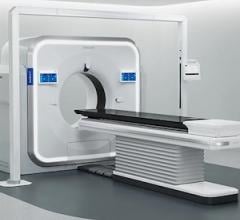
According to a new report produced by Grand View Research, the global magnetic resonance imaging (MRI) market size was valued at $5.3 billion in 2020 and is expected to expand at a compound annual growth rate (CAGR) of 6 percent from 2021 to 2028.
The Grand View Research report states that advancements in diagnostic techniques such as open MRI, visualization software and superconducting magnets are fueling the growth of the MRI market. However, like many imaging technologies this year, the most recent advances being seen in MRI technology are mainly on the software side, and are expected to guide the market growth.
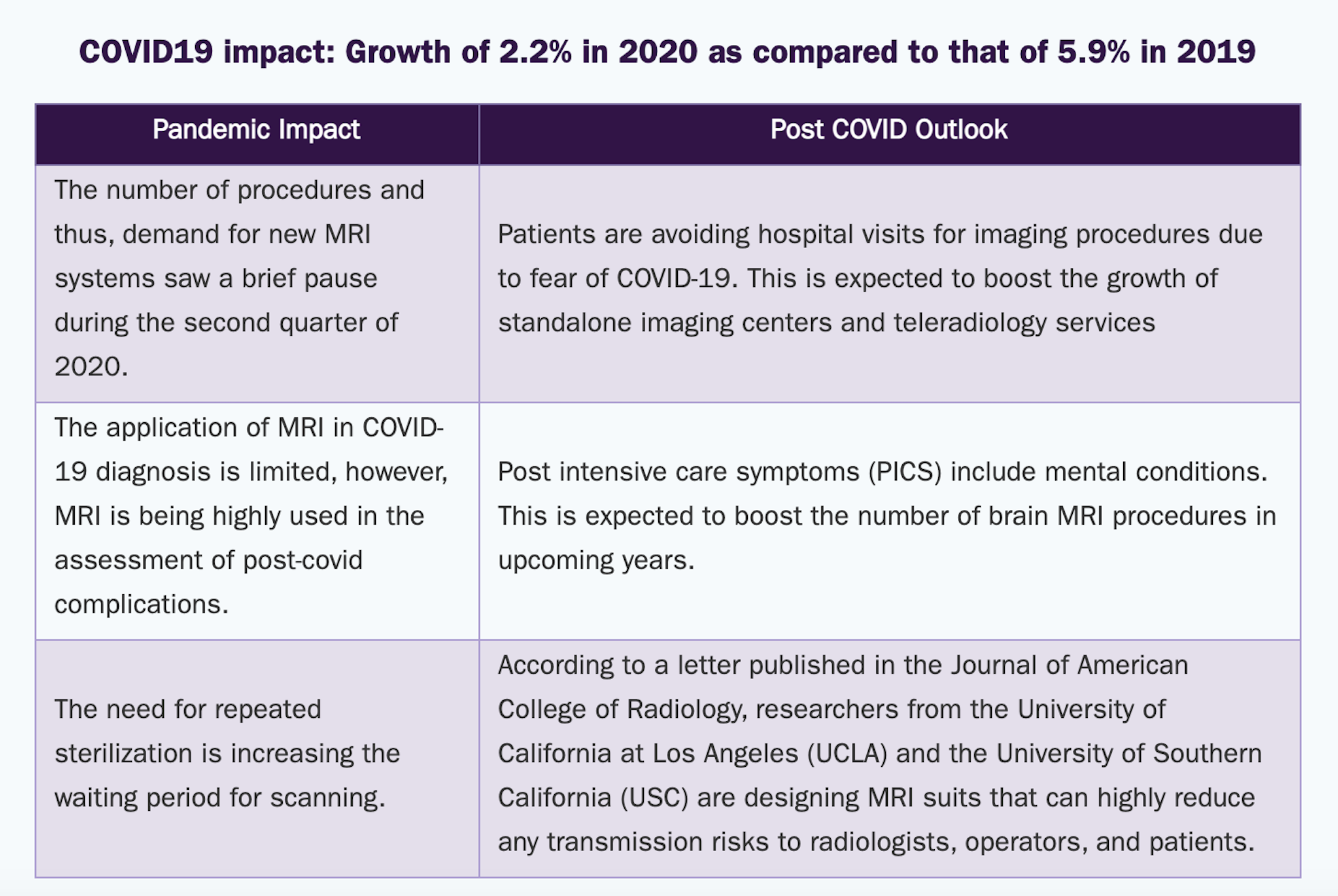
As with all imaging technologies, COVID-19 is expected to continue to negatively impact the market. The report states that the New York metropolitan health system reported an 87 percent reduction in outpatient imaging services over the past year. This also ties in to the high costs incurred for installation of the machines, depleting deposits of helium gas which is required for cooling of the MRI machine, and delayed product approvals which are some of the factors restraining the industry growth. See COVID19's Impact.
Artificial Intelligence for MRI
itnTV recently interviewed Darryl B. Sneag, M.D., radiologist and director of peripheral nerve MRI at the Hospital for Special Surgery in New York City on the topic of artificial intelligence for MRI. Many radiology departments are now experiencing a backlog of cases due to COVID-19 shutdowns and have a limit on the number of patients that can be seen at a hospital due to pandemic precautions. Sneag outlined how artificial intelligence is now playing a role in helping streamline this workflow. You can watch the video here.
“The system I'm currently using at the Hospital for Special Surgery is one we helped to develop, GE’s AIR Recon DL. This is an artificial intelligence system that works on raw data, fired into MRI to denoise the data that is to increase the signal to noise ratio, or SNR, and also to remove certain artifacts including Gibbs reading artifacts,” he said. “Typically in MRI, there's a tradeoff between scan time and image quality, and in particular spatial resolution and tissue contrast. We pride ourselves on providing very high quality, very high spatial resolution images. With the backlog and COVID cases, what are we able to do is to implement AIR Recon DL to actually speed up the cases, and not only maintain but actually improve image quality. This is a new tool in in our toolkit to actually improve image quality, but at the same time to speed up imaging. The way we do this is by acquiring, typically, what would seem to be lower signal to noise ratio images or lower SNR images, put the raw data through this AIR Recon DL algorithm, and then it actually spits out higher quality images. So, we're able to image faster, but actually obtain higher spatial resolution images, which are really critical in our everyday workflow.”
Sneag explained that it's been quite easy to modify the protocols, and essentially just requires some processing power. “It was a very smooth transition,” he explained. “Essentially, it's just the click of a button on our station to tell the reconstruction system built in to reconstruct it using this particular algorithm.”
This modification has allowed for an approximate 50 percent time-savings on any of the facility’s protocols. “By acquiring a faster acquisition, you make the scan less prone to artifacts, and in fact we've been able to do this, create very short protocols with 10 minutes or less, and reduce the amount of motion artifacts. This helps with image interpretation,” Sneag said.
The hospital has also staggered the time between patients to allow a much deeper cleaning of the magnets. “We try to stagger the patients increasingly, as well, so that we don't have too many people in the in the waiting room,” he explained. “We are able to image faster, and we're still able to scan the same number of exams in a day, but still maintain image quality. This is important for me as a radiologist is to ensure that I'm seeing that image quality.”
Sneag said what's really nice about the algorithm, unlike some other AI algorithms, is that is not specific for a particular anatomy or particular part of the body. “Some AI algorithms might make my target a particular portion of the body, or maybe a particular type of whole sequence. This algorithm currently applies to many different types of pulse sequences, and has the potential to really be applied broadly throughout MRI,” he concluded.
Related MRI information:
VIDEO: Artificial Intelligence For MRI Helps Overcome Backlog of Exams Due to COVID
MRI Wide Bore Systems Comparison Chart
Related MRI and COVID Content:
Business During COVID-19 and Beyond
Imaging Volumes Hold Steady Post COVID-19 Closures
GE Healthcare Addresses Growing Radiology Data Challenges at RSNA 2019
Technology is Driving the MRI Market
VIDEO: How to Image COVID-19 and Radiological Presentations of the Virus
Top Trend Takeaways in Radiology From RSNA 2020

 October 08, 2026