

Technology
August 23, 2010 – Making the most of limited space, a low-profile, height-adjustable, user-friendly, mini-workstation that folds against a wall when not in use brings computer technology to almost any location in a healthcare facility. AFC Industries Inc. introduced the Wall Mount Combo AFC78-08_12 at Association for Medical Imaging Management (AHRA) 2010 annual meeting in booth 429.
 August 23, 2010

News
August 23, 2010 - The radiation therapy skin cancer business of Topex Inc. is being sold to Sensus Healthcare. Sensus will take over sales of the low-energy SRT 100 superficial radiotherapy treatment system.
August 23, 2010 
Feature
August 23, 2010 - Calypso Medical Technologies Inc., entered into a distribution agreement with Siemens Healthcare for the sale of its Calypso System in Europe. The Calypso System is a real-time localization technology used for the precise tracking of tumor targets.
August 23, 2010 Sponsored Content
Videos | Radiology Imaging
Contrast Diversification in CT Imaging Across imaging departments, supply variability and growing demand are creating ...
September 08, 2026 
News
August 23, 2010 - Two companies recently signed a strategic partnership agreement drawing on both firms' established expertise in imaging technology to establish computed tomography (CT) as a viable, minimally-invasive imaging alternative for many cardiovascular procedures.
August 23, 2010 
News
August 23, 2010 - A new, rapid method of labeling peptides with a fluorine-18 (F-18) positron-emission tomography (PET) radiotracer is being evaluated. Immunomedics Inc. and GE Healthcare announced they have entered into a license and collaboration agreement for the evaluation of labeling technologies based on Immunomedics' patented F-18 peptide labeling method.
August 22, 2010 
Feature
August 19, 2010 – Researchers at the University of Maryland School of Medicine in Baltimore have developed a novel 3-D imaging approach that may improve the accuracy of treatment for ventricular tachycardia (VT). The potentially life-threatening heart rhythm disorder causes the heart to beat too fast.
August 20, 2010 Sponsored Content
Sponsored Content
Videos | Radiology Imaging
Today’s radiology teams are faced with a wide range of growing complexities such as patient and procedure variabilities ...
June 24, 2026 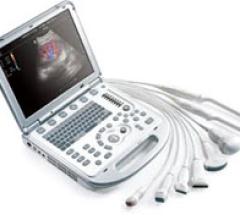
Technology
August 19, 2010 – High-end imaging capabilities are offered in the ergonomically designed, portable Mindray premium M7 ultrasound system, being launched this week in the United States.
August 20, 2010 Technology
The fully transportable IMIX RadStation digital radiography (DR) system delivers full digital capability without mechanical modifications. A single RadStation provides a medical facility with an efficient and cost-effective way to achieve DR imaging from multiple portable X-ray systems.
August 20, 2010 
News
August 19, 2010 – A transportable digital radiography (DR) system that can be moved and connected to any existing radiography system to deliver immediate imaging will be shown for the first time by IMIX Americas Inc. at the American Healthcare Radiology Administrators (AHRA) 2010 Annual Meeting, Aug. 23-25, in Booth 408 in Washington, D.C.
August 20, 2010 Sponsored Content

Feature | Information Technology
AT A GLANCE Organization: Expert Radiology Management Services, LLC Specialty: Subspecialty teleradiology — neuro and ...
May 01, 2026 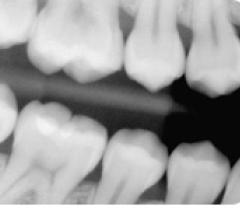
News
August 19, 2010 – New driving software for the Dent-X EVA Digital X-Ray sensor was unveil this past week. The EVAsoft software features Keep-On-Top, which allows X-ray images stay visible over any window so a doctor can simultaneously edit a patient’s chart, in any practice management software, while looking at the corresponding digital image.
August 20, 2010 News
August 19, 2010 – The Intersocietal Accreditation Commission (IAC) this week announced the launch of its new website, at www.intersocietal.org, along with new websites for each of its specialty divisions. These include: • ICAVL for noninvasive vascular testing, www.icavl.org • ICAEL for echocardiography, www.icael.org
August 20, 2010 Technology
August 20, 2010 – A newly launched website enables the convenience of Web-based medical imaging software from any location. Ramsoft’s ReadFromAnywhere.com site serves as a primer for potential clients new to digital imaging or to help clinicians seeking new, cost-effective imaging solutions.
August 20, 2010 Sponsored Content
Sponsored Content
Videos | Radiology Business
Radiology departments have many different needs and face a wide variety of challenges that can impact their departments ...
November 11, 2025 
Technology
August 19, 2010 – The Horizon Cardiology cardiovascular information system (CVIS) version 12.2 is being released and provides performance and usability improvements. It offers workflow enhancements to the current CVIS and electrocardiogram (ECG) management products. It also improves the integrated of the fractional flow reserve (FFR) module.
August 19, 2010 
News
August 18, 2010 - Cardiac computed tomography (CT) was found to be safe, accurate, and cost-effective in low risk patients in a recent scientific statement published by the American Heart Association (AHA), titled “Testing of Low-Risk Patients Presenting to the Emergency Department With Chest Pain.”
August 18, 2010 News
August 18, 2010 - Researchers from Mount Sinai School of Medicine have for the first time developed a way to visualize coronary artery plaques vulnerable to rupture using multicolor computed tomography (CT), an innovation that may lead to better and earlier diagnosis of cardiovascular disease. The data are published in the September issue of Radiology.
August 18, 2010 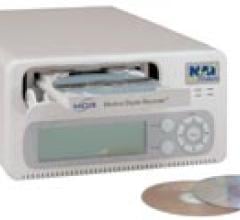
News
August 18, 2010 - PACSGEAR, a provider of imaging connectivity for electronic health records, announced the acquisition of all assets of NAI Tech Products of Auburn, Calif. NAI Tech Products is a medical device company specializing in the high quality digital video capture of medical images.
August 18, 2010 
Technology
August 17, 2010 — The DRX-1C detector uses a cesium iodide scintillator to deliver exceptional image quality, with detective quantum efficiency (DQE) that is substantially higher than the DRX-1 detector. It is the latest expansion to Carestream Health's family of imaging solutions based on its wireless, cassette-size digital radiography (DR) detectors.
August 17, 2010 
News
August 17, 2010 – Fluke Biomedical announced today a major expansion of service options for its customers across the United States. New CarePlans extended-warranty packages, as well as onsite and mobile services, offer priority services to ensure a new level of convenience for users of Fluke Biomedical best-in-class medical test and safety equipment.
August 17, 2010 
News
August 17, 2010 — DISC announced that as of August 1, 2010, Associated X-Ray Imaging Corp., Haverhill, MA is the new representative for DISC products throughout the Northeastern United States.
August 17, 2010 
News
August 16, 2010 – Software version 3.01 for CS-3 Control Station has been released by Konica Minolta. It supports the company’s new image resend feature and enables users to connect an existing CS-3 to the dual bay Xpress CR 210 with C-plate technology.
August 17, 2010 © Copyright Wainscot Media. All Rights Reserved.

Subscribe Now