July 23, 2010 – A new research and development center for medical imaging systems recently opened at University Hospitals Case Medical Center in northeastern Ohio. The Global Advanced Imaging Innovation Center brings together radiologic experts to coordinate clinical research, education, development and commercialization of advanced imaging technologies.
The center was opened in partnership with Philips Healthcare and Case Western Reserve University. It is funded in part by a $5 million Ohio Third Frontier grant to Case Western Reserve University with additional support of $33.4 million from Philips Healthcare. The center is will be housed on the campus of University Hospitals Case Medical Center, providing the latest imaging technologies and treatments to patients with cancer, neurologic conditions and heart disease.
The center is designed to move innovative technologies more quickly into patient care. The latest Philips imaging equipment will be brought to Cleveland for development, validation of clinical efficacy and product release. The center is expected to become an international hub for education in these cutting edge medical technologies. Many of Philips’ newest technologies will be tested at the site.
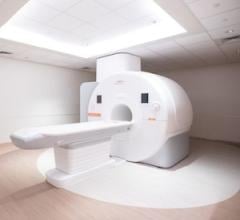
One of the world’s first PET/MRI (positron emission tomography/magnetic resonance imaging) machines will be housed in the future University Hospitals Cancer Hospital, opening in the spring of 2011. This hybrid scanner is in a new class of diagnostic imaging that captures both functional and anatomical information. The PET/MRI brings together the complementary capabilities of MRI and PET scanning to potentially improve patient care by increasing understanding of the causes, effects, and development of disease processes to better diagnose and treat the condition.
A new generation of PET/CT that will improve the dual function of this technology and increase diagnostic imaging capabilities, specifically with cancer. PET detects metabolic signals in the body while CT provides a detailed picture of the internal anatomy. The combined image provides more complete information on cancer location and metabolism and key applications in heart disorders.
A new PET scanner that is an even more powerful diagnostic tool that helps in the diagnosis and treatment of certain diseases, such as cancer and Alzheimer’s. This new PET imaging system can reveal metabolic changes in the body not currently detectable with today’s technology.
 October 07, 2026