
News
German University Reports First Radiotherapy Patient Treatments on Integrated Brainlab/Elekta System
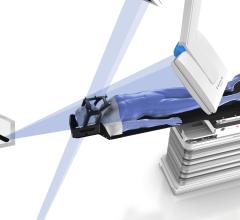
Brainlab announced first patient treatments on a fully integrated radiation oncology solution that combines its ExacTrac patient positioning with the Elekta Versa HD linear accelerator (LINAC). Working in synergy, these technologies determine positioning and treatment accuracy for cancer patients.
 April 03, 2015
Technology | Population Health
PatientPoint announced that PatientPoint Outreach 3.2 is now certified for Meaningful Use in an ambulatory setting. The software is also compliant with the Office of the National Coordinator (ONC) 2014 Edition criteria for certified electronic health record technology (CEHRT).
April 03, 2015 
News
The Virginia Zoo veterinary team partnered with a team from Sentara Heart Hospital to perform ultrasound on the hearts of orangutans Pepper and Schnitz as part of the animals’ annual wellness checkups at the Zoo’s state-of-the-art veterinary hospital.
April 03, 2015 Sponsored Content
Sponsored Content
Videos | Radiology Business
Radiology departments have many different needs and face a wide variety of challenges that can impact their departments ...
November 11, 2025 
Technology
IBA announced the release of its myQA global quality assurance platform. myQA offers full support throughout all quality assurance (QA) applications and provides the user access to their various software modules and data from one platform, anytime and anywhere.
April 03, 2015 
News
Agfa HealthCare will unveil enhancements to its suite of technologies during the Healthcare Information and Management Systems Society (HIMSS) annual conference that are designed to integrate multiple points of data consolidation and access with its Enterprise Imaging platform. The new capabilities will be on display at the HIMSS15 Annual Conference & Exhibition, April 12-16, 2015, in Chicago.
April 03, 2015 
News
Digisonics will showcase its latest offerings to streamline reporting workflow and improve overall turnaround times at this year’s Healthcare Information and Management Systems Society (HIMSS) Conference in Chicago.
April 03, 2015 Sponsored Content
Feature | Breast Imaging
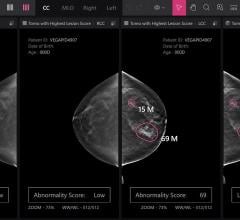
Despite decades of progress in breast imaging, one challenge continues to test even the most skilled radiologists ...
October 24, 2025 News
The World Molecular Imaging Society (WMIS) announced the kick-off of a collaboration with the National Cancer Institute (NCI), part of the National Institutes of Health (NIH), to promote best practices for co-clinical trials. The end goal of the collaboration is to speed the discovery of more and better treatments for cancer and other diseases.
April 02, 2015 
News
The German Lung Cancer Screening Intervention Trial (LUSI) shows the early repeat scan rate for suspicious findings decreased by more than 80% with the second and subsequent low-dose computed tomography (LDCT) screens. At the same time, study results emphasize the need to have an organized screening program with the baseline scan available for comparison.
April 02, 2015 
News
A new study found that women who received a text message reminder about their breast cancer screening appointment were 20 percent more likely to attend than those who were not texted. The study was published in the British Journal of Cancer.
April 02, 2015 Sponsored Content
Sponsored Content
Videos | Radiology Business
Bayer Radiology’s Barbara Ruhland and Thom Kinst discuss how radiology departments can address the many different ...
October 09, 2025 
News
The U.S. Food and Drug Administration (FDA) is alerting patients who had mammograms at Richard D. Adelman, M.D., Family Medicine in Raleigh, North Carolina, about possible problems with the quality of their mammograms. The alert applies to patients who had mammograms any time after Aug. 24, 2012.
April 02, 2015 
Whitepapers | Rupinder Colby, MPH and Jef Williams, PMP, MBA
Archiving capabilities and vendor neutrality are relatively simple concepts to understand, but the overarching clinical, business, and operational benefits of a vendor neutral archive (VNA) are less intuitive. The versatility of a VNA solution can be leveraged as a cornerstone of an overall enterprise imaging strategy and further. A VNA offers value to a range of initiatives from a simple archiving solution to a complete Enterprise Imaging Transformation.
April 02, 2015 News
Samsung Electronics America Inc. has partnered with Heart Across America to host the Heart Across America cycling tour, aimed at increasing awareness on how to prevent heart disease and stroke.
April 02, 2015 Sponsored Content

Case Study | PACS
eHealth Saskatchewan plays a vital role in providing IT services to patients, health care providers, and partners such ...
February 03, 2025 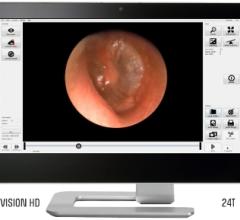
Technology
ThinkTank Technologies announced the availability of their state-of-the-art endoscope imaging system, SweetVision HD. The system provides doctors the ability to utilize their own rigid and fiber optic endoscope to capture high-definition and high-quality video during examinations and to perform a variety of other scope procedures.
April 02, 2015 
Feature | Greg Freiherr
What’s healthy? What’s not? These questions should be easy to answer in our world of high-tech, high-resolution scanners. But population-based studies demonstrate they are anything but.
April 01, 2015 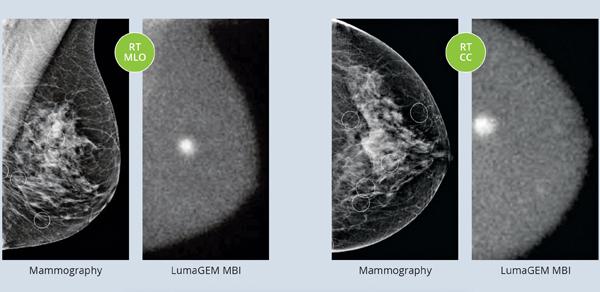
Feature | Jim Calandra
Breast cancer is the second leading cause of cancer deaths among women in developed countries.[1] It is estimated that about 12 percent of women in the United States will develop invasive breast cancer over the course of their lifetime and more than 200,000 new cases of invasive breast cancer are expected to be diagnosed in 2015.[2] It is important to know the risks and warning signs of breast cancer, and having the benefit of early detection is invaluable, but sometimes that’s easier said than done.
April 01, 2015 
Feature | Jeff Zagoudis
Of all the departments in a hospital, radiology arguably holds the most and richest variety of data. There’s so much data, in fact, that it can be difficult to know what to do with it all and how to handle it. As the healthcare industry continues to shift toward a value-based payment model, utilizing that data becomes even more important as hospitals take a look at their operations and try to improve their performance. For radiology departments struggling with information overload, business analytics can provide a solution.
April 01, 2015 
Feature | Jeff Zagoudis
The landscape of the healthcare industry is poised for dramatic change in 2015 and the years ahead, and radiologists need to be ready to adapt if they’re going to thrive. This was the overarching message from the plenary session “Critical Issues Facing the Practice of Radiology in 2015 and Beyond” at RSNA 2014, presented by Bibb Allen, Jr., M.D., FACR; Geraldine McGinty, M.D., FACR; and James A. Brink, M.D., FACR, all members of the American College of Radiology (ACR) Board of Chancellors.
April 01, 2015 
Feature | Jef Williams
Sharing — it’s a quality we all learned at a young age to aspire toward. Our parents, our teachers, our friends and our siblings (OK, maybe not our siblings!) all challenged us to learn to share. Over the past few years with implementation of the Affordable Care Act (ACA), even our federal government has created an impetus to share — to share information, to share patients, to share revenues, to share responsibility. With the scramble toward Meaningful Use (MU), which inherently requires exchange (sharing), we are finally seeing that the theory is much easier than the execution of that idea.1 Many large organizations are still struggling to share information
April 01, 2015 
Feature | Jeff Zagoudis
As radiation therapy becomes more sophisticated and new methods are devised for treating cancer, treatment planning systems have become an essential tool for physicians and physicists. While new features are being added to improve the functionality of various radiotherapy systems, the end goal is still the same — contouring the radiation beam to treat the cancerous tissue while minimizing exposure to any surrounding healthy tissue.
April 01, 2015 
Feature | Jeff Zagoudis
Radiation dose continues to be one of the hottest topics in radiology, as government mandates and public concern are forcing healthcare teams to find ways to achieve the same high image quality while reducing dose. The 2014 annual meeting of the Radiological Society of North America (RSNA) in December reflected those concerns, featuring sessions on the latest metrics for measuring dose and ways to keep dose down.
April 01, 2015 © Copyright Wainscot Media. All Rights Reserved.

Subscribe Now