
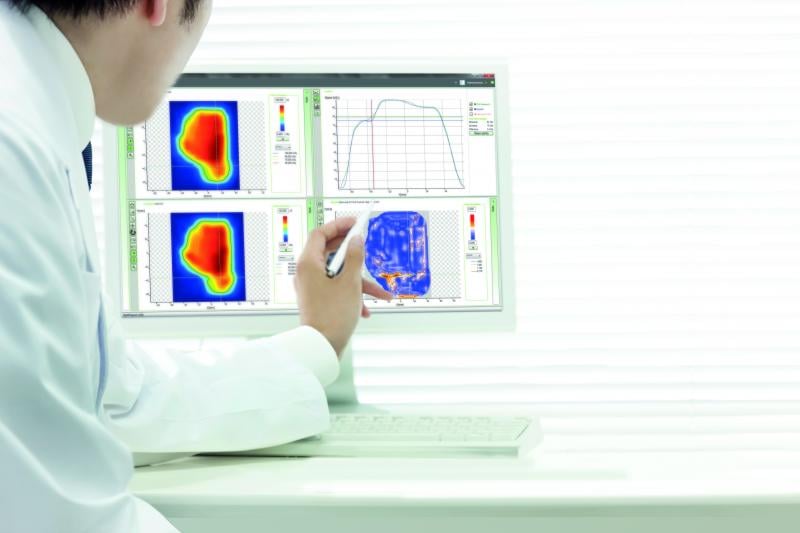
October 20, 2015 — For cervical cancer patients undergoing postsurgical radiation therapy, image-guided intensity ...
 October 20, 2015

Siemens’ PETNET Solutions Inc., a wholly owned subsidiary of Siemens Healthcare, will formulate the VPAC1 molecular biomarker 64Cu TP-3805 exclusively for clinical trials for the biopharmaceutical firm NuView Life Sciences Inc., of Park City, Utah.
October 19, 2015 
News | Radiation Therapy
Immunotherapy combined with palliative radiation therapy (RT) for a subset of patients with metastatic melanoma reduces the growth and spread of the cancer, according to research presented at the American Society for Radiation Oncology’s (ASTRO’s) 57th annual meeting.
October 19, 2015 Sponsored Content
Videos | Radiology Imaging
Contrast Diversification in CT Imaging Across imaging departments, supply variability and growing demand are creating ...
September 08, 2026 
Technology | Patient Positioning Radiation Therapy
Orfit Industries introduced and demonstrated its HP Pro Solution, an innovative, comprehensive and versatile immobilization system for proton therapy, at the American Society for Radiation Oncology (ASTRO) 57th annual meeting. The technology, designed for brain, head and neck treatments, has received U.S. Food and Drug Administration (FDA) 510(k) clearance.
October 19, 2015 
For some early-stage breast cancer patients, accelerated partial breast irradiation (APBI) using multicatheter brachytherapy following breast conserving surgery may be an excellent treatment option. In new research presented at the American Society for Radiation Oncology’s (ASTRO’s) 57th annual meeting, APBI was proven to be as effective as the current standard treatment – whole breast irradiation (WBI) – in local control, disease-free and overall survival rates.
October 19, 2015 
News | Radiation Therapy
For some patients with human papilloma virus (HPV)-related cancer of the tonsils and tongue, reduced intensity radiation therapy (RT) and chemotherapy may be as effective as standard-dose radiation and chemotherapy, and result in less acute side effects. This conclusion came from research presented at the American Society for Radiation Oncology’s (ASTRO’s) 57th annual meeting, Oct. 18-21 in San Antonio.
October 19, 2015 Sponsored Content
Sponsored Content
Videos | Radiology Imaging
Today’s radiology teams are faced with a wide range of growing complexities such as patient and procedure variabilities ...
June 24, 2026 
News | Procedure Navigation Systems
Brainlab announced a major sales milestone with its Airo Mobile Intraoperative CT (computed tomography) scanner, with acquisitions by 50 hospitals in just a little over a year since the first shipment. University of Utah Health Care and Henry Ford Hospital round out the facilities to have already acquired Airo for enhanced surgical decision-making.
October 16, 2015 
The main pumping chamber of the heart ages differently in men and women, according to a new magnetic resonance imaging (MRI) study published online in the journal Radiology. Researchers said the findings may support different treatment approaches for men and women with heart disease.
October 16, 2015 
News | Radiation Therapy
IBA (Ion Beam Applications S.A.) announced the successful response of over 120 attendees for the live webinar “Electronic Recordkeeping in Radiation Therapy” delivered Sept. 23, 2015. The webinar was hosted by Medical Physics Web with funding provided by an IBA educational grant and was presented by James Nunn, MS, CHP, DABR, senior medical physicist at LewisGale Regional Hospital in Virginia.
October 16, 2015 Sponsored Content

Feature | Information Technology
AT A GLANCE Organization: Expert Radiology Management Services, LLC Specialty: Subspecialty teleradiology — neuro and ...
May 01, 2026 
News | Mammography
Findings from a new population-based study in the Netherlands appear to reaffirm that early detection of breast cancer positively impacts long-term patient survival.
October 16, 2015 
Blog | Clinical Decision Support
“Survival kit contents check. In them you'll find: One .45 caliber automatic; two boxes of ammunition; four days’ ...
October 16, 2015 
Technology | PACS Accessories
lifeIMAGE announced its participation in the 2015 Cerner Health Conference (CHC), Cerner’s annual healthcare event taking place in Kansas City, Missouri, Oct. 11 – 14.
October 15, 2015 Sponsored Content
Sponsored Content
Videos | Radiology Business
Radiology departments have many different needs and face a wide variety of challenges that can impact their departments ...
November 11, 2025 
News | Remote Viewing Systems
The eight-page Centricity Universal Viewer Zero Footprint (ZFP) Resource Guide from GE Healthcare provides an interactive solution for physicians who are looking to gain more information about this mobile viewing tool with anytime, anywhere access, where Internet is available.
October 14, 2015 
Technology | Nuclear Imaging
Gamma Medica Inc. announced the CE Mark approval allowing for the sale and distribution of the LumaGEM Molecular Breast Imaging (MBI) system within the European Economic Area (EEA). Gamma Medica is finalizing distribution partners in strategic markets across the EEA.
October 14, 2015 
Feature | Computed Tomography (CT)
Computed tomography (CT) chest scans of emergency-room patients with blunt trauma could be reduced by more than one-third without compromising detection of major injury, concludes a new study led by a UC San Francisco physician.
October 14, 2015 
News | Flat Panel Displays
Quest International Inc. announced the availability of the Totoku CCL550i2 color diagnostic display from JVC Kenwood. The newly announced 5MP (megapixel) display is the first color 5MP diagnostic display that has been granted 510(k) full-field digital mammography (FFDM) approval by the U.S. Food and Drug Administration for use in all digital mammography applications.
October 14, 2015 
Technology | Magnetic Resonance Imaging (MRI)
Kopp Development Inc. has released a new entryway system for magnetic resonance imaging (MRI) rooms — FerrAlert Halo II Plus. This detection system dramatically reduces alarm fatigue by not alarming on the MRI door and ferromagnetic objects exiting the MRI room. Alarm fatigue reduction is a top priority for ECRI and The Joint Commission.
October 14, 2015 Feature | Women's Health | Melinda Taschetta-Millane
Recently, KLAS Research released its report, “Women’s Imaging 2015: Are New Technologies Delivering Promised Benefits?” ...
October 14, 2015 
News | Oncology Diagnostics
October 13, 2015 — At the 2015 Radiological Society of North America (RSNA) annual meeting, Sectra will showcase its ...
October 13, 2015 
Technology | Flat Panel Displays
Eizo Inc. announced the release of the FlexScan EV2750, a 27-inch IPS monitor with an LCD screen that is flush with the minimalist frame that surrounds it for a fully flat surface.
October 13, 2015 © Copyright Wainscot Media. All Rights Reserved.

Subscribe Now