
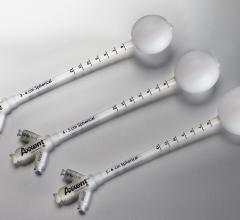
iCAD Inc. announced that the company’s Xoft Axxent balloon applicators have received approval from the China Food & Drug Administration (CFDA) for the treatment of early-stage breast cancer. The Xoft Axxent balloon applicators are a key component of the Xoft Axxent Electronic Brachytherapy (eBx) System, which is used to perform intraoperative radiation therapy (IORT) in early-stage breast cancer patients who meet specific selection criteria.
 August 30, 2017

Feature | Breast Imaging | Dave Fornell
August 30, 2017 — This is a list of the top breast imaging content so far for 2017. These articles and videos highlight ...
August 30, 2017 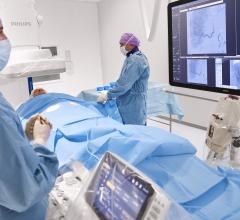
News | Interventional Radiology
Radioembolization is a therapy method used for liver tumors that are uncurable with surgery or chemotherapy. Thorough development of an individual plan is important for successful treatment. Within the SIRTOP project, the Fraunhofer Institute for Medical Image Computing MEVIS in Bremen, Germany, is developing sophisticated computer algorithms to make therapy planning faster and more precise. The research team will present their initial results at several upcoming conferences.
August 29, 2017 Sponsored Content
Videos | Radiology Imaging
Contrast Diversification in CT Imaging Across imaging departments, supply variability and growing demand are creating ...
September 08, 2026 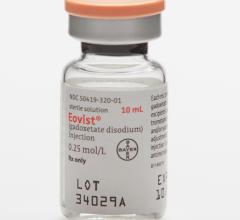
News | Contrast Media
August 29, 2017 — The European Medicines Agency (EMA) issued a final opinion that recommended restricting the use of ...
August 29, 2017 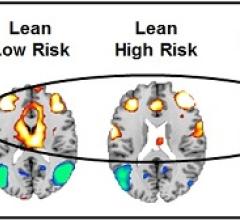
News | Neuro Imaging
A team of researchers recently used functional magnetic resonance imaging (fMRI) to investigate neural responses to food cues in overweight compared with lean adolescents. The team, including senior investigator Bradley Peterson, M.D., director of the Institute for the Developing Mind at Children’s Hospital Los Angeles, observed that food stimuli activated regions of the brain associated with reward and emotion in all groups. However, adolescents at an increasing risk for obesity had progressively less neural activity in circuits of the brain that support self-regulation and attention.
August 28, 2017 
News | PACS
August 28, 2017 — Rayence Inc. announced the first multiple installations of a new Rayence cloud picture archiving and ...
August 28, 2017 Sponsored Content
Sponsored Content
Videos | Radiology Imaging
Today’s radiology teams are faced with a wide range of growing complexities such as patient and procedure variabilities ...
June 24, 2026 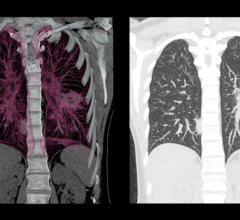
Technology | Lung Imaging
20/20 GeneSystems Inc. recently released in China what is believed to be the world’s first machine learning algorithm commercialized for use in conjunction with blood tests to aid in the early detection of lung cancer. The cloud-accessible software, marketed in China by MyBioMed Ltd., is expected to be utilized over the next six months by at least 20 hospitals in five or more cities to help in distinguishing between benign versus malignant pulmonary nodules following computed tomography (CT) imaging.
August 28, 2017 
News | CT Angiography (CTA)
August 28, 2017 — Philips Healthcare and HeartFlow Inc. announced they entered into a collaboration agreement to improve ...
August 28, 2017 
News | Radiology Business
To ensure you continue to receive information most critical to your job, please participate in a survey that will take only two to three minutes of your time. The survey will measure the readership and usefulness of the various healthcare industry publications and electronic newsletters or websites.
August 28, 2017 Sponsored Content

Feature | Information Technology
AT A GLANCE Organization: Expert Radiology Management Services, LLC Specialty: Subspecialty teleradiology — neuro and ...
May 01, 2026 
Videos | Nuclear Imaging
Prem Soman, M.D., director of nuclear cardiology at the Heart and Vascular Institute, University of Pittsburgh, and ...
August 24, 2017 
Videos | Nuclear Imaging
Randy Thompson, M.D., attending cardiologist, St. Luke’s Mid-America Heart Institute, Kansas City, explains protocols ...
August 24, 2017 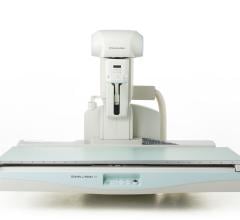
News | Digital Radiography (DR)
Frost & Sullivan, a global market research and consulting company, has awarded Shimadzu Corp. the 2017 Global General Radiography Product Line Strategy Leadership Award. Frost & Sullivan presents this award to the diagnostic imaging company that has introduced products and services representing the highest leadership in the global market for diagnostic X-ray systems in 2016 and employs the best strategies for success. The award recognizes the innovations, versatility, and extent to which Shimadzu’s radiography product line meets customer needs, the overall impact Shimadzu has in terms of providing value, and its increased market share.
August 24, 2017 Sponsored Content
Sponsored Content
Videos | Radiology Business
Radiology departments have many different needs and face a wide variety of challenges that can impact their departments ...
November 11, 2025 MR Solutions’ 9.4T cryogen-free magnetic resonance imaging (MRI) system is designed for preclinical applications. The cryogen-free (“dry”) magnet system provides high-resolution imaging within a compact footprint.
August 24, 2017 
Technology | Breast Imaging
Kubtec announced that it has developed a unique solution to a potential problem faced by operating room (OR) staff when treating patients for breast cancer. Automatic Specimen Alert (ASA), now available on the Mozart System, Kubtec’s intraoperative 3-D tomosynthesis system, eliminates the possibility that OR professionals may forget to remove the excised specimen from the system once imaging is complete.
August 23, 2017 
News | Interventional Radiology
Merit Medical Announces Advanced Interventional Cardiology Transradial Intervention Education Course
Merit Medical Systems Inc. will partner with internationally renowned interventional cardiologist Ferdinand Kiemeneij, M.D., Ph.D., to deliver the next generation in educational opportunities for interventional cardiologists and interventional radiologists.
August 23, 2017 
News | Computed Tomography (CT)
Central Minnesota residents now have access to advanced computed tomography (CT) technology that is safe and fast at St. Cloud Hospital with the installation of the Aquilion One/Genesis Edition from Toshiba Medical, a Canon Group company. The system is located across a hallway from the emergency department and is being used for a wide range of exams, including neuro perfusion studies.
August 23, 2017 
News | Cybersecurity
The Medical Device Innovation, Safety and Security Consortium (MDISS) recently launched the first of more than a dozen planned device security testing labs and cyber-ranges. The new MDISS World Health Information Security Testing Lab (WHISTL) facilities will comprise a federated network of medical device security testing labs, independently owned and operated by MDISS-member organizations including healthcare delivery organizations, medical device manufacturers, universities and technology companies. Each WHISTL facility will launch and operate under a shared set of standard operating procedures. The goal is to help organizations work together to more effectively address the public health challenges arising from cybersecurity issues emergent in complex, multi-vendor networks of medical devices.
August 23, 2017 
News | Focused Ultrasound Therapy
Insightec announced recently that worldwide adoption of magnetic resonance (MR)-guided focused ultrasound continues to gain momentum as Exablate Neuro patient treatment numbers surpass the 1,000 mark. Medical facilities are ramping up their MR-guided focused ultrasound service and essential tremor patients are now being treated on a weekly basis at many sites, according to the company.
August 22, 2017 
News | Oncology Diagnostics
A new UCLA study is the first to identify patient and tumor characteristics that predict the successful creation of models and which types of sarcomas are most likely to grow as xenografts. The research, which is the first and largest patient-derived orthopedic xenograft (PDOX) study in sarcoma, gives physician-scientists a much-needed roadmap for personalizing therapies for the disease without placing patients at risk for treatment-related complications or ineffective therapy.
August 22, 2017 
Videos | Information Technology
Melissa Martin, MS, president of the American Association of Physicists in Medicine (AAPM), discusses her vision of the ...
August 22, 2017 © Copyright Wainscot Media. All Rights Reserved.

Subscribe Now