

Feature
Computed tomography (CT) imaging utilization has grown markedly across many clinical disciplines during the past decade, raising concerns about radiation overexposure.
 March 24, 2014

News
A clinical study of more than 50,000 women participating in the U.K. NHS Breast Screening Programme has found that, while three-yearly screening intervals are appropriate for the majority of women, approximately one third of women are at higher risk of developing cancer and might benefit from more frequent mammograms.
March 24, 2014 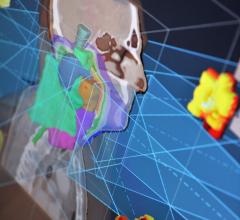
News
RaySearch Laboratories AB has entered into an exclusive distribution agreement with AlphaXRT based in Sydney, Australia and Auckland, New Zealand.
March 24, 2014 Sponsored Content
Sponsored Content
Videos | Radiology Business
Radiology departments have many different needs and face a wide variety of challenges that can impact their departments ...
November 11, 2025 
News
Medical physicists met in Denver, Colo., March 15-18 for the American Association of Physicists in Medicine (AAPM) Spring Clinical Meeting, hosted at the Denver Marriott Tech Center. The meeting focused on helping medical physicists with the integration of emerging technologies into the clinical environment. Mirada Medical demonstrated its comprehensive suite of advanced deformable image registration (DIR) software tools to meeting attendees. The company utilizes its scientifically advanced DIR algorithms to provide practical tools to support treatment planning.
March 24, 2014 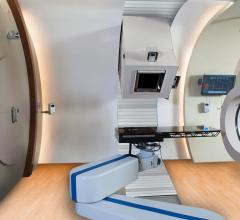
Technology
ProTom International Inc has received 510(k) clearance for its Radiance 330 Proton Therapy System. The Radiance 330 is a compact, modular and more affordable proton beam delivery system for the treatment of patients with cancer. The system delivers extremely focused, conformal, scanned proton beams that destroy tumors while sparing nearby healthy tissue and anatomical structures.
March 24, 2014 
Technology
VuComp Inc. debuted its automated breast density measurement technology, M-Vu Breast Density, at NCoBC, March 15-19 in Las Vegas. Clinical studies have shown that dense breasts can make breast cancer detection in a mammogram more difficult by potentially masking malignant masses. Because of this, radiologists classify breast density into four categories established by the American College of Radiology’s Breast Imaging Reporting and Data System (BI-RADS) standard.
March 21, 2014 Sponsored Content
Feature | Breast Imaging
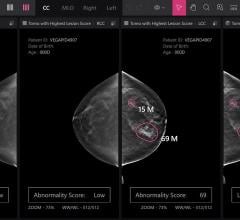
Despite decades of progress in breast imaging, one challenge continues to test even the most skilled radiologists ...
October 24, 2025 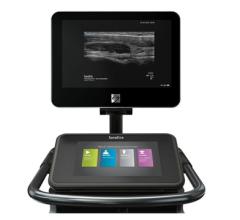
News
Fujifilm Medical Systems U.S.A., Inc. and Fujifilm SonoSite Inc. showcased its women’s health care solutions at the National Consortium of Breast Center Meeting in Las Vegas, March 15-19. The NCoBC brings together medical and industry professionals from around the globe to network, learn and share ideas, methodologies and treatment options that improve quality of care and outcome for patients diagnosed with breast diseases.
March 21, 2014 
Technology
The U.S. Food and Drug Administration (FDA) has approved a third beta-amyloid plaque positron emission tomography (PET) imaging radiotracer to identify Alzheimer’s disease. The FDA’s approval of Piramal Imaging’s Neuraceq (florbetaben F-18 injection) comes four weeks after receiving marketing authorization in Europe.
March 20, 2014 News
Medical industry veteran Walt Cebulski died at his home in Foresthill, Calif., on Jan. 24 after a brief fight with cancer. He was 58.
March 20, 2014 Sponsored Content
Sponsored Content
Videos | Radiology Business
Bayer Radiology’s Barbara Ruhland and Thom Kinst discuss how radiology departments can address the many different ...
October 09, 2025 
News
Konica Minolta Medical Imaging showcased solutions ideal for orthopedic practices at the American Academy of Orthopaedic Surgeons (AAOS) 2014 Annual Meeting, March 12-15 in New Orleans, La. Two newly released systems, ImagePilot Aero and Sonimage P3, were introduced for the first time to orthopedic surgeons. The company also highlighted the ImagePilot Sigma, a solution for practices looking to convert to digital radiography.
March 19, 2014 
News
Molecular breast imaging (MBI) Clinical Indications, Benefits and Challenges is the focus of a new CME credit course to be offered by ICPME. It is funded in part by Gamma Medica Inc. and in part by GE Healthcare. The one-hour online session will provide a thorough overview of MBI, which is a growing imaging technology for women with dense breasts and certain difficult-to-image cancers.
March 19, 2014 
News
Hokkaido University and Hitachi Ltd. completed construction of facilities incorporating the Probeat-RT Proton Beam Therapy System within the Hokkaido University Hospital. Hokkaido University and Hitachi had been jointly developing the Probeat–RT. The project was awarded a grant in 2010 under the Funding Program for World-Leading Innovative R&D on Science and Technology (the “FIRST Program”), a national project sponsored by the Japanese government. The University plans to begin treatments using the newly constructed facilities March 19, 2014.
March 19, 2014 Sponsored Content
Case Study | PACS
eHealth Saskatchewan plays a vital role in providing IT services to patients, health care providers, and partners such ...
February 03, 2025 News
EOS imaging gained CE marking of its hipEOS, a 3-D hip arthroplasty planning software based on EOS biplanar 3-D imaging.
March 19, 2014 Feature | Dave Fornell
I have watched a trend in medical technology grow from a small ripple a couple years ago into what I expect will be a tidal wave in 2014 due to growing concern over patient radiation dose levels from medical imaging. Use of radiation dose monitoring software came to the forefront when California, followed by Texas, created laws requiring medical facilities to record the amount of exposure patients receive from things like computed tomography (of which cardiac exams are among the highest dose levels used) and angiography. Adoption of this software will be further accelerated by new Joint Commission standards released in December 2013, which starting in mid-2014 requires the use of radiation dose monitoring software as part of its accreditation.
March 18, 2014 Blog
By Dave Fornell, editor
March 18, 2014 
Feature
Mevion Medical Systems delivered its Mevion S250 proton therapy superconducting synchrocyclotron accelerator to the physician-owned proton therapy center at First Coast Oncology in Jacksonville, Fla.
March 18, 2014 
Feature
One in eight visits to a doctor for a headache or migraine end up with the patient going for a brain scan, at a total cost of about $1 billion a year, a University of Michigan Medical School study finds.
March 18, 2014 
News
In a joint response to the Centers for Medicare & Medicaid Services (CMS) National Coverage and Analysis Group, the Lung Cancer Alliance, The Society of Thoracic Surgeons, American College of Radiology (ACR) and 38 other medical organizations called on CMS to quickly provide national Medicare coverage of low-dose computed tomography (LDCT) screening for patients at high risk for lung cancer.
March 18, 2014 
News
Brain imaging using nuclear imaging radiotracers can detect early evidence of Alzheimer's disease that may predict future cognitive decline among adults with mild or no cognitive impairment. This is according to a 36-month follow-up study led by Duke Medicine.
March 18, 2014 
Feature
Research and Markets have announced the addition of the "US Proton Therapy Outlook 2017." ?Physicians, in the face of an alarmingly rising incidences of cancer and limited treatment options are being forced to look for treatments beyond the conventional ones. In such a scenario, proton therapy is being projected as the Rolls Royce of radiation oncology. Unfortunately, access to proton therapy is limited for many patients due to the low number of proton therapy centers. Hence, many research institutes and hospitals are now investing in proton therapy to make it more accessible to patients.
March 14, 2014 © Copyright Wainscot Media. All Rights Reserved.

Subscribe Now