
The radiology landscape is pocked with cyber mines. And it’s getting worse. Legacy imaging systems are connected to picture archiving and communication systems (PACS), which are being linked to electronic medical record (EMR) systems and best of breed IT systems, as hospitals increasingly move to enterprise imaging. These make tempting targets for hackers. And the worsening situation is being caused by the best intentions.


Bethesda Health in southwest Florida has leveraged its picture archiving and communication system (PACS) to improve medical imaging workflow and efficiency. This has led to cost savings, shortened turnaround times (TAT) and improved analytics to enable better business management. Bethesda Health is based in Boynton, Fla., and includes Bethesda Hospital East and West hospitals with a total of 481 beds, plus the Bethesda Health Urgent Care.  


The implementation of electronic health records (EHR) has created an expectation that all patient data, including images, should be available in one location. Today, reports describing images are not enough, as many referring physicians want to see the images, and many use them to help guide therapies. This has caused an increased demand to exchange medical images in the various departments of healthcare settings. 


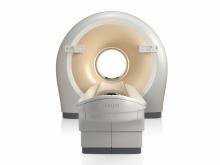
The continuum of personalized care, covering individualized prevention and therapy, translates into multiple changes to patient data sources. One of the primary sources is medical imaging that evolves into various multimodalities, allowing simultaneous acquisition of clinical images. Positron emission tomography/computed tomography (PET/CT) systems have been around for more than a decade, and now PET/magnetic resonance imaging (MRI) scanners are working to reach the market.


The U.S. Food and Drug Administration (FDA) defines radiographic/fluoroscopy (R/F) as a type of medical imaging that shows a continuous X-ray image on a monitor, much like an X-ray movie. During a fluoroscopy procedure, an X-ray beam is passed through the body. The image is transmitted to a monitor so the movement of a body part or of an instrument or contrast agent through the body can be seen in detail. 


May 5, 2017 — Accuray Inc. announced preliminary results from a prospective, phase I clinical trial evaluating adjuvant stereotactic partial breast irradiation (S-PBI) in early-stage breast cancer patients treated with the CyberKnife System. The study, published in the May issue of the peer-reviewed International Journal of Radiation Oncology - Biology - Physics, reported no recurrences or distant metastases at median follow-up of 26 months.

Although new technology and research has helped in the fight against breast cancer, death rates continue to be steady in women younger than 50, and continue to decrease in older women, according to the American Cancer Society (ACS). This decline is believed to be a result of finding breast cancer earlier thanks to improved screening technology, better treatment options and widespread awareness. 

Mevion Medical Systems announced a strategic agreement with medPhoton GmbH to integrate ImagingRing, an innovative cone beam computed tomography (CBCT) system for volumetric image guidance, with the Mevion S250i with Hyperscan, Mevion’s pencil-beam scanning proton therapy system. The new CBCT offering will debut at the 36th annual meeting of the European Society for Radiotherapy & Oncology (ESTRO), May 5-9 in Vienna, Austria.

Theraclion recently announced the presentation of data from the U.S. feasibility trial of echotherapy with Echopulse, a non-invasive treatment employing ultrasound-guided high-intensity focused ultrasound (HIFU), in women with breast fibroadenomas. Results were presented at The American Society of Breast Surgeons (ASBrS) Annual Meeting, held April 26-30 in Las Vegas.

Subscribe Now