Philips announced IntelliSpace Radiation Oncology, an intelligent patient management solution to manage complexity, improve efficiency and enable operational excellence in radiotherapy departments. IntelliSpace Radiation Oncology, which is considered a work in progress and not available for sale, provides a harmonized way of working, integrating applications and automating workflow to help reduce the amount of time it takes from receiving a patient referral to the start of their treatment. The solution is being unveiled at the European Society for Radiation Oncology’s (ESTRO) 38th Annual Meeting, April 26-30 in Milan, Italy.

Samsung announced that its new image post-processing engine (IPE), S-Vue 3.02, recently received U.S. Food and Drug Administration (FDA) clearance. The technology employs an advanced noise-reduction algorithm that allows devices to produce the same high-quality image using a fraction of the radiation in pediatric patients. Image evaluations on devices using S-Vue showed they reduced X-ray dose up to 45 percent for pediatric abdomen exams,* 15.5 percent for pediatric chest exams, and up to 27 percent for pediatric skull exams as compared with the previous IPE on the same X-ray systems.

April 24, 2019 — Imaging Technology News (ITN) was recently named the 2019 Jesse H. Neal Award winner in the Best Technical Content category for its team coverage of the topic of gadolinium.

Konica Minolta Healthcare Americas Inc., announced its KDR Advanced U-Arm and KDR Primary Digital Radiography System have been certified in California to withstand earthquakes, as part of the state’s Hospital Facilities Seismic Safety Act. The certification provided by the Office of Statewide Health Planning and Development (OSHPD) was awarded after both systems underwent and passed rigorous testing, including a shake test. With the OSHPD Seismic Certification, the KDR AU and KDR Primary can now be installed in any facility that requires this type of certification.Konica Minolta Healthcare Americas Inc., announced its KDR Advanced U-Arm and KDR Primary Digital Radiography System have been certified in California to withstand earthquakes, as part of the state’s Hospital Facilities Seismic Safety Act. The certification provided by the Office of Statewide Health Planning and Development (OSHPD) was awarded after both systems underwent and passed rigorous testing, including a shake test. With the OSHPD Seismic Certification, the KDR AU and KDR Primary can now be installed in any facility that requires this type of certification.

Accuray announced the launch of its Synchrony motion tracking and correction technology to be used with the Radixact System. This new feature adds intrafraction motion synchronization capabilities to the Radixact System, enabling real-time tracking, visualization and correction for tumor motion during treatment, with the goal of improving dose accuracy and treatment times compared to conventional radiation therapy systems. The Radixact System with Synchrony will be unveiled at the European Society for Radiotherapy & Oncology (ESTRO) meeting, April 26-30 in Milan, Italy.


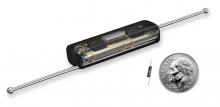
Wires have traditionally been placed prior to lumpectomy to mark cancerous tissues in the breast. Wire-free localizers, however, provide alternatives. And their clinical applications may expand.


Non-small cell lung cancer is a common cancer for both men and women. Many people who are diagnosed with this type of cancer are not candidates for surgery due to heart disease from a history of tobacco use. For these patients who cannot have a surgery, stereotactic body radiation therapy (SBRT) or stereotactic ablative radiotherapy (SABR) is a safe, effective and convenient treatment. Over the years, several published dose guidelines for this radiation treatment have been used by physicians. But a common dose schedule has not previously existed.

Konica Minolta Healthcare Americas Inc. announced that its Dynamic Digital Radiography (DDR) technology, introduced at the 2018 Radiological Society of North America (RSNA) annual meeting, has received 510(k) clearance from the U.S. Food and Drug Administration (FDA). The company says DDR represents the next evolution in X-ray imaging with the ability to capture movement in a single exam and is a fundamental change in the way clinicians can utilize radiography.


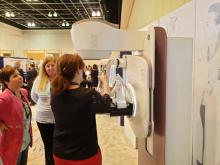
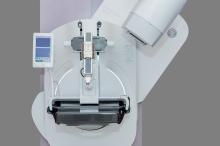
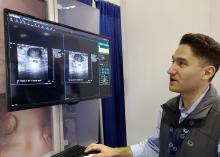
Signs of what the future may look like in women’s health dotted the exhibit floor of the Society for Breast Imaging (SBI)/American College of Radiology (ACR) Breast Imaging Symposium in Hollywood, Fla. Notable was an emphasis on productivity.


April 22, 2019 — Mentice AB, provider of endovascular performance solutions, has signed an agreement with the nonprofit public service RAD-AID to donate high-fidelity simulators for interventional radiology (IR) procedure training in various resource-constrained regions of the world. Under the agreement, Mentice pledges to contribute simulator software, hardware and expertise to RAD-AID IR educational teams.

Subscribe Now