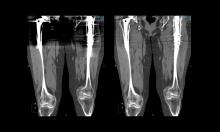
Rubicon Support Catheter

Mach 7 Technologies introduced the new iModality application for mobile devices. The Keystone Suite allows clinicians to capture medical imaging data from an iPhone or iPad to be stored on a patient's electronic health record (EHR).


Nearly 300 radiologic technologists from North Carolina visited with lawmakers in Raleigh on Feb. 27 to ask them to support licensing standards for the state’s personnel who perform medical imaging and radiation therapy procedures.


March 7, 2013 — Senate Bill 1115, which would require individuals in Idaho to secure a license before performing medical imaging and radiation therapy procedures, is currently awaiting a hearing in the Idaho Senate Committee on Health and Welfare.


March 7, 2013 — Ultrasound technology could soon experience a significant upgrade that would enable it to produce high-quality, high-resolution images, thanks to the development of a new key material by a team of researchers that includes a professor in the department of biomedical engineering at Texas A&M University.


The American Society of Echocardiography (ASE) has released a list of five interventions whose appropriateness physicians and patients should discuss as part of Choosing Wisely, an initiative of the ABIM Foundation, along with Consumer Reports. First in the list, they ask that patients and their doctors talk about the real need for additional echocardiograms when there are only minor signs of heart valve leakage.


As the U.S. government works to strengthen its global nuclear security strategy by eliminating potential sources of bomb-grade highly enriched uranium (HEU), it has eyed the production of medical isotopes for nuclear imaging, which rely on HEU.  To encourage reliable supplies of medical radioisotopes produced from non-HEU sources, President Obama signed into law on Jan. 2, 2013, the American Medical Isotopes Production Act of 2011 (AMIPA). It should be noted that it was part of the 2013 National Defense Authorization Act, so the measure goes beyond interest in just making sure patients have access to radiopharamceutical tracers to enable myocardial perfusion imaging (MPI) scans.  The effort is designed to make HEU sources less available on the world market to reduce the threat of nuclear weapons proliferation or the building of a “dirty bomb.”


Subscribe Now