At the International Society for Magnetic Resonance in Medicine’s (ISMRM) 21st Annual Meeting in Salt Lake City, Utah, Philips Healthcare demonstrated a range of clinical functionalities in magnetic resonance imaging (MRI).

Leading research institutions are making breakthroughs in advanced magnetic resonance (MR) imaging with Toshiba America Medical Systems Inc.’s Vantage Titan 3.0T MR system. Toshiba has partnered with Shands at the University of Florida and the Keck Medical Center of the University of Southern California (USC) for MR research in fMRI, as well as body and cardiac imaging.


April 24, 2013 — A prostate cancer patient has become the first person in the world to be treated using the latest version of Varian's Vitesse real-time planning solution for planning and performing advanced high-dose-rate (HDR), ultrasound-guided brachytherapy treatments. The treatment took place at the Levine Cancer Institute in Charlotte, N.C.


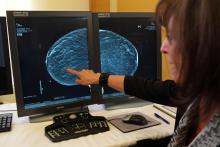
More than three years after the United States Preventive Services Task Force (USPSTF) recommended against routine mammogram screening for women between the ages of 40 and 49, a study from Brigham and Women's Hospital (BWH) finds that mammogram rates in the United States have not declined in that age group, or any other. The study results are published in the online journal Cancer.

Varian Medical Systems and Paul Scherrer Institute (PSI) announced a collaboration to further advance motion management techniques for proton therapy. The multi-year agreement, aimed at optimizing treatment strategies for indications such as cancer in the lung, liver, pancreas and breast, will evaluate strategies using a 4-D treatment planning simulator developed by PSI.

Nucletron, an Elekta company, has introduced its redesigned Flexitron remote afterloading platform. Flexitron emphasizes safety and efficiency in the brachytherapy workflow, increasing the clinician's confidence that execution of all workflow steps will proceed as planned for brachytherapy/treatment delivery.

Researchers at Karolinska Institutet have developed a method for assessing the effect of tamoxifen, a common drug to prevent the relapse of breast cancer. The key lies in monitoring changes in the proportion of dense tissue, which appears white on a mammogram, during treatment. Women who show a pronounced reduction in breast density during tamoxifen treatment have a 50 percent reduction in breast cancer mortality. This tool provides doctors with the possibility to assess whether a patient is responding to tamoxifen at an early phase of treatment.

Subscribe Now