The Elsie and Robert Pierson Radiation Oncology Center is a part of City of Hope National Medical Center — a dedicated, National Cancer Institute (NCI)-designated comprehensive cancer center located in Duarte, Calif. 


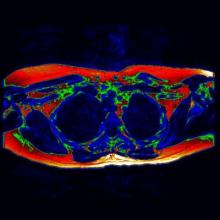
The advent of hybrid PET/MR in 2011 brought the promise of vastly improved imaging technology in the form of a new modality that combined whole body positron emission tomography (PET) with magnetic resonance (MR) technology. Following two years of using PET/MR, we are seeing clinical benefits with this system at the University Hospitals Seidman Cancer Center in Cleveland.


What was once diagnostic imaging is on track to becoming much more. Radiology is on the verge of a new era in which its focus goes beyond the traditional gatekeeper role, directing the earliest steps in patient management to one that adjusts the direction of care throughout the management of a patient.


Physicians have used radiation in medicine for more than a century. The use of radiation in diagnostic imaging, including computed tomography (CT), fluoroscopy, angiography, mammography, computed radiography (CR) and digital radiography (DR), as well as in nuclear medicine, has aided greatly in the diagnosis and treatment of cancer and other diseases. 


Digital radiography (DR) has become a mainstay within many hospitals and radiology practices. The increased adoption of DR can be attributed to X-ray vendors dropping their prices, as well as the introduction of wireless DR, which offers more flexibility and improved workflow than fixed-plate DR. Now, many radiologists are opting to invest in DR systems rather than retrofit older computed radiography (CR) systems. While companies such as Samsung are just entering the DR market with new introductions, the focus today is not as much on introduction as it is on refinement. From smaller and lighter detectors for specific applications, to the development of features for dose monitoring and recording, DR is evolving to become more efficient for radiologists. 


St. Peter’s Breast Center, located in Albany, N.Y, added 3D mammography (breast tomosynthesis) in 2011 because the staff knew it would improve diagnostic accuracy; even so, the technology has exceeded all expectations. In 2012 more than 22,000 mammograms were performed at the breast center.

To help identify trends and find out what topics Imaging Technology News (ITNreaders are interested in, our editorial team makes note of what the audience is viewing online at itnonline.com. In 2013, the topic of women’s breast health — specifically, breast density — dominated half of this list. Perhaps 2014 will be the year that standardized breast density reporting will become law in all states; 2013 got this off to a good start, helping to spread awareness. Other hot topics included healthcare reform and the role it could play in the radiology field, and of course breaking new technology.


Survivors of breast cancer have a one in six chance of developing breast cancer in the other breast. But a study conducted in mice suggests that survivors can dramatically reduce that risk through treatment with moderate doses of radiation to the unaffected breast at the same time that they receive radiation therapy to their affected breast.


Researchers at the University of North Carolina at Chapel Hill have achieved higher resolution ultrasounds that can help detect tumors. They combined ultrasound with a contrast agent comprised of micro-sized bubbles that pair with an antibody produced at elevated levels by many cancers. By binding to the protein SFRP2, the microbubble contrast agent greatly improves the resolution and tumor-detecting ability of scans produced by ultrasound. 


Subscribe Now