January 31, 2014 — Researchers at the University of North Carolina at Chapel Hill have achieved higher resolution ultrasounds that can help detect tumors.
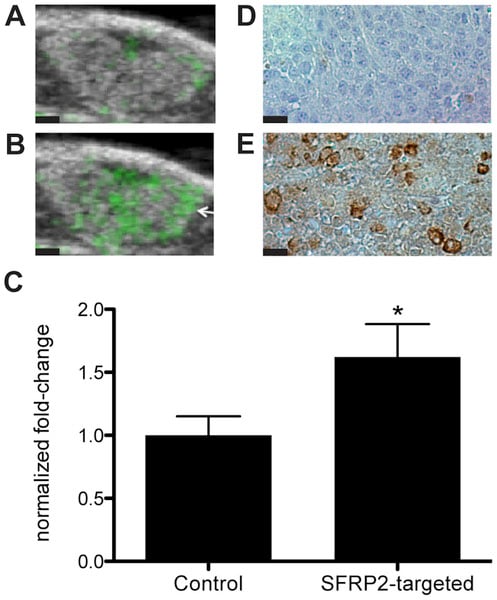
They combined ultrasound with a contrast agent comprised of micro-sized bubbles that pair with an antibody produced at elevated levels by many cancers. By binding to the protein SFRP2, the microbubble contrast agent greatly improves the resolution and tumor-detecting ability of scans produced by ultrasound.
In a paper published by PLOS-ONE, UNC Lineberger Comprehensive Cancer Center members Nancy Klauber-DeMore, M.D., professor of surgery, and Paul Dayton, Ph.D., professor of biomedical engineering, were able to visualize lesions created by angiosarcoma, a malignant cancer that develops on the walls of blood vessels.
“The SFRP2-moleculary targeted contrast agent showed specific visualization of the tumor vasculature,” Klauber-DeMore said. “In contrast, there was no visualization of normal blood vessels. This suggests that the contrast agent may help to distinguish malignant from benign masses found on imaging.”
Klauber-DeMore’s lab discovered that angiosarcoma cells produce an excess of SFRP2, and her team focused on how to use the protein to better monitor the progress of the cancer within blood vessels. Using a pre-clinical model, the researchers delivered the microbubble contrast agent via intravenous injection and tracked it using ultrasound.
SFRP2 is expressed in many cancer, including breast, colon, pancreas, ovarian and kidney tumors, making the technique potentially useful on a broad range of cancer types. Klauber-DeMore said that the next steps of her research team will involve determining how well the technique works with these tumor types, as well as studying its effect on breast cancer.
Research indicates the level of SFRP2 expressed by tumors increases as they develop, and the team will investigate whether the technique can be used to track tumor growth and chemotherapy response. The researchers will also investigate whether it can be used to detect and visualize very small tumors.
Ultrasound is less expensive than commonly used imaging methods like magnetic resonance imaging (MRI), and the technique could lower costs to patients being treated for cancer. Ultrasound portability may enable treatment in rural and low-resource areas.
For more information: www.plosone.com

 October 01, 2026