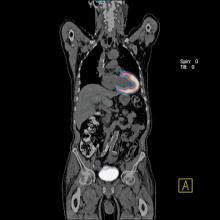
As long as inexpensive statins, which lower cholesterol, are readily available and patients do not mind taking them, it does not make sense to do a heart comuted tomography (CT) scan to measure how much plaque has built up in a patient’s coronary arteries before prescribing the pills, according to a new study by researchers at UC San Francisco.


UC Davis clinicians and physicists have recommended new strategies to make computed tomography (CT) safer, including adoption of a new metric for dose measurement, ways to manage exposure protocols that differ by CT brand and specific approaches to reduce exposure during needle biopsies.


Computed tomography (CT) imaging utilization has grown markedly across many clinical disciplines during the past decade, raising concerns about radiation overexposure.


A clinical study of more than 50,000 women participating in the U.K. NHS Breast Screening Programme has found that, while three-yearly screening intervals are appropriate for the majority of women, approximately one third of women are at higher risk of developing cancer and might benefit from more frequent mammograms.

RaySearch Laboratories AB has entered into an exclusive distribution agreement with AlphaXRT based in Sydney, Australia and Auckland, New Zealand. 

Medical physicists met in Denver, Colo., March 15-18 for the American Association of Physicists in Medicine (AAPM) Spring Clinical Meeting, hosted at the Denver Marriott Tech Center. The meeting focused on helping medical physicists with the integration of emerging technologies into the clinical environment. Mirada Medical demonstrated its comprehensive suite of advanced deformable image registration (DIR) software tools to meeting attendees. The company utilizes its scientifically advanced DIR algorithms to provide practical tools to support treatment planning.

ProTom International Inc has received 510(k) clearance for its Radiance 330 Proton Therapy System. The Radiance 330 is a compact, modular and more affordable proton beam delivery system for the treatment of patients with cancer. The system delivers extremely focused, conformal, scanned proton beams that destroy tumors while sparing nearby healthy tissue and anatomical structures.

VuComp Inc. debuted its automated breast density measurement technology, M-Vu Breast Density, at NCoBC, March 15-19 in Las Vegas. Clinical studies have shown that dense breasts can make breast cancer detection in a mammogram more difficult by potentially masking malignant masses. Because of this, radiologists classify breast density into four categories established by the American College of Radiology’s Breast Imaging Reporting and Data System (BI-RADS) standard.

Mynx Ace Vascular Closure Device

Subscribe Now