Hokkaido University and Hitachi Ltd. completed construction of facilities incorporating the Probeat-RT Proton Beam Therapy System within the Hokkaido University Hospital. Hokkaido University and Hitachi had been jointly developing the Probeat–RT. The project was awarded a grant in 2010 under the Funding Program for World-Leading Innovative R&D on Science and Technology (the “FIRST Program”), a national project sponsored by the Japanese government. The University plans to begin treatments using the newly constructed facilities March 19, 2014.

EOS imaging gained CE marking of its hipEOS, a 3-D hip arthroplasty planning software based on EOS biplanar 3-D imaging.

I have watched a trend in medical technology grow from a small ripple a couple years ago into what I expect will be a tidal wave in 2014 due to growing concern over patient radiation dose levels from medical imaging. Use of radiation dose monitoring software came to the forefront when California, followed by Texas, created laws requiring medical facilities to record the amount of exposure patients receive from things like computed tomography (of which cardiac exams are among the highest dose levels used) and angiography. Adoption of this software will be further accelerated by new Joint Commission standards released in December 2013, which starting in mid-2014 requires the use of radiation dose monitoring software as part of its accreditation.


Mevion Medical Systems delivered its Mevion S250 proton therapy superconducting synchrocyclotron accelerator to the physician-owned proton therapy center at First Coast Oncology in Jacksonville, Fla.


One in eight visits to a doctor for a headache or migraine end up with the patient going for a brain scan, at a total cost of about $1 billion a year, a University of Michigan Medical School study finds.


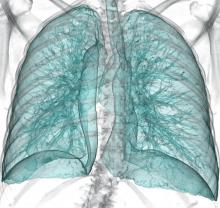
In a joint response to the Centers for Medicare & Medicaid Services (CMS) National Coverage and Analysis Group, the Lung Cancer Alliance, The Society of Thoracic Surgeons, American College of Radiology (ACR) and 38 other medical organizations called on CMS to quickly provide national Medicare coverage of low-dose computed tomography (LDCT) screening for patients at high risk for lung cancer.

Brain imaging using nuclear imaging radiotracers can detect early evidence of Alzheimer's disease that may predict future cognitive decline among adults with mild or no cognitive impairment. This is according to a 36-month follow-up study led by Duke Medicine.


Research and Markets have announced the addition of the "US Proton Therapy Outlook 2017." ?Physicians, in the face of an alarmingly rising incidences of cancer and limited treatment options are being forced to look for treatments beyond the conventional ones. In such a scenario, proton therapy is being projected as the Rolls Royce of radiation oncology. Unfortunately, access to proton therapy is limited for many patients due to the low number of proton therapy centers. Hence, many research institutes and hospitals are now investing in proton therapy to make it more accessible to patients.


Subscribe Now