New research from King's College London has found that COVID-19 may be diagnosed on the same emergency scans intended to diagnose stroke.

Canon Medical Systems


September 22, 2020 — New research from King's College London has found that COVID-19 may be diagnosed on the same emergency scans intended to diagnose stroke. The findings have important implications in the management of patients presenting with suspected stroke through early identification of COVID-19.

In a paper published in the American Journal of Neuroradiology, study lead and Senior Lecturer in Neuroimaging at King's College London, Tom Booth, M.D., said the emergency scans captured images of the top of the lungs where a fluffiness known as 'ground glass opacification' allowed COVID-19 to be diagnosed.

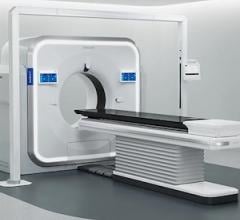
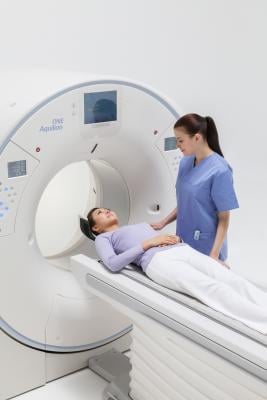
225 patients were examined from three London Hyper-Acute Stroke Units. The emergency stroke scan consisted of a computed tomography (CT) of the head and neck blood vessels.

Booth said the results show that when the team saw these changes in the top of the lungs during the emergency scan, they were able to reliably and accurately diagnose COVID-19 and the changes also predicted increased mortality.

"This is particularly relevant given the limitations of currently available Severe Acute Respiratory Syndrome Coronavirus 2 (SARS-CoV-2) reverse transcriptase-polymerase chain reaction (RT-PCR) testing as it takes time to complete the test and sometimes it is inaccurate," Booth said. "Additionally, our data have prognostic information given the increased mortality in those with lung changes shown in our cohort. These are useful results because the changes are simple for radiologists and other doctors to see. This is "free information" from a scan intended for another purpose yet extremely valuable."

Primarily, the findings allow earlier selection of the appropriate level of personal protective equipment (PPE) and attendant staff numbers, triage to appropriate inpatient ward settings, self-isolation and contact tracing.

For more information: www.kcl.ac.uk/


Related Content

News | Magnetic Resonance Imaging (MRI)

Feb. 9, 2026 — MRIguidance, a MedTech company developing BoneMRI, a radiation-free bone imaging solution, has appointed ...

Time February 09, 2026
arrow
Feature | Cardiac Imaging | Kyle Hardner

Advances in coronary CT angiography (CCTA) have reached the point where image quality and AI capabilities are creating ...

Time February 06, 2026
arrow
News | Magnetic Resonance Imaging (MRI)

Feb. 6, 2026 — A state-of-the-art intraoperative MRI (iMRI) has arrived at the University of Chicago Medicine, one of ...

Time February 06, 2026
arrow
News | Computed Tomography (CT)

Feb. 4, 2026 — A new review published in the American Journal of Roentgenology (AJR) finds that advances in CT ...

Time February 04, 2026
arrow
News | Radiology Imaging

Feb. 4, 2026 — The Royal College of Radiologists (RCR) has issued its initial reaction to the British government's ...

Time February 04, 2026
arrow
News | Interventional Radiology

Feb. 2, 2026 — GE HealthCare has announced that Allia Moveo has received U.S. Food and Drug Administration (FDA) 510(k) ...

Time February 02, 2026
arrow
News | Magnetic Resonance Imaging (MRI)

Jan. 27, 2026 — Hyperfine has announced results from the largest data set to date evaluating stroke detection with its ...

Time January 28, 2026
arrow
News | Radiology Education

Jan. 22, 2026—The American Roentgen Ray Society (ARRS) will host a live virtual symposium, "Medical Imaging for ...

Time January 28, 2026
arrow
News | PET Imaging

Jan. 26, 2026 — Nuclidium, a clinical-stage radiopharmaceutical company developing a proprietary copper-based ...

Time January 27, 2026
arrow
News | Computed Tomography (CT)

Jan. 21, 2026 — Aidoc recently announced that the U.S. Food and Drug Administration (FDA) cleared the industry's first ...

Time January 23, 2026
arrow
Subscribe Now