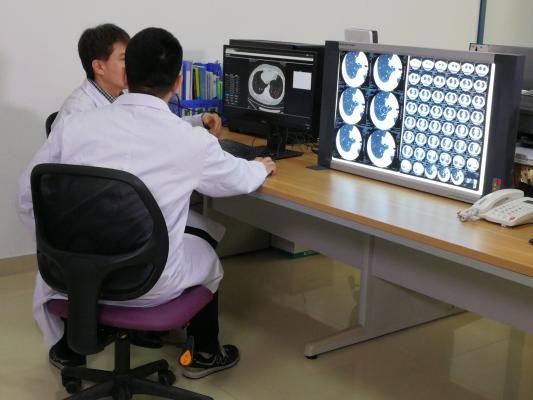
May 21, 2018 — A new statement from the American College of Radiology (ACR) asserts that provider non-compliance to lung cancer screening guidelines may be resulting in thousands of unnecessary deaths each year. The statement attributes the phenomenon to physician ignorance of lung cancer screening guidelines, lack of patient and physician education on the benefits of screening, and drastically low Medicare reimbursement for low-dose computed tomography (LDCT) lung cancer screening exams.
More than 220,000 people will be diagnosed with lung cancer in 2018. Nearly 160,000 people will die from the disease — more than from breast, colon and prostate cancers combined. This exam is the first and only cost-effective test proven to significantly reduce lung cancer deaths, according to the ACR.
The United States Preventive Services Task Force (USPSTF) recommends lung cancer screening for high-risk, older current and former smokers. Yet, these exams remain comparatively unused – according to a recent study presented at the American Society of Clinical Oncology (ASCO).
“CT lung cancer screening can save more lives than any cancer screening test in history, but patients are not hearing about this test from their doctors. Medicare is not adequately covering these exams. This noncompliance and practical non-coverage is contributing to unnecessary deaths due to lack of screening,” said Ella Kazerooni, M.D., FACR, chair of the ACR Lung Cancer Screening Committee and ACR Thoracic Imaging Panel.
Updates to Lung-RADS — a quality assurance tool to standardize lung cancer screening CT reporting and management recommendations — has reduced false positive rates by 75 percent compared to previous studies, according to the college. This process will improve, but only with an adequate number of patients to screen and review.
Previous psychological studies show that patient concern over cancer screening false positives is short-term with no lasting effects.
Given the immediate threat to older current and former smokers from this disease, the significant lifesaving benefit of these exams outweighs any likely harms to the defined screening population, the association said. In fact, patients are required by law to be made aware of the harms of screening and other pertinent information prior to any exams being performed.
Unlike breast and colon cancer screening, a patient’s primary care physician must approve the patient to get a lung cancer screening exam during a shared-decision making visit. Many of these providers are unaware of the exams – or not informed on the benefits of these scans.
According to the ASCO study, 12,000 people per year may be dying due to lack of screening. Many of these people may never hear that there is a test that can help save them. Additional education of both ordering physicians and patients, such as “Saved by the Scan,” is necessary.
Shortly after providing coverage for these exams, the Centers for Medicare & Medicaid Services slashed Medicare reimbursement to approximately $60 per exam. That is less than half the Medicare provider reimbursement for a mammogram. Such cuts have largely restricted the number of facilities financially able to provide these scans to large teaching hospitals. The ACR said funding for lung cancer screening exams needs to be greatly increased.
The medical community is working to maximize the lifesaving benefits of these tests, by reducing false positive exams and restricting screening to populations most likely to benefit from screening. However, the ACR said Medicare needs to provide realistic coverage for these tests. These processes can occur at the same time.
“Thousands of people each year should not be allowed to die needlessly while the medical community fine tunes the only exam proven to save lives from the nation’s leading cancer killer. Medicare must also provide adequate reimbursement. We need to save lives now,” said Kazerooni.
For more information: www.radiologyinfo.org

 October 07, 2026