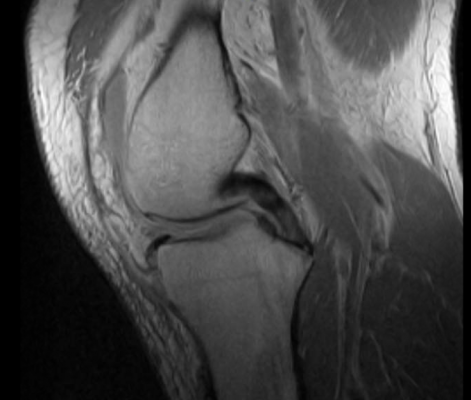
January 11, 2018 – Obese people who lose a substantial amount of weight can significantly slow down the degeneration of their knee cartilage, but only if they lose weight through diet and exercise or diet alone, according to a new magnetic resonance imaging (MRI) study presented at the annual meeting of the Radiological Society of North America (RSNA), Nov. 26-Dec. 1 in Chicago.
Obesity is a major risk factor for osteoarthritis, a degenerative joint disease that affects more than a third of adults over the age of 60, according to the Centers for Disease Control and Prevention. The knee joint is a common site of osteoarthritis, and in many people the condition progresses until total knee replacement becomes necessary.
"Once cartilage is lost in osteoarthritis, the disease cannot be reversed," said the study's lead author, Alexandra Gersing, M.D., from the Department of Radiology and Biomedical Imaging at the University of California, San Francisco.
Since cartilage loss cannot be reversed, it is important for people at risk of osteoarthritis or with early signs of the disease to slow the degeneration of cartilage. Weight loss has been shown to slow down cartilage degeneration in overweight and obese individuals, but it was unclear if the method used to lose weight made a difference.
Gersing and colleagues investigated cartilage degeneration and joint abnormalities over the course of 96 months in overweight and obese individuals who maintained stable weight and who lost weight via differing regimens.
The researchers studied 760 men and women with a body mass index of greater than 25 from the Osteoarthritis Initiative, a nationwide research study focused on the prevention and treatment of knee osteoarthritis. The patients either had mild to moderate osteoarthritis or risk factors for the disease. Patients were divided into a group of 380 patients who lost weight, and a control group of 380 patients who lost no weight. The weight-loss group was further segmented by weight loss method: diet and exercise, diet alone and exercise alone. The researchers used MRI to quantify knee osteoarthritis at the beginning of the study, at 48 months and at 96 months.
Cartilage degeneration was significantly lower in the weight loss group, compared to the control group over the 96 months. However, this finding was only present among the patients who lost weight through diet and exercise or diet alone. Although patients who only exercised lost as much weight as patients who dieted alone or dieted and exercised, weight loss through exercise alone showed no significant difference in cartilage degeneration, compared to the group who lost no weight.
"These results add to the hypothesis that solely exercise as a regimen in order to lose weight in overweight and obese adults may not be as beneficial to the knee joint as weight loss regimens involving diet," Gersing said.
Co-authors on the study are Gabby B. Joseph, Ph.D., Benedikt J. Schwaiger, M.D., Charles E. McCulloch, Ph.D., Michael C. Nevitt, Ph.D., and Thomas M. Link, M.D., Ph.D.
For more information: www.rsna.org

 October 07, 2026