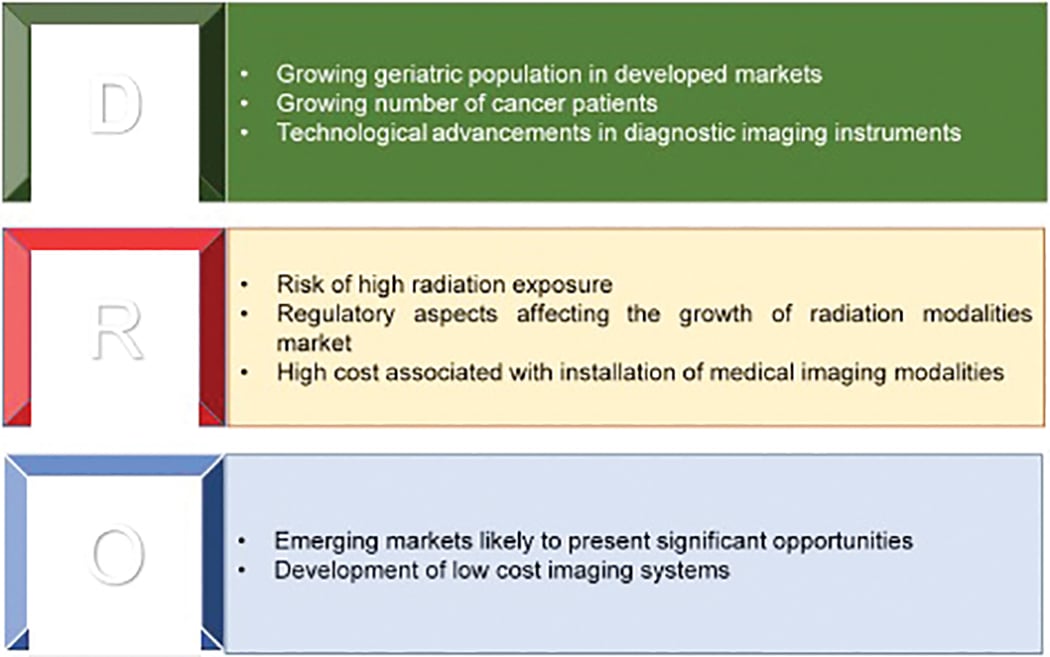
Figure 1: Digital/synthetic reference object (DRO) analysis of the medical imaging market.
The emerging markets of Asia-Pacific and Latin America will drive the medical imaging market by more than 5 percent by 2021. Globally, medical imaging has transformed the methods of diagnostics and has made the diagnosis and treatment of several medical conditions more effective and efficient in the modern era. Growing awareness about the usage of imaging devices for treatment in the healthcare segment and advancements in technologies is driving the global market for medical imaging worldwide.
The global market for medical imaging was worth $30.05 billion in 2015 and it is expected to reach $40.56 billion in 2021, expanding at a compound annual growth rate (CAGR) of 5.1 percent between 2016 and 2021. Medical imaging equipment can be defined in many ways, but here is mainly categorized as X-ray devices, computed tomography (CT) scanners, magnetic resonance imaging (MRI) scanners, ultrasound devices and nuclear imaging scanners.
X-ray Devices
X-ray devices currently dominate the medical imaging market worldwide, while the nuclear imaging market is anticipated to grow at the highest CAGR by 2021.
A research report published by Infinium Global Research1 found that X-ray devices dominated the global medical imaging market, and are expected to continue to do so with a market share of 29.36 percent by 2021. The market size of X-ray devices is projected to grow at a CAGR of 5 percent over the period of 2016 to 2021. X-ray imaging is the oldest form of medical imaging, while it has evolved multifold in order to make diagnosis and treatment more reliable. With advancements in this segment, digital X-ray and 3-D X-ray have become a trend in the recent past. Moreover, advanced X-ray systems help reduce the radiation dose.
Watch the VIDEOS and read the article “Technology Report: Digital Radiography (DR).”
Nuclear Imaging
With growing demand for radiation devices for the treatment of various types of cancers and neurological medical conditions, the market size of nuclear imaging is expected to grow at the highest CAGR over the forecast period. It is projected to grow at a CAGR of 10 percent between 2016 and 2021. Currently, with an increased number of cancer patients, the demand for nuclear imaging devices is anticipated to experience significant growth. Positron emission tomography (PET) and single-photon emission computed tomography (SPECT) are nuclear imaging instruments used in nuclear imaging. Among the two, SPECT accounted for the largest segment in 2014 and 2015.
Watch the VIDEO “VIDEO: Trends in Nuclear Cardiology Imaging.”
Ultrasound
According to research conducted for the report, ultrasound imaging accounted for the second largest share — 21 percent — in 2015, while MRI accounted for 19 percent share in the same year.
A growing geriatric population and rising number of cancer patients are likely to drive the global market of medical imaging, while high risk of radiation exposure is a primary restraining factor. The geriatric population is exposed to a higher threat of cancer and neurological disorders. Moreover, significant environmental changes are likely to create more health concerns for this segment of the population worldwide. Further, technological advancements in diagnostic imaging instruments are expected to escalate the growth in this market by 2021.
One of the main risks associated with medical imaging modalities is high risk of radiation exposure associated with these devices, however it is also an important factor affecting the growth in the medical imaging market over the forecast period. (See Figure 1.) Additionally, stringent regulations pertaining to use of radiation devices in developed markets such as the U.S. and U.K. are anticipated to restrain the growth in this market over the forecast period.
Watch the VIDEO “VIDEO: Trends in Ultrasound at RSNA 2016.”
Read the article “Ultrasound Enhances Quality as Technology Advances.”
Asia-Pacific Market
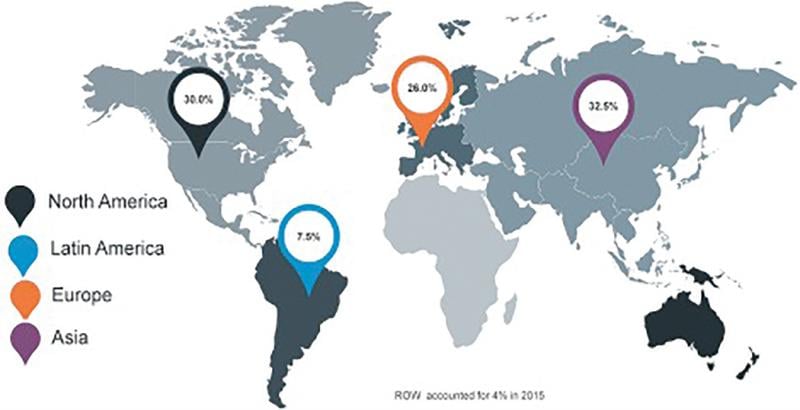
The Asia-Pacific market is projected to grow at the highest CAGR after dominating the global market in 2015. The study estimated Asia-Pacific to be the largest market for medical imaging instruments, with the growth in this market driven by emerging markets such India and China, while Japan accounted for the largest market share in the region in 2015. (See Figure 2.) A large consumer base in this region is the primary driving factor that is expected to boost the growth over the forecast period. Emerging markets such as India and China are projected to experience significant growth over the forecast period due to rapid infrastructure development in the healthcare sector in these markets of Asia-Pacific.
North America, which was the second largest market for medical imaging devices in 2015, is currently dominated by the U.S. It is the largest market for medical imaging devices among the countries in the world market. Although the U.S. market presents the most stringent laws pertaining to usage of radiation devices, it also presents the most technologically advanced medical imaging modalities in the world.
Reference:
1. “Global Medical Imaging Market: Analysis, Trends and Forecast 2016
to 2021,” Infinium Global Research, http://www.researchandmar
kets.com/ Accessed Jan. 9, 2017.
Infinium Global Research is a business consulting and market research firm; a group of experts who cater to fulfilling business and market research needs of leading companies in various industry verticals and business segments. The company also serves government bodies, institutes and non-profit/non-government organizations to meet their knowledge and information needs.
 October 06, 2026