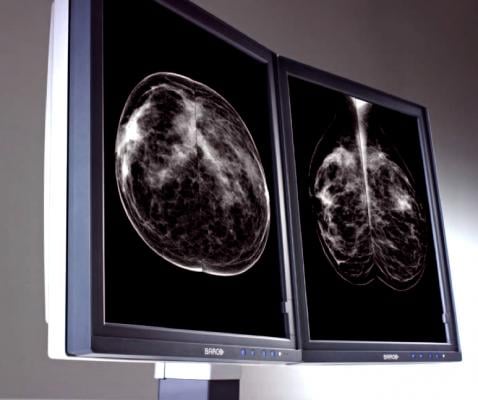
April 26, 2016 — A new study from Elizabeth A. Rafferty, M.D., formerly of Massachusetts General Hospital, and colleagues evaluated the screening performance of digital mammography combined with tomosynthesis compared with digital mammography alone for women with varying levels of breast density. The study appears in the April 26 issue of JAMA.
Breast density is associated with reduced mammographic sensitivity and specificity, and increased tumor size and worsened prognosis are associated with increased breast density. Currently, 24 states have laws mandating that women be notified of the implications of breast density, thereby encouraging discussions between patients and physicians regarding the need for supplemental screening. However, which, if any, additional testing should be recommended for women with dense breasts is not known.
This study included data from screening performance metrics from 13 U.S. institutions, which were reported for 12 months using digital mammography alone and from the date of introduction of tomosynthesis. Subgroups included the four breast density categories used for clinical reporting. Overall and invasive cancer detection rates and recall rate with and without tomosynthesis were analyzed in patients with both nondense and dense breasts.
Of 452,320 examinations, 278,906 were digital mammography alone and 173,414 digital mammography plus tomosynthesis; 2,157 cancers were diagnosed. The researchers found that the addition of tomosynthesis to digital mammography for screening was associated with a 50 percent increase in cancer detection rate and a 14 percent reduction in recall rate for women with both dense and nondense breast tissue.
“These combined gains were largest for women with heterogeneously dense breasts, potentially addressing limitations in cancer detection seen with digital mammography alone in this group, but were not significant in women with extremely dense breasts,” the authors reported.
They also noted that for women classified as having dense breast tissue, most have heterogeneously dense breasts, mandating caution in drawing conclusions regarding the performance of tomosynthesis for the small proportion of women with extremely dense breasts.
For more information: www.jama.jamanetwork.com

 October 19, 2026