Getty Images
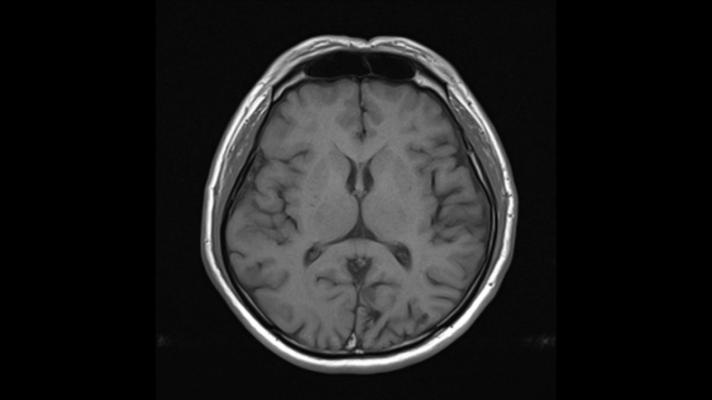
April 27, 2023 — Medical centers around the world could significantly reduce their carbon footprint and expenses by turning off MRIs and putting them in the lowest power mode instead of idling them when not in use, a new study in Radiology found.
Health care is responsible for up to 4.4% of global carbon emissions, and imaging contributes an outsized share due to its energy-intensive devices, especially MRI. A 2020 study found that three CTs and four MRIs used the same amount of energy per year as a town of 852 people, for example.
Though turning a machine off is better than idling, a substantial amount of MRI energy consumption occurs in “off” mode, which still draws a constant level of power for cooling. To address this, a new “power save” mode was developed that saves even more energy than the “off” mode by cycling cooling components on and off.
UC San Francisco researchers sought to compare energy consumption in the “idle,” “off” and “power save” modes. The researchers found that turning off MRIs overnight for 12 hours reduced their energy use by 25-33%, and that enabling the additional “power save” mode while the machine was off lowered power use by an additional 22-28%. Switching from idle directly to “power save” decreases energy use by 46-51%.
While just one company currently offers the “power save” mode while machines are off, it’s a design strategy worth replicating, noted the study, which will publish on April 25, 2023.
“The results of this study demonstrate the potential energy and cost savings any radiology practice can obtain by using these simple power-down methods,” said Sean Woolen, MD, first author on the study and assistant professor in UCSF’s Department of Radiology & Biomedical Imaging. “Our goal was to find ways for radiology departments worldwide to reduce their collective environmental footprint.”
Imaging has become increasingly central to medical decision-making, so it’s imperative to evaluate the design and operations of these machines in order to decarbonize health care, added Woolen.
Health Care Industry Would Save Millions
The study was made possible thanks to an academic-industry partnership comprising UCSF, Siemens Healthineers, Siemens USA, and Siemens Smart Infrastructure. Siemens provided technology and funding to equip MRI machines with power meters and install power monitoring software, and UCSF performed data collection and analysis.
The researchers equipped four outpatient MRI scanners from three different vendors with power meters and examined data over 39 days. They calculated energy output, costs (assuming a mean cost of $0.14 per kilowatt hour), and carbon use.
On an annual basis, switching a scanner from idle mode to off for 12 hours saved 12.3 to 21 megawatt hours (MWh) of electricity, where a megawatt is equal to 1,000 kilowatts of electricity used continuously for an hour. This translated to annual savings of $1,717 to $2,943, and 8.7 to 14.9 metric tons of C02-equivalent (MTCO2eq), which is a metric used to compare emissions of greenhouse gases based on their potential to contribute to global warming.
Switching from off to power save mode reduced energy use by an additional 8.8 to 11.4 MWh and saved $1,226 to $1,594 and 6.2 to 8.1 MTC02eq per year.
“If all outpatient MRIs in the U.S. implemented a power save mode instead of an off mode for 12 hours overnight, it would save U.S. health care between $8 and nearly $11 million dollars, as well as enough energy to power 6,889 homes a year in the U.S,” said Woolen.
“Often when we talk about how to decarbonize, solutions seem out of reach, but this initiative is proof that innovators everywhere can have impact,” added Barbara Humpton, CEO of Siemens USA. “The technology to decarbonize is here and ours is hard at work, helping industries like health care uncover ways to be more efficient and take concrete action to meet their carbon-reduction targets.”
The potential impact of adopting this technique as an industry standard would not impact patient care and would be an effective strategy to reduce cost and carbon emissions in health care, added Woolen.
“This research represents a milestone in our journey towards a carbon-neutral future with our customers, for whom this topic becomes more important with every passing day,” said David Pacitti, president of Siemens Medical Solutions USA, Inc. and head of the Americas, Siemens Healthineers. “Starting with MRI scanners, a very demanding technology when it comes to power consumption, we will build on this research to keep finding new ways to reduce our carbon emissions together.”
For more information: https://www.ucsfhealth.org/
Related MRI content:
MRI turns 50: Expert Brad Sutton Explains its History and Role in Understanding the Aging Brain
ACR Seeks Radiologic Community Input Regarding New MRI Safety Guidelines

 October 08, 2026