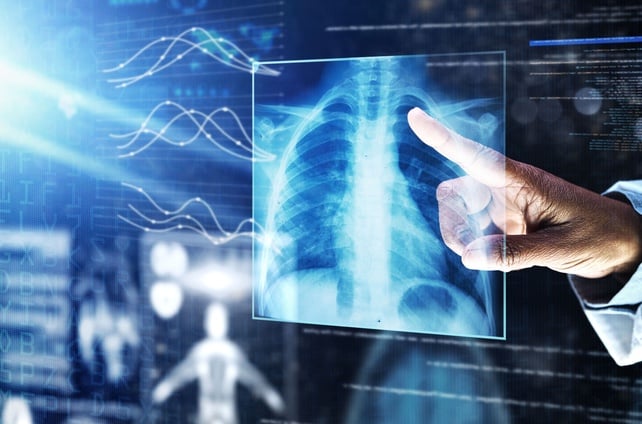
Photo: Getty Images
Radiologists spend much of their day moving between different systems: One application to review images. Another to access clinical information. Another to launch AI tools. Another to dictate findings and finalize radiology reports.
Each step serves a purpose. But when systems are disconnected, the burden falls on the radiologist to pull information together, navigate multiple applications and manage the handoffs between them. That cognitive burden adds pressure to teams already managing rising imaging volumes, workforce shortages and increasingly complex cases.
For years, efforts to address these challenges focused on making individual tasks faster. Today, the broader opportunity is to connect and streamline the diagnostic workflow itself, bringing together imaging, interpretation, reporting, communication and follow-up.
The goal is a more coordinated diagnostic process, where information flows seamlessly, findings and recommendations are easier to communicate and track and radiologists can focus on the clinical decisions that matter most.
Connected Workflows
Artificial intelligence (AI) is already identifying subtle patterns in imaging studies, improving consistency of interpretation and surfacing findings that might otherwise be overlooked.
However, most clinical AI tools have been deployed as point solutions designed for specific problems. Over time, imaging organizations have accumulated numerous applications, all providing value on their own but operating separately from the broader workflow.
The result is a new form of complexity. Radiologists move between systems to review images, launch AI tools, compare prior studies, dictate findings and finalize reports. Measurements may be generated in one application, AI findings reviewed in another and reports finalized in a third. Information that should move naturally through the diagnostic process instead requires manual coordination.
As imaging volumes rise and workforce shortages persist, adding more tools alone is not the answer. The greater opportunity lies in bringing those tools together into one unified workflow and one of the clearest places to begin is reporting.
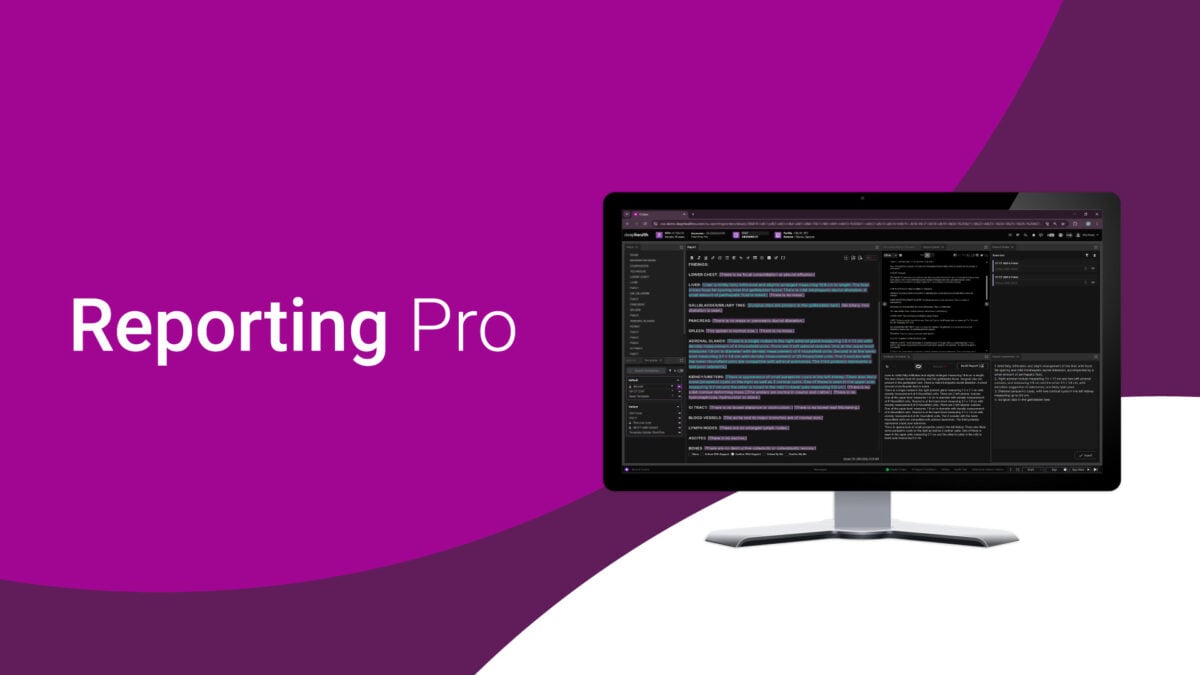
The Center of Workflow Transformation
Reporting is where diagnostic findings become clinical action. Yet despite its importance, reporting has remained surprisingly manual.
Radiologists commonly dictate free-text narratives into separate systems that require manual edits and have inconsistent terminology and variable report structures. Important findings can become difficult to track, and recommendations may not consistently translate into appropriate follow-up.
Radiologists also often begin with a largely blank document. Valuable information may already exist across imaging studies, prior reports, AI-generated findings and clinical records, but it frequently remains disconnected from the reporting workflow. As a result, clinicians spend time recreating information that already exists elsewhere in the diagnostic process.
Integrated reporting workflows are beginning to change that model.
Transforming Reporting Workflows
Modern reporting solutions help ensure that findings, measurements and clinical context flow directly into structured drafts during interpretation rather than being recreated manually throughout the reporting process. When integrated into an end-to-end radiology platform, this information moves seamlessly from interpretation into reporting, reducing repetitive documentation while improving consistency between image review and the final report.
AI can assist with lesion quantification, comparison to prior exams, follow-up recommendations and quality checks before sign-off. Structured reporting frameworks also canhelp standardize language and reduce variability between readers and sites.
Increasingly, AI-powered reporting is shifting radiologists from having to create reports entirely from scratch to reviewing and refining structured drafts informed by imaging findings, prior studies and clinical context.
This reflects a broader evolution in reporting technology. Many systems were designed before AI became part of routine clinical practice. As AI-generated findings become more common, reporting workflows must evolve from simply documenting interpretations to incorporating and managing machine-generated insights in a structured and clinically meaningful way.
The radiologist remains fully responsible for the final interpretation but spends less time assembling information and more time validating conclusions and recommendations. That distinction matters: A radiologist's greatest value lies in clinical judgment, not in the mechanics of creating a report.
High-quality structured reporting also improves communication with referring physicians, enables more consistent follow-up management and creates cleaner longitudinal data that can support analytics, quality improvement initiatives and population health programs. AI also can help move quality assurance closer to the point of report creation, allowing potential omissions, inconsistencies and compliance issues to be identified before reports are finalized rather than after the fact. This can improve report quality while reducing the need for downstream review and correction.
Reporting then becomes an active part of the diagnostic workflow, not simply its final step.
What Integration Makes Possible
The greatest gains from AI do not come from a single algorithm operating in isolation. They emerge when imaging, workflow orchestration, clinical AI, reporting and follow-up management function as one system.
AI-powered worklists prioritize urgent cases and balance workloads across radiologists. Integrated clinical AI supports detection, quantification and characterization across imaging modalities. Findings then flow directly into reporting workflows, reducing manual documentation burdens while improving consistency and quality.
Together, these workflow improvements reduce administrative burden, improve standardization and help radiologists spend more time on clinical decision-making rather than operational tasks.
Beyond the Radiology Reading Room
Structured reporting and integrated workflows enable organizations to track recommendations, monitor adherence to follow-up pathways, analyze outcomes and identify operational inefficiencies across the imaging enterprise. What was once a series of siloed steps becomes a more measurable and coordinated process.
The benefits span a range of clinical applications. In thyroid imaging, AI-assisted workflows are reducing scan times and improving operational throughput. In breast cancer screening, integrating AI directly into clinical workflows helps scale screening programs and has been shown to improve cancer detection rates.
By connecting these elements across the care pathway, radiology is better positioned to support earlier intervention, consistent follow-up, and coordinated patient care.
Driving Transformation
Healthcare workflows are variable and deeply human. Radiologists manage interruptions, shifting priorities, complex cases and evolving clinical information in real time. Systems designed without close clinical input often fail to fit real-world practice.
Successful transformation therefore requires more than adding AI tools. It requires technology designed around how radiologists actually work. The most successful implementations fit naturally into how studies are interpreted, communicated, and managed, often enhancing existing workflows, rather than forcing radiologists to abandon familiar reporting practices, templates or processes.
Organizations making the greatest progress recognize that success depends on more than algorithm performance. It depends on usability, workflow integration, interoperability and ultimately whether clinicians choose to adopt the technology.
A New Standard
The ultimate impact of workflow transformation is a shift in how radiology contributes to patient care.
When imaging workflows are connected and AI-enabled, important findings can be identified earlier. Recommendations can be communicated more consistently. Follow-up can be tracked more effectively. Care teams can make decisions with greater confidence and visibility.
The future of radiology will not be defined by standalone AI applications. It will be defined by integrated workflows that bring imaging, reporting, communication and clinical decision-making together.
None of this eliminates the radiologist. It empowers them in the way their training intended: as clinical decision-makers, not transcription engines. The cognitive work of pattern recognition, clinical correlation, differential reasoning, and recommendations remains central, but it no longer has to compete with the mechanics of producing a document.
The impact extends beyond helping radiologists read faster. The aim is a coordinated diagnostic workflow where important findings are identified, communicated, tracked and acted upon with greater consistency. That is how workflow transformation translates into better experiences for clinicians, care teams, and patients.
Madhu Jahagirdar is Business and Product Leader, Enterprise Imaging at DeepHealth in Sommerville, Massachusetts.

 October 08, 2026