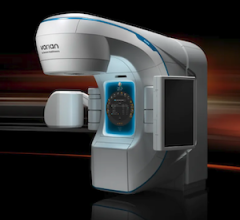
October 25, 2020 —Philips, a global leader in health technology, will showcase its latest advances in radiation oncology at the American Society for Radiation Oncology (ASTRO) annual meeting (October 24-28). During the virtual event, Philips will showcase its comprehensive portfolio of integrated radiation oncology systems and artificial intelligence (AI)‐powered software that helps radiation oncologists manage complexity and boost efficiencies to accelerate the time from patient referral to treatment.
As diagnostic and treatment workloads expand in both volume and complexity, radiation therapy departments are under mounting pressure to provide accurate treatment, while minimizing wait times for patients. Today, the radiation oncology planning process can be labor-intensive, with frequent handovers, long wait times and lags in data transfers between systems. By optimizing workflows, standardizing processes, and providing easy access to relevant patient information, Philips supports care teams by integrating clinical workflows, reducing wait times and increasing confidence in decision-making.
“Healthcare providers are rethinking the way they organize care in order to support a streamlined, end-to-end exchange of data, which can help them achieve a faster workflow, address capability gaps and reduce costs,” said Ardie Ermers, Vice President and General Manager Radiation Oncology at Philips. “With our broad portfolio of oncology technologies and solutions, Philips is in a unique position to help providers across the end-to-end patient pathway, optimizing workflows and generating insights from integrated diagnostics, aiming for clear care pathways and predictable outcomes for every patient.”
An integrated solution supported by consultancy services
IntelliSpace Radiation Oncology [1] enables radiotherapy departments to achieve operational excellence and accelerate the time from referral of the patient to the start of their treatment. By integrating the analytics and on-site change management features of Philips’ Practice Management solution [1], radiotherapy departments can identify and act on data-driven insights to address performance gaps, monitor progress and drive sustainable change.
The South West Wales Cancer Centre (SWWCC) in the UK is among the first partner sites that have deployed the solution. “This new intelligent patient management orchestrator helps our patients by improving their experience by decreasing their time to treatment and it will help us as clinicians to consistently treat every patient to the highest quality levels,” said Dr. Russell Banner, Clinical Oncologist, and Radiotherapy Lead at SWWCC. “Our 14-step breast pathway had a referral-to-first treatment interval of 32 days initially. With full implementation of IntelliSpace Radiation Oncology and the Practice Management consultants, we think it is achievable to bring this down to just 14 days.”
Advanced Imaging and treatment planning tools
At ASTRO and beyond on its virtual radiation oncology experience website, Philips will present its dedicated radiation oncology line-up, including the Big Bore RT scanning and simulation platform (Big Bore RT) and the comprehensive MR simulation platform (Ingenia MR-RT).
Philips continues to advance its leading MR-only radiotherapy portfolio, receiving 510(k) clearance from the U.S. Food and Drug Administration (FDA) for its AI-based MRCAT Brain application earlier this year. MRCAT reduces the organization and coordination of scans involved in MR-CT registration, saving the patient from undergoing another imaging procedure. MRCAT scans are now accelerated by Compressed Sense, a technology that speeds up scans by up to 50% [2], further helping to improve patient comfort.
Advanced imaging capabilities tailored for MR in Radiotherapy from Philips being highlighted for ASTRO include functional imaging using DWI XD TSE with reduced distortion [3], metal artifact reduction with OMAR XD, and motion management with 3D Vane XD, which supports imaging of the abdomen without the need for the patient to hold their breath.
As the company further consolidates its radiation oncology IT platform, Philips is also showcasing its next generation of personalized IMRT and VMAT Therapy Planning System (Pinnacle Evolution) which improves the quality, consistency and efficiency of the therapy planning process.
End-to-end oncology care
With its broad portfolio of oncology-related technologies and solutions that span the end-to-end patient care-path, Philips is in a unique position to help oncology care providers to connect the disparate pathway processes and workflows to improve the efficiency, robustness and quality of oncology care. More information on Philips’ oncology portfolio is available here.
[1] Not available for sale in all markets.
[2] Compared to Philips scans without Compressed SENSE.
[3] Compared to EPI diffusion DWI.
For more information: usa.philips.com
 October 19, 2026