June 29, 2016 — Hodgkin lymphoma patients can be spared the serious side effects of chemotherapy thanks to high-tech scans that can predict the outcome of treatment, according to a recent study in the New England Journal of Medicine. The study was led by Prof. Peter Johnson, M.D., professor of medical oncology at the University of Southampton.
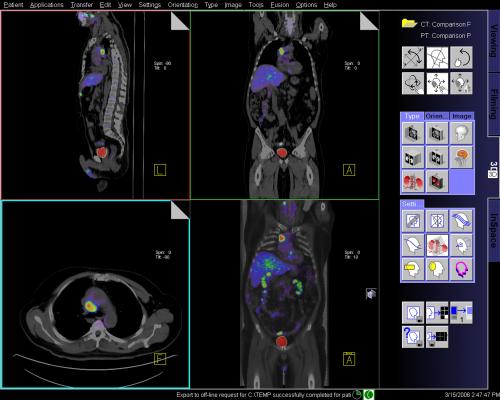
Doctors funded by Cancer Research UK and international partners in Europe and Australasia used positron emission tomography (PET) to scan more than 1,200 patients with advanced Hodgkin lymphoma after they had been given two cycles of standard chemotherapy.
Those who had a clear PET scan were split into two groups – one group continued with chemotherapy including the drug bleomycin and the other had chemotherapy without the drug.
They found that patients who stopped having bleomycin had the same survival rates as those who continued it. But, importantly, they were spared side effects.
Patients on the trial who did not have a clear PET scan after two rounds of chemotherapy, suggesting they had a more resistant form of the disease, were given more intense chemotherapy treatment.
Bleomycin has been an important drug to treat Hodgkin lymphoma for 30 years, but it has a potential risk of severe effects on the lungs, with the risk of scarring, even years later, that can lead to serious breathing problems.
Due to these risks the researchers wanted to explore the potential of adapting treatment by stopping bleomycin for patients with a good outlook and escalating treatment only for those at highest risk of the treatment not working.
Johnson, Cancer Research UK’s chief clinician based at the University of Southampton who led the study, said: “The good news is that the majority of people diagnosed with Hodgkin lymphoma can be cured – in this trial more than 95 percent of patients are alive after three years. But we worry about the long-term side effects from the treatments we use. As we’ve done in this trial, personalizing treatment based on how well it works is a major development for patients with Hodgkin lymphoma, and sets a new standard of care.
“Knowing which patients have a more difficult-to-treat form of the disease means we can select those who need stronger chemotherapy, while sparing everyone else the severe side effects such as infertility. This approach, along with a reduction in the need for radiotherapy, should substantially reduce damage to healthy tissues and the risk of second cancers caused by treatments.”
Sally Barrington, clinical lead of the UK National Cancer Research Institute PET lab at Guy’s and St Thomas NHS Foundation Trust, London said: “We have made a big investment in developing and using PET scans to select the best treatments for our patients in the U.K., and this trial conducted in seven different countries is a great example of how we can work together to help patients have healthier lives beyond cancer.”
The trial was run from the Cancer Research UK and UCL Cancer Trials Centre.
For more information: www.nejm.org

 October 19, 2026