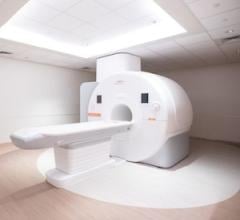
November 21, 2023 — A newly developed artificial intelligence (AI) system that analyzes specialized MRIs of the brain accurately diagnosed children between the ages of 24 and 48 months with autism at a 98.5% accuracy rate, according to research being presented next week at the annual meeting of the Radiological Society of North America (RSNA).
Mohamed Khudri, B.Sc., a visiting research scholar at the University of Louisville in Kentucky, was part of a multi-disciplinary team that developed the three-stage system to analyze and classify diffusion tensor MRI (DT-MRI) of the brain. DT-MRI is a special technique that detects how water travels along white matter tracts in the brain.
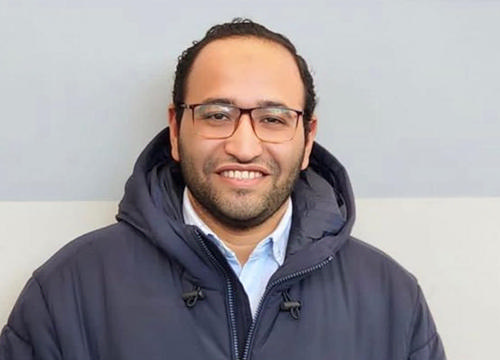
Mohamed Khudri, B.Sc.
"Our algorithm is trained to identify areas of deviation to diagnose whether someone is autistic or neurotypical," Khudri said.
The AI system involves isolating brain tissue images from the DT-MRI scans and extracting imaging markers that indicate the level of connectivity between brain regions. A machine learning algorithm compares the marker patterns in the brains of children with autism to those of the normally developed brains.
"Autism is primarily a disease of improper connections within the brain," said co-author Gregory N. Barnes, M.D., Ph.D., professor of neurology and director of the Norton Children's Autism Center in Louisville. "DT-MRI captures these abnormal connections that lead to the symptoms that children with autism often have, such as impaired social communication and repetitive behaviors."
The researchers applied their methodology to the DT-MRI brain scans of 226 children between the ages of 24 and 48 months from the Autism Brain Imaging Data Exchange-II. The dataset included scans of 126 children affected by autism and 100 normally developing children. The technology demonstrated 97% sensitivity, 98% specificity, and an overall accuracy of 98.5% in identifying the children with autism.
"Our approach is a novel advancement that enables the early detection of autism in infants under two years of age," Khudri said. "We believe that therapeutic intervention before the age of three can lead to better outcomes, including the potential for individuals with autism to achieve greater independence and higher IQs."
According to the CDC's 2023 Community Report on Autism, fewer than half of children with autism spectrum disorder received a developmental evaluation by three years of age, and 30% of children who met the criteria for autism spectrum disorder did not receive a formal diagnosis by 8 years of age.
"The idea behind early intervention is to take advantage of brain plasticity, or the ability of the brain to normalize function with therapy," Dr. Barnes said.
The researchers said infants and young children with autism receive a delayed diagnosis for several reasons, including a lack of bandwidth at testing centers. Khudri said their AI system could facilitate precise autism management while reducing the time and costs associated with assessment and treatment.
"Imaging offers the promise of quickly detecting autism in an objective fashion," Dr. Barnes said. "We envision an autism assessment that begins with DT-MRI followed by an abbreviated session with a psychologist to confirm the results and guide parents on next steps. This approach could reduce the psychologists' workload by up to 30%."
The AI system produces a report detailing which neural pathways are affected, the anticipated impact on brain functionality, and a severity grade that can be used to guide early therapeutic intervention.
The researchers are working toward commercializing and obtaining FDA clearance for their AI software.
Additional co-authors are Mostafa Abdelrahim, B.Sc., Yaser El-Nakieb, Ph.D., Mohamed Ali, Ph.D., Ahmed S. Shalaby, Ph.D., A. Gebreil, M.D., Ali Mahmoud, Ph.D., Ahmed Elnakib, Ph.D., Andrew Switala, Sohail Contractor, M.D., and Ayman S. El-Baz, Ph.D.
For more information: www.rsna.org
 October 19, 2026