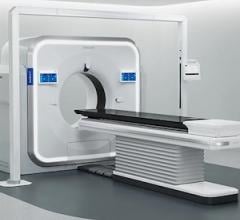
September 21, 2023 — Scientists in Moscow have successfully engineered a prototype detector for X-ray and PET/CT mаchines, using the perovskite-based photoconverters. These materials possess the unique ability to transmute radiation into an electric signal, yielding precise and illuminating images.
With their ability to produce clear and detailed visuals, they facilitate the acquisition of informative medical images. This technological advancement promises heightened accessibility to medical research. Additionally, the enhanced sensitivity of these novel detectors holds the promise of reducing radiation exposure to patients. The development is currently undergoing rigorous testing.
Yuri Vasilev, CEO of the Center for Diagnostics and Telemedicine, disclosed, "Presently, Russia lacks its own detector production for X-ray equipment, with components being imported from different countries. So, our Center, in collaboration with the MISIS University of Science and Technology, has unveiled a cutting-edge detector prototype. An optoelectronic converter based on innovative perovskite technology serves as the foundation for converting X-ray radiation into an electronic signal. This development is presently undergoing testing, with the prospect of establishing local production for such detectors. They notably outperform their existing analog counterparts in various aspects, thus facilitating wider accessibility to radiation examinations."
The development is already undergoing intensive testing procedures, and future plans entail the establishment the detector production, marked by their remarkable superiority over existing analogs. The implementation of the detectors will make X-ray scans more accessible to all.
A researcher at the Center for Diagnostics and Telemedicine, as well as an engineer at the Solar Energy Laboratory at NUST MISIS, said, "Our endeavors center around pioneering a new generation detector architecture on basis of perovskite. Perovskites represent a modern type of semiconductor materials that exhibit heightened sensitivity to ionizing radiation, commonly utilized in radiology. This heightened sensitivity is poised to significantly limit radiation exposure to patients. Remarkably, our studies have demonstrated that perovskite crystals can endure substantial doses of radiation without compromising their optical properties, ensuring a prolonged operational lifespan. We remain sanguine that perovskites will serve as the base of post-silicon electronics."
Furthermore, these detectors hold the potential for utilizations in recording X-rays within orbital vehicles traversing the expanse of space, specialized devices for monitoring the condition of metal structures, X-ray baggage inspection and medical machines. A prototype of a perovskite detector has already been made, seamlessly integrated into the electronic circuitry of a serial device, and is undergoing rigorous trials.
The scientific community in Moscow is actively delving into the multifaceted properties of perovskites, anticipating that this research will culminate in the localized production of critical components for heavyweight medical equipment. In the foreseeable future, these innovative devices promise to lower the cost of medical equipment and elevate the quality of healthcare services for patients across the nation. A comprehensive scientific research has been published in the journal Nano Letters.
For more information: https://telemedai.ru/

 October 08, 2026