December 14, 2017 — Optellum, a high-tech startup in lung cancer and machine learning, and Mirada Medical recently announced a partnership to accelerate the deployment of deep learning technology to market. This collaboration combines the deep technology and clinical expertise of Optellum with the software platforms and rapid development know-how of Mirada. They have partnered to address what they call a huge and growing problem in lung cancer diagnosis: the management of patients with indeterminate pulmonary nodules.
A scientific presentation arising from the partnership working in collaboration with investigators from Oxford University Hospitals, entitled “Assessment of CT Texture Analysis as a Tool for Lung Nodule Follow-Up” (SSC03-02), was presented at the 2017 Radiological Society of North America (RSNA) Annual Meeting, Nov. 26-Dec. 1 in Chicago.
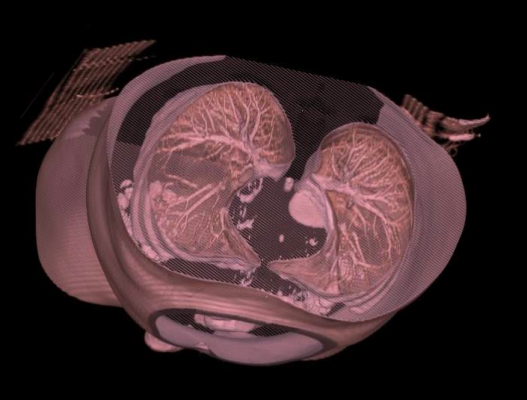
Early detection of lung cancer by a chest computed tomography (CT) scan can dramatically improve survival rates. Millions of chest CT scans are performed for a variety of reasons, ranging from screening for lung cancer to scanning for suspected cardiac disease or even following trauma. Such scans frequently identify pulmonary nodules, small opacities in the lung. Up to 30 percent of all patients scanned have such small nodules, but the vast majority are harmless. Unfortunately, radiologists frequently struggle to determine if a nodule is cancerous, leading to an indeterminate diagnosis which requires up to two-year follow-up imaging to monitor growth. Moreover, additional biopsies and surgeries are often performed to investigate nodules that ultimately turn out to be benign. Millions of such unnecessary follow-up scans and procedures increase patient anxiety, carry a risk of complications and present a huge and growing burden on healthcare system resources.
The collaboration has developed what it calls the world’s first imaging artificial intelligence (AI)-based decision support software to improve patient management and reduce unnecessary follow-up procedures. The software provides expert-level clinical decision support that can improve a doctor’s ability to correctly diagnose lung nodules. The software, utilizing state-of-the-art deep learning, provides an objective risk score of nodule malignancy learned from a database of tens of thousands of CTs with known ground-truth diagnoses. The output enables clinicians to confidently stratify lung nodule patients earlier, potentially on the basis of only one or two scans.
The team showcased their work at the Mirada Medical booth at RSNA 2017.
For more information: www.mirada-medical.com
 October 07, 2026