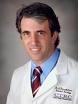
Niko Papanikolaou, Ph.D., is the director of the medical dosimetry training program.
October 16, 2009 - The UT Health Science Center at San Antonio’s one-year training certificate in medical dosimetry, offered through the School of Medicine’s Department of Radiation Oncology at the Cancer Therapy and Research Center (CTRC), has became only the eighth program in the country to receive accreditation from the Joint Review Committee on Education in Radiologic Technology, the field’s major accrediting body.
“Accreditation makes us more competitive in recruiting high-caliber students,” noted the program’s education director, Alonso Gutierrez, Ph.D., assistant professor of radiation oncology. “Good students refer other good students to us.” He added that the only other accredited program in Texas is at the U.T. M.D. Anderson Cancer Center in Houston.
Dosimetry is a quickly developing field that requires extensive knowledge of new technologies, such as computed tomography (CT) scans, magnetic resonance imaging (MRI), positron emission tomography (PET) scans and ultrasound. "As imaging modalities change, our strategy for treatment planning has to evolve,” said Diana Baacke, the program’s clinical director and manager.
"The increasing complexity of treatment planning and radiation delivery requires a special skill set from the medical dosimetrist that only academic programs, such as CTRC’s, with the depth and breadth of resources can offer," said Niko Papanikolaou, Ph.D., director of the medical dosimetry training program. "This accreditation ultimately will improve the quality of care we provide to cancer patients." Papanikolaou is professor and chief of the Division of Medical Physics in the Department of Radiation Oncology.
The one-year program accepts applicants who have earned either a bachelor’s degree or an associate’s degree in radiation therapy or a bachelor’s degree in a physical science. All applicants must have taken college algebra, college physics, human gross anatomy and/or physiology and medical terminology. The curriculum requires 400 hours of formal classroom teaching and 1,300 hours of clinical training.
Routinely, 70 applications arrive for only four or five slots each year in this extremely competitive field. This year the program accepted its largest class to date — six students from Texas and other states who entered the program in August. One of them, Titus Kyenzeh, is a native of Kenya who arrived in the U.S. four years ago and heard about the dosimetry program from a friend. After working 17 years in the computer industry, he is now pursuing his dream of working in medicine.
“I was excited to discover that I get to deal with patients over a long time,” he noted. “Typically, a person receives daily doses of radiation over a period of up to six weeks and, therefore, you see the patients every day. You become like a family. It’s very gratifying to be part of team that is saving a life or prolonging the life of someone with cancer.”
For more information: www.ctrc.net and http://www.ctrc.net/ctrc_2_2_radonc.cfm?db_content=radiationdosimetrysc…
 October 07, 2026