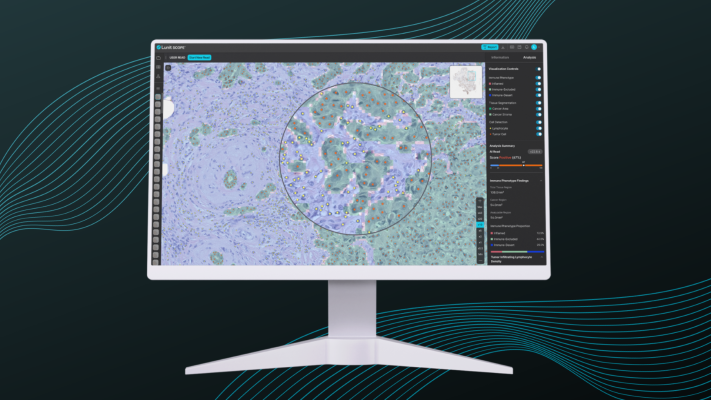
Lunit's AI-powered analyzer for quantitative immune phenotyping from H&E, "Lunit SCOPE IO"
April 8, 2024 — Lunit, a leading provider of AI-powered solutions for cancer diagnostics and therapeutics, today announced the publication of a new study featuring Lunit SCOPE IO, Lunit's AI-powered analyzer for quantitative immune phenotyping from H&E. The study was recently published in Clinical Cancer Research (CCR), an international journal by the American Association for Cancer Research (AACR).
Led by researchers of Yonsei Cancer Hospital Head and Neck Cancer Center Department of Oncology (Prof. Hye Ryun Kim, Min Hee Hong, Chang Gon Kim, Hyun Wook Kim), Department of Otolaryngology (Prof. Yoon Woo Koh, Da hee Kim), and Department of Pathology (Prof. Sun Och Yoon) from Yonsei University College of Medicine, Seoul, Korea, the study focuses on the efficacy of neoadjuvant immunotherapy for head and neck squamous cell carcinoma (HNSCC) patients. This investigation addresses the current lack of exploration into the clinical implications of neoadjuvant immunotherapy in HNSCC patients with resectable tumors, utilizing Lunit SCOPE IO to examine the changes in tumor microenvironment when treated with durvalumab and tremelimumab.
In this phase II randomized clinical trial, 48 HNSCC patients were enrolled, with 24 receiving preoperative durvalumab and 24 receiving a combination of durvalumab plus tremelimumab before surgical resection. Both treatment groups demonstrated favorable safety profiles, affirming the feasibility of preoperative immunotherapy in resectable HNSCC without causing delays in surgery.
The study findings revealed that patients treated with the combination of durvalumab and tremelimumab exhibited significantly better 4-year distant recurrence-free survival (DRFS) compared to those receiving durvalumab monotherapy (91.1% vs. 53.3%), suggesting the potential benefits of combining durvalumab with tremelimumab in improving patient outcomes. Similarly, the 4-year overall survival (OS) was notably higher in patients receiving combination therapy (83.1% vs. 67.5%). Additionally, Lunit SCOPE IO's AI analysis backed the remarkable shift in the tumor microenvironment towards an inflamed phenotype, characterized by increased immune activity within the tumor area, in patients receiving combination therapy. This was in contrast to those treated with durvalumab monotherapy or cytotoxic chemotherapy.
Moreover, analysis of circulating immune cells revealed that patients receiving both durvalumab and tremelimumab showed increased activity and proliferation of certain immune cells, indicating a unique immune response induced by the combination therapy compared to durvalumab alone.
“Through this prospective clinical study, we have confirmed the clinical utility of preoperative immunotherapy for treating locally advanced head and neck cancer,” said Professor Kim Hye Ryun, head of the research. “This discovery has the potential to revolutionize future treatment paradigms and significantly enhance patient outcomes. We are committed to offering this promising treatment method.”
"In this study, Lunit SCOPE IO provides deeper insights into the tumor microenvironment and immune response, empowering healthcare professionals with invaluable information to make more informed treatment decisions. Additionally, the study addresses a longstanding gap in our understanding of the clinical effectiveness of neoadjuvant immunotherapy in HNSCC, which is the seventh most common cancer worldwide," said Brandon Suh, CEO of Lunit. "Moving forward, Lunit will continue to innovate and enhance Lunit SCOPE's capabilities to further improve patient outcomes and revolutionize personalized cancer treatment through AI."
This study underscores the importance of leveraging AI technology, such as Lunit SCOPE IO, in understanding the complex interplay between the immune system and cancer, ultimately leading to more effective treatment approaches and improved patient outcomes.
For more information: www.lunit.io

 October 07, 2026