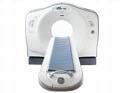
December 9, 2008 - GE Healthcare’s low-dose Discovery CT750 HD, the Discovery MR750 and the LOGIQ E9 became commercially available today.
The Discovery CT750 HD, the world's first high-definition computed tomography (CT) provides an improved image with less radiation dose per scan for patients. This new technology offers up to 83 percent less dose on cardiac scans and up to 50 percent less dose across the rest of the body.
The new scanner is designed to give doctors greater diagnostic confidence through "HD-quality" imaging with reportedly 33 percent greater clarity and allows physicians to see small vessels from head to toe - as thin as a human hair. The CT750 also is engineered to provide clinicians with minimized image distortion, the ability to accurately analyze masses and lesions regardless of their location, and the capability to isolate problems for precise treatment planning.
GE reported that Discovery MR750, one of the fastest magnetic resonance imaging (MRI) scanners, is also available. The MR750 is said to have greater accuracy and image clarity compared to previous GE scanners. The improved speed of the technology aims to help radiologists obtain complete information within minutes, supporting informed decision making for treatment. The MR750 allows for up to five times the imaging performance over previous generations, and 60 percent greater coverage and resolution. These improvements offer the freedom for advanced application development, including: a routine liver exam in reportedly 15 minutes versus the typical 40-minute exam and a full breast exam in only two sequences as opposed to four or five sequences previously.
Also available is the LOGIQ E9, an ultrasound platform capable of fusing ultrasound images with images from other imaging technologies like CT and MR. With tools and capabilities called "Volume Navigation" and "Agile Ultrasound," the LOGIQ E9 improves workflow and diagnostic confidence for radiology and vascular applications.
Through Volume Navigation, the LOGIQ E9 incorporates two key components: fusion to combine the advantages of real-time ultrasound imaging with the high spatial and contrast resolution of CT, MR or PET; and to track and mark a patient’s anatomy during the ultrasound exam. This new GE architecture, called Agile Ultrasound, replaces old assumptions of conventional ultrasound systems with new, modular mathematical models that provide more accurate measurements of how sound interacts with different body tissue types. The result of the LOGIQ E9 architecture is said to be a more life-like image without a lot of manual adjustments to view specific anatomy on a variety of patients - from children to obese adults.
For more information: www.gehealthcare.com

 October 07, 2026