December 5, 2018 — GE Healthcare recently announced new applications and smart devices built on Edison – a platform that helps accelerate the development and adoption of artificial intelligence (AI) technology and empower providers to deliver faster, more precise care. Edison is part of GE Healthcare’s $1 billion and growing Digital portfolio and will serve as a “digital thread” for its existing AI partnerships and products. Clinical partners will use Edison to develop algorithms, and technology partners will work with GE Healthcare to bring the latest advancements in data processing to Edison applications and smart devices.
The healthcare AI market will reach $6.6 billion in 2021, and 39 percent of healthcare provider executives say that they’re investing in AI, machine learning and predictive analytics, according to GE. Appreciating the technology’s potential, GE Healthcare presented the following Edison applications and Edison-powered devices at the 104th annual meeting of the Radiological Society of North America (RSNA), Nov. 25-30, 2019, in Chicago.
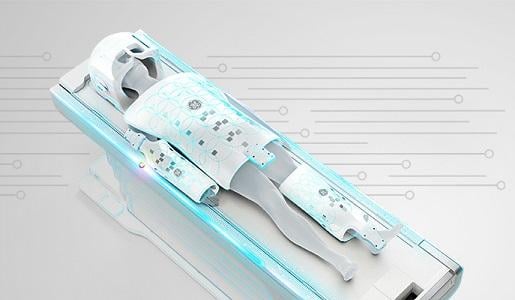
- AIRx is an AI-based, automated workflow tool for magnetic resonance imaging (MRI) brain scanning designed to increase consistency and productivity. AIRx is designed to provide automated slice prescriptions to help reduce previously redundant, manual steps. AIRx is intended to produce images that have less variability between technologists and between scans, to help lower the chances for a patient to be recalled due to incorrect slice placement. An increase in consistency is particularly important when doing longitudinal assessments for diseases like Alzheimer’s and multiple sclerosis. AIRx features a pre-trained neural network model that leverages deep learning algorithms and anatomy recognition based on a database of over 36,000 images sourced from clinical studies and reference sites. The application is U.S. Food and Drug Administration (FDA) 510(k) pending and is not available for sale.
- Critical Care Suite on the Optima XR240amx digital radiography (DR) system is designed to identify cases with the critical condition of pneumothorax at the point-of-care to enable prioritization of image review. Critical Care Suite will employ a suite of AI algorithms, such as pneumothorax detection, designed to identify this potentially life- threatening condition in chest X-rays with high accuracy (>0.95 AUC). The AI algorithms are hosted on the mobile X-ray system – a first of its kind AI-embedded imaging device, according to GE – designed to share the output through an onscreen notification. When a pneumothorax condition is identified, the point-of-care notification alerts the clinical team, enabling prioritization of image review. The AI results are sent to the picture archiving and communication system (PACS) for review of the critical findings by a radiologist. The application is U.S. Food and Drug Administration (FDA) 510(k) pending and is not available for sale.
- CT Smart Subscription provides continuous access to the latest computed tomography (CT) software, extending the lifecycle of the device and making it more valuable over time. Applications can be selected based on a hospital or health system’s unique needs, with options ranging from intracranial hemorrhage and stroke detection to routine dose reduction and optimization to cardiac function assessment.
- Automated Lesion Segmentation on Logiq E10 increases productivity through automation. Ultrasound users experience significant ergonomic challenges due to repetitive exam steps. Automated Lesion Segmentation helps eliminate the need for the user to measure lesions manually, by segmenting an identified breast, thyroid or liver lesion and automatically providing a trace of the lesion and corresponding area. This feature also helps ensure consistency among different users, or even the same user, for documentation and follow-ups.
“There's a lot of hidden meaning in the deep data, but it takes a significant sophistication to extract the value,” said Rachael Callcut, M.D., a partner in the development of Critical Care Suite, associate professor of surgery at UCSF, a surgeon at UCSF Health and director of data science for the Center for Digital Health Innovation. “AI gives us an opportunity to see patterns that we don't see and change the way we care for patients, which can ultimately improve outcomes.”
Edison also offers a service that allows data to be traced during the development of an algorithm. This tool could boost clinicians’ trust in the technology and simplify a developer’s ability to create compliant AI applications. The AI capabilities are just one of the more than 100 Edison services available to GE Healthcare and ultimately third-party developers. Other services include security, visualization, utilization management and auto-protocoling.
For hospital executives, the Edison platform allows GE Healthcare to add continuous value to its millions of installed medical devices with smart workflows. Clinicians who use Edison applications, which were built using Edison services, can be assured that algorithms were developed with and validated by an ecosystem of clinical and technology partners. Developers who use Edison will benefit from a common integrated platform that brings together globally diverse data from across modalities, vendors and care settings.
Edison applications can be deployed on medical devices, via the cloud or on the edge (computing technology that sits close to the physical device).
Related GE Edison Platform Content:
VIDEO: Artificial Intelligence - GE Builds AI Applications on Edison Platform
GE Healthcare Unveils New Applications and Smart Devices Built on Edison Platform
VIDEO: itnTV Conversations — What is Edison?

 October 07, 2026