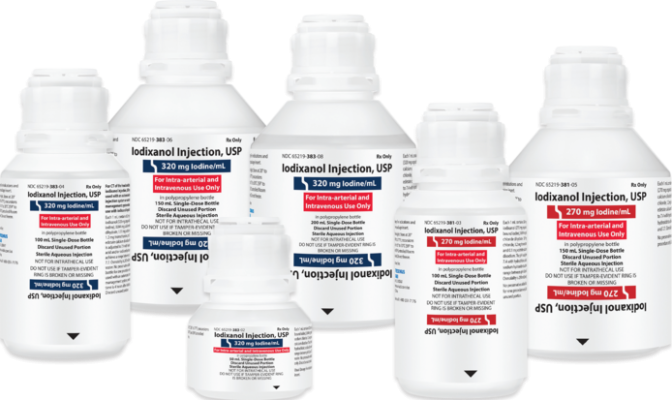
July 18, 2022 — Fresenius Kabi announced today it will introduce a portfolio of generic contrast media agents in the United States, starting immediately with the launch of Iodixanol Injection, USP, a product the U.S. Food and Drug Administration (FDA) lists as being in shortage nationwide.
Iodixanol Injection, USP is the first U.S. FDA-approved generic iso-osmolar, dimeric iodinated contrast media agent, which is used during diagnostic x-ray-based imaging such as computed tomography (CT) scans.
Iodixanol and other contrast media agents are in shortage across the U.S. due to COVID-19 related supply-chain disruptions. Fresenius Kabi is committed to preventing and mitigating shortages by working closely with its customers, suppliers, and the FDA, and by making long-term investments that support the supply chain of care in the United States.
Contrast media agents are essential to patient diagnosis. An estimated 50 million examinations with contrast agents are performed each year in the United States, and as many as half the nation’s hospitals have been affected by this shortage.1
Iodixanol Injection, USP is bioequivalent and therapeutically equivalent to Visipaque, rendering it fully substitutable to the brand, and is the first generic iodinated contrast media agent available exclusively from Fresenius Kabi, a global health care company that specializes in medicines and technologies for infusion, transfusion, and clinical nutrition.
“Fresenius Kabi is pleased to help expand access to affordable, high-quality contrast media agents for the radiology community,” said John Ducker, president and CEO of Fresenius Kabi USA. “The approval and U.S. availability of Fresenius Kabi Iodixanol Injection, USP is expected to provide immediate relief to the current shortage. As a company committed to the purpose of ‘caring for life,’ we’re honored to help patients receive the timely care they need.”
Fresenius Kabi Iodixanol Injection, USP is an option for hospitals and clinics to use in the diagnosis of certain disorders of the brain, blood vessels, heart, kidneys, and other internal organs.2 It is free of preservatives and comes in a polymer bottle. The container closure is not made with natural rubber latex. Fresenius Kabi Iodixanol Injection, USP is currently available in six presentations for intra-arterial and intravenous procedures:
270 mg Iodine per mL:
- 100 mL polymer bottle
- 150 mL polymer bottle
320 mg Iodine per mL:
- 50 mL polymer bottle
- 100 mL polymer bottle
- 150 mL polymer bottle
- 200 mL polymer bottle
“The U.S. availability of Iodixanol Injection, USP is the first offering from our generic radiology portfolio,” said Lindsey Thomas, senior vice president of Pharmaceutical Marketing at Fresenius Kabi USA and the company’s representative on the End Drug Shortage Alliance Board of Directors. “We are doing everything we can to accelerate product availability to help our customers during this acute contrast media agent shortage, including air shipping product. We are also actively working to bring additional affordable contrast agents to U.S. clinicians to help ensure patient access to essential diagnostic imaging procedures.”
Indications and Usage
Iodixanol injection is a radiographic contrast agent indicated for the following:
Intra-arterial Procedures
Adults and pediatric patients 12 years of age and over
- Intra-arterial digital subtraction angiography (270 mg Iodine/mL and 320 mg Iodine/mL).
- Angiocardiography (left ventriculography and selective coronary arteriography), peripheral arteriography, visceral arteriography, and cerebral arteriography (320 mg Iodine/mL).
Pediatric patients less than 12 years of age
- Angiocardiography, cerebral arteriography, and visceral arteriography (320 mg Iodine/mL).
Intravenous Procedures
Adults and pediatric patients 12 years of age and over
- Computed tomography (CT) imaging head and body (270 mg Iodine/mL and 320 mg Iodine/mL).
- Excretory urography (270 mg Iodine/mL and 320 mg Iodine/mL).
- Peripheral venography (270 mg Iodine/mL).
- Coronary computed tomography angiography (CCTA) to assist diagnostic evaluation of patients with suspected coronary artery disease (320 mg Iodine/mL).
Pediatric patients less than 12 years of age
- CT imaging of the head and body (270 mg Iodine/mL).
- Excretory urography (270 mg Iodine/mL).
Important Safety Information
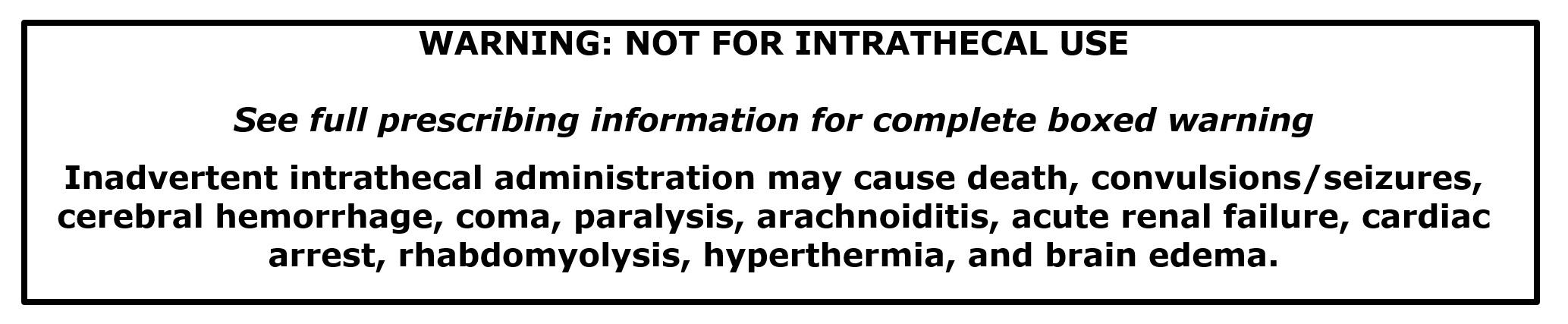
Iodixanol is contraindicated for intrathecal use.
- Hypersensitivity Reactions: Life-threatening or fatal reactions can occur. Always have emergency equipment and trained personnel available.
- Contrast-Induced Acute Kidney Injury: Acute injury including renal failure can occur. Minimize dose and maintain adequate hydration to minimize risk.
- Cardiovascular Adverse Reactions: Hemodynamic disturbances including shock and cardiac arrest may occur during or after administration.
- Thyroid Dysfunction in Pediatric Patients 0 to 3 Years of Age: Monitor these patients for thyroid function abnormalities and treat as clinically needed.
Adverse Events: Most common adverse reactions (incidence greater than 0.5%) in adult patients after iodixanol injection: Discomfort, warmth, pain; Cardiovascular: angina. Gastrointestinal: diarrhea, nausea, vomiting. Nervous System: agitation, anxiety, insomnia, nervousness, dizziness, headache, migraine, unusual skin sensations, sensory disturbance, fainting, sensation of spinning. Skin: itchy rash, severe itching, hives. Special Senses: Smell, taste, and vision alteration. Pediatric patients experienced similar adverse reactions.
To report SUSPECTED ADVERSE REACTIONS, contact Fresenius Kabi USA, LLC at 1-800-551-7176, option 5, or FDA at 1-800-FDA-1088 or www.fda.gov/medwatch.
- Lactation: A lactating woman may pump and discard breast milk for 10 hours after iodixanol administration.
- Geriatrics: Exercise caution in dose selection for elderly patients.
This Important Safety Information does not include all the information needed to use Iodixanol Injection, USP safely and effectively. Please see full prescribing information, including BOXED WARNING, for Iodixanol Injection, USP at www.fresenius-kabi.com/us.
To report SUSPECTED ADVERSE REACTIONS, contact Fresenius Kabi USA, LLC at 1-800-551-7176, option 5, or FDA at 1-800-FDA-1088 or www.fda.gov/medwatch.
For more information: www.fresenius-kabi.com/us
Related Content on Gadolinium Concerns
Global Contrast Media Shortage: Strategies for Conservation
AJR Publishes Best Practices for Iodinated Contrast Media Shortage
Voluntary Dismissal of Chuck Norris Gadolinium Case Involving Bracco
VIDEO: How Serious is MRI Gadolinium Retention in the Brain and Body? An interview with Max Wintermark, M.D.
VIDEO “Big Concerns Remain for MRI Gadolinium Contrast Safety at RSNA 2017,” An interview with Emanuel Kanal, M.D.
Radiology Has Failed to Properly Assess or Track MRI Gadolinium Contrast Safety
Recent Developments in Contrast Media
FDA Committee Votes to Expand Warning Labels on Gadolinium-Based Contrast Agents
European Medicines Agency Issues Update on Gadolinium Contrast Agents

 October 07, 2026