March 2, 2020 — As part of the U.S. Food and Drug Administration’s ongoing and aggressive commitment to address the coronavirus outbreak, the agency issued a new policy for certain laboratories seeking to develop diagnostic tests for coronavirus in order to achieve more rapid testing capacity in the U.S.
“We believe this policy strikes the right balance during this public health emergency,” said FDA Commissioner Stephen M. Hahn, M.D. “We will continue to help to ensure sound science prior to clinical testing and follow-up with the critical independent review from the FDA, while quickly expanding testing capabilities in the U.S. We are not changing our standards for issuing Emergency Use Authorizations. This action today reflects our public health commitment to addressing critical public health needs and rapidly responding and adapting to this dynamic and evolving situation.”
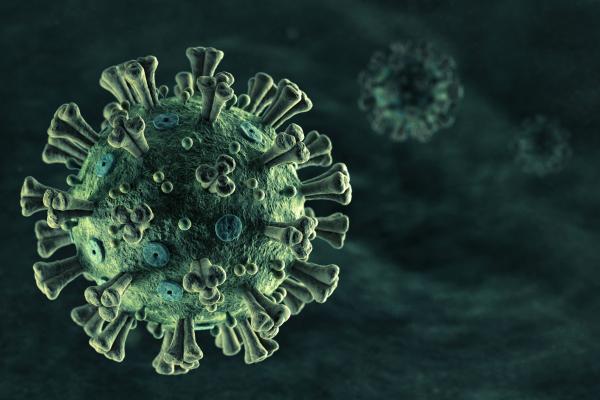
There is currently an outbreak of respiratory disease caused by a novel coronavirus that was first detected in Wuhan City, Hubei Province, China and which has now been detected in 50 locations internationally, including cases in the United States. The virus has been named “SARS-CoV2” and the disease it causes has been named “Coronavirus Disease 2019” (COVID-19). SARS-CoV-2 has demonstrated the capability to rapidly spread, leading to significant impact on health care systems and causing societal disruption. The potential public health threat posed by COVID-19 is high, both globally and to the U.S. To effectively respond to the COVID-19 outbreak, rapid detection of cases and contacts, appropriate clinical management and infection control, and implementation of community mitigation efforts are critical. This can best be achieved with wide availability of testing capabilities in health care settings, reference and commercial laboratories, and at the point of care.
The new policy is for certain laboratories that develop and begin to use validated COVID-19 diagnostics before the FDA has completed review of their Emergency Use Authorization (EUA) requests. The FDA can issue an EUA to permit the use, based on scientific data, of certain medical products that may be effective in diagnosing, treating or preventing a disease or condition when there is a determination, by the Secretary of Health and Human Services (HHS), that there is a public health emergency or a significant potential for a public health emergency that has a significant potential to affect national security or the health and security of U.S. citizens, and a declaration that circumstances exist justifying the medical products’ emergency use.
On Feb. 4, 2020, the Secretary of HHS determined that there is a public health emergency and that circumstances exist justifying the authorization of emergency use of in vitro diagnostics for detection and/or diagnosis of the COVID-19 outbreak. Rapid detection of COVID-19 cases in the U.S. requires wide availability of diagnostic testing to control the emergence of a rapidly spreading, severe illness. The FDA has authorized one EUA for COVID-19 that is in use by the U.S. Centers for Disease Control and Prevention (CDC) and some public health labs across the country.
The guidance issued today describes a policy enabling laboratories to immediately use tests they developed and validated in order to achieve more rapid testing capacity in the U.S.
“The global emergence of COVID-19 is concerning, and we appreciate the efforts of the FDA to help bring more testing capability to the U.S.,” said Nancy Messonnier, M.D., director of the CDC’s Center for the National Center for Immunization and Respiratory Diseases (NCIRD).
The immediately in effect guidance issued today describes the circumstances where the FDA does not intend to object to the use of these tests for clinical testing while the laboratories are pursuing an EUA with the FDA. Importantly, this policy only applies to laboratories that are certified to perform high-complexity testing consistent with requirements under Clinical Laboratory Improvement Amendments.
“We applaud the FDA’s approach to speed the path toward emergency use authorization for COVID-19 diagnostics. This step may reduce development costs, speed the process for availability at more testing sites, incentivize private development and, ultimately, help save lives,” said Rick Bright, Ph.D., director of the Biomedical Advanced Research and Development Authority (BARDA), part of the HHS Office of the Assistant Secretary for Preparedness and Response. “At BARDA, we are identifying industry partners to develop rapid diagnostics that can be used in commercial and hospital labs or even doctors’ offices so that medical professionals and their patients have the information they need to take action.”
The FDA guidance provides recommendations for test developers, including information regarding test validation, FDA notification and interim confirmatory clinical testing.
Following the completion of their test validation, laboratories should communicate with the FDA, via email, in order to notify the agency that the test has been validated. Laboratories should submit a completed EUA request within 15 business days of notification.
“Under this policy, we expect certain laboratories who develop validated tests for coronavirus would begin using them right away prior to FDA review,” said Jeff Shuren, M.D., J.D., director of the FDA’s Center for Devices and Radiological Health. “We believe this action will support laboratories across the country working on this urgent public health situation. We are dedicating all available resources to expediting the review of medical products, including diagnostics, to prevent the spread of this outbreak.”
The FDA, an agency within the U.S. Department of Health and Human Services, protects the public health by assuring the safety, effectiveness, and security of human and veterinary drugs, vaccines and other biological products for human use, and medical devices. The agency also is responsible for the safety and security of our nation’s food supply, cosmetics, dietary supplements, products that give off electronic radiation, and for regulating tobacco products.
For more information: www.fda.gov
Related Coronavirus Content:
CT Provides Best Diagnosis for Novel Coronavirus (COVID-19)
Emerging Technologies Proving Value in Chinese Coronavirus Fight
The Cardiac Implications of Novel Coronavirus
Radiologists Describe Coronavirus CT Imaging Features
Coronavirus Update from the FDA
CT Imaging of the 2019 Novel Coronavirus (2019-nCoV) Pneumonia
Infervision in the Frontlines Against the Coronavirus
CT Imaging Features of 2019 Novel Coronavirus (2019-nCoV)
Chest CT Findings of Patients Infected With Novel Coronavirus 2019-nCoV Pneumonia
Find more related clinical content Coronavirus (COVID-19)
FDA Resource on the Novel coronavirus (COVID-19)
Mount Sinai Physicians the First in U.S. Analyzing Lung Disease in Coronavirus Patients from China
 October 23, 2026