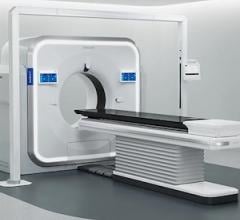
Carestream Health is partnering with Robarts Research to demonstrate the clinical value of digital tomosynthesis and dual energy technologies to help improve patient outcomes. (Graphic: Business Wire)
February 8, 2023 — Carestream Health is partnering with Robarts Research Institute to increase and demonstrate the clinical value of digital X-ray, digital tomosynthesis and dual energy technologies to help improve the outcomes of patients with cardiothoracic and pulmonary diseases. Carestream is providing a state-of-the-art imaging system and software to Robarts, the research institute of Schulich School of Medicine & Dentistry at Western University in Canada, to advance its multidisciplinary translational research.
The equipment installed at Robarts mirrors what is found in the region’s clinical settings and will support collaborative, multidisciplinary research that bridges bench to bedside.
The partnership with Robarts is one of many collaborations that Carestream has with research and healthcare facilities worldwide to develop and assess new solutions that can help improve patient care, management and outcomes while simplifying workflows and optimizing clinical utility.
“Collaborations such as this offer Carestream the opportunity to assess the value of our technologies that, as in the case of tomosynthesis, afford physicians the ability to gain better clinical insight and translate this understanding into impactful patient management decisions. This engagement also explores innovative clinical solutions based on artificial intelligence, as well as image processing and computer vision, that enhance the visibility of disease processes and anatomical structures while providing meaningful quantitative metrics,” said Luca Bogoni, Ph.D., Head of Advanced Research and Innovation at Carestream. “Robarts is highly respected for its work in translational research. We greatly appreciate this partnership and the opportunity to evaluate, learn and improve our solutions within a clinical setting.”
“What we’re doing here is fairly unique in Canada,” said Dr. Narinder Paul, Chair/Chief, Department of Medical Imaging at Schulich Medicine & Dentistry. “The projects we will undertake here are multidisciplinary. Imaging scientists can bring their ideas to a project, physicians can address their clinical needs and bring their experience of the current gaps in healthcare provision and industry partners can collaborate to move their technologies forward.”
These synergies align with the School’s new five-year strategic plan and illustrate several goals focused on new infrastructure and new partnerships.
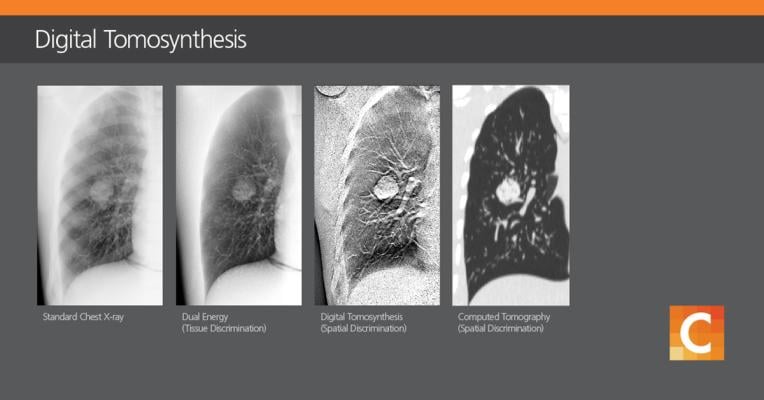
The Carestream solutions installed at Robarts are the DRX-Evolution Plus System with state-of-the-art Dual Energy (DE) acquisition and Digital Tomosynthesis (DT) image acquisition software. In comparison to conventional radiography, DT provides more accurate depth location while improving the contrast visualization of local structures—removing overlying and underlying anatomy. DE allows for improved detection sensitivity for abnormalities in the lung and improved assessment at the entrance exposure of a standard chest X-ray, which typically is a challenging image acquisition.
“The combination of these features facilitates comprehensive high-resolution structural and functional imaging, combined with tomographic capabilities that improve on conventional X-ray images by removing overlapping structures and, in certain scenarios, provides information similar to CT but at a much lower radiation dose,” said Matthew Teeter, Ph.D., Associate Professor, Medical Biophysics at Schulich Medicine & Dentistry.
Carestream’s solutions are part of Robarts’ larger research initiative to benefit patients involved in clinical studies, and optimize patient’s and clinician’s time. The center also furthers collaborations between scientists, clinicians and technology developers and allows for imaging equipment to be used in novel ways, leading to greater improvements in patient care.
“It all comes back to why we are doing research,” Dr. Paul said. “Everything we do is focused on making life better for patients.”
For more information: www.carestream.com

 October 08, 2026