Getty Images
May 5, 2021 — Lung cancer is the third most common cancer in the U.S. and the leading cause of cancer death, with about 80% of the total 154,000 deaths recorded each year caused by cigarette smoking. Black men are more likely to develop and die from lung cancer than persons of any other racial or ethnic group, pointing to severe racial disparities. For example, research has shown that Black patients are less likely to receive early diagnosis and life-saving treatments like surgery. Now researchers at Jefferson have found that a commonly used risk prediction model does not accurately identify high-risk Black patients who could gain life-saving benefit from early screening, and paves the way for improving screenings and guidelines. The research was published in JAMA Network Open on April 6.
"Black individuals develop lung cancer at younger ages and with less intense smoking histories compared to white individuals," explained Julia Barta, M.D., Assistant Professor of Medicine in the Division of Pulmonary and Critical Care Medicine at Thomas Jefferson University, and researcher at the Jane and Leonard Korman Respiratory Institute. "Updated guidelines now recommend screening eligible patients beginning at age 50, but could still potentially exclude higher-risk Black patients. We are interested in finding methods that could help identify at-risk patients who are under-screened."
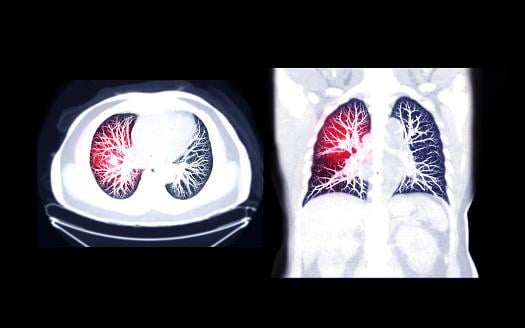
Screening for lung cancer is an annual CT scan to detect the presence of lung cancer in otherwise healthy people with a high risk of lung cancer. Current guidelines do not require a risk score for screening eligibility, but some researchers think that risk models could improve care. Risk prediction models are mathematical equations that take into account risk factors like smoking history and age to produce a risk score, which indicates the risk for developing lung cancer. Existing risk prediction models are derived from screening data that only include 5% or fewer African American individuals.
"What makes our study unique is that our screening cohort included more than 40% Black individuals," said senior author Barta, a member of Sidney Kimmel Cancer Center - Jefferson Health. "To our knowledge, our study is the first to examine lung cancer risk in a diverse screening program and aims to strengthen the argument for more inclusive guidelines for screening eligibility."
The most well-validated model used in screening research is the Prostate, Lung, Colorectal and Ovarian Cancer Screening Trial modified logistic regression model (PLCOm2012). "It uses 10-12 risk factors that include age, race, smoking history, as well as some socioeconomic factors like education to calculate a risk score," said Christine Shusted, MPH, first author of the study and research data analyst for Jefferson's Lung Cancer Screening Program through the Korman Respiratory Institute at Thomas Jefferson University. "The higher the score, the higher the risk of developing lung cancer. We wanted to see how well this model identifies patients with the highest risk of lung cancer in this diverse patient population."
The researchers conducted a cross-sectional, retrospective study in 1,276 Black and white patients (mean age, 64.25 years; 42.7% Black; 59.3% women) who enrolled in the Jefferson Lung Cancer Screening Program between January 2018 and September 2020. From this screening cohort, lung cancer was detected in 32 patients, 44% of whom were Black - these patients formed the cancer cohort. The researchers then calculated risk scores using the PLCOm2012 model. In the screening cohort, more Black patients than white patients were in high-risk groups, indicating that Black patients in this cohort had a higher risk of developing lung cancer.
As anticipated, white patients with screen-detected lung cancer generally had high lung cancer risk scores. "Among Black patients, we would have expected to see a similar trend," explained Barta. "However, we saw that despite having a lung cancer diagnosis through screening, Black patients were actually defined as lower risk. This indicates that the model is not accurately predicting risk of lung cancer in Black patients."
"These findings allowed us to identify weaknesses in this model for risk calculation for lung cancer," explained Shusted. "It indicates that we need to not only expand criteria for lung cancer screening so that more diverse populations are included, but that these prediction models need to include factors, like environmental contributors, access to health care, and other social determinants of health."
The researchers hope to continue building on these findings, with the ultimate goal of defining comprehensive risk factors and improving lung cancer screening uptake and adherence especially among vulnerable populations.
"This work is an important step to reducing disparities in the screening and early detection of lung cancer, and making sure we can trust our models to predict those individuals at the highest risk," said Barta.
For more information: www.

 October 08, 2026