
Philips
222 Jacobs St.,
Cambridge, MA 02141
Product Categories:
Fusion Imaging Software, Angiography, Treatment Planning, PET-CT, Radiation Dose Management, Computed Tomography (CT), Magnetic Resonance Imaging (MRI), Ultrasound Imaging, Cardiovascular Ultrasound, Information Technology, Artificial Intelligence, Mobile Devices, Enterprise Imaging, Cardiac PACS, PACS
Fusion Imaging Software, Angiography, Treatment Planning, PET-CT, Radiation Dose Management, Computed Tomography (CT), Magnetic Resonance Imaging (MRI), Ultrasound Imaging, Cardiovascular Ultrasound, Information Technology, Artificial Intelligence, Mobile Devices, Enterprise Imaging, Cardiac PACS, PACS
RELATED CONTENT
News
Neusoft Corporation announced that it has signed a Term Sheet with Philips on the proposed transaction of shares and assets in Philips and Neusoft Medical Systems Co. Ltd. ("PNMS"). According to the Term Sheet, Neusoft's wholly owned subsidiary Neusoft Medical System Co. Ltd. and its overseas associates intend to acquire 51 percent equities in PNMS held by Philips. Upon the completion of the proposed transaction, all intellectual property rights of PNMS will be shared by both Neusoft and Philips. In addition, a team of approximately 100 to 150 computed tomography (CT) system and component engineers and supporting staff will transfer from the joint venture to Philips.
 February 12, 2013
Feature | Greg Freiherr
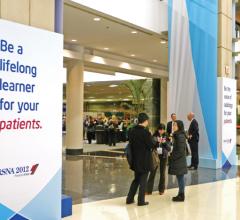
Since my first RSNA meeting in 1984, I had been told the only radiologists who had patients were those who did interventions. The mainstream radiologist was a physicians’ physician, providing expert interpretation of medical images, identifying the subtle visual indicators of disease and ruling out diagnoses when signs of pathology were absent. This year was different.
February 08, 2013 
Feature | Dave Fornell
The Radiological Society of North America (RSNA) annual meeting has transitioned in recent years from an imaging device focus to an imaging information technology focus. The interest in software continued at this year’s meeting, partly fueled by the need for healthcare organizations to meet Stage 1 and 2 meaningful use requirements. Two key trends seen throughout the show floor included remote viewing systems for radiology images and technology streamlined to aid workflow efficiency.
February 08, 2013 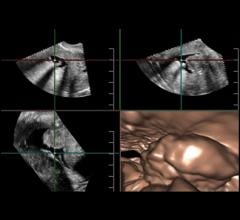
Feature | Raissa Rocha
With ever-increasing concerns about radiation dose and the appropriate use of diagnostic imaging tests, doctors are continuously looking for ways to better image their patients. Advances in ultrasound are making the technology appear more attractive for certain clinical applications, from breast health to cardiology, thanks to their noninvasiveness, cost-effectiveness and lack of radiation. Some of the emerging innovations in ultrasound, such as real-time 3-D imaging and the development of wireless transducers, are set to keep the market going throughout 2013 and beyond.
February 08, 2013 
Feature | By Dave Fornell
Just a few years ago, the debate in radiology departments about workhorse X-ray systems was whether to convert from analog film to computed radiography (CR) cassettes and digital readers, or to direct imaging digital radiography (DR) systems. Today, there is no doubt DR has won that debate and is being widely adopted, and CR is falling out of favor.
February 08, 2013 News
Elekta and Philips Healthcare announced The University of Texas MD Anderson Cancer Center (Houston, Texas) has signed an agreement to join a research group to advance the development of an innovative image-guided treatment technology for cancer care. The technology merges radiation therapy and magnetic resonance imaging (MRI) technology in a single system. MD Anderson is the second member of the research consortium, which will comprise leading radiation oncology centers and clinicians, and already includes the University Medical Center Utrecht (the Netherlands).
January 25, 2013 
Feature
According to a new market research report "Breast Imaging Technologies Market (Digital Mammography,3D Breast Tomosynthesis, Breast MRI, Breast Ultrasound, Molecular Breast Imaging, Optical Imaging, PET/CT/PEM Modalities) Technology and Market Analysis & Global Forecasts to 2017" is an attempt to showcase the market impact of current and emerging breast imaging technologies having excellent growth potential in the coming five years. The technologies profiled in the report are segmented into Ionizing breast imaging modalities and Non-Ionizing breast imaging technologies on basis of radiation. Ionizing breast imaging modalities include Mammography, 3D Breast Tomosynthesis, Cone beam Computed Tomography (CBCT), Positron Emission Mammography (PEM), Molecular Breast Imaging (MBI), Positron Emission Tomography (PET) and Breast Specific Gamma Imaging (BSGI). The various Non-ionizing modalities for breast screening covered in the report are Breast MRI, Optical Imaging, Breast thermography and Breast Ultrasound.
January 11, 2013 
News
Royal Philips Electronics today announced a landmark agreement with the Farah Medical Complex in Jordan that will see the development of a new hospital which has patient experience firmly at the center of its ethos. Through this partnership, Philips will provide a customized package of 15 advanced imaging solution systems, healthcare informatics and services, in addition to a suite of 20 Ambient Experience rooms, the largest installation to date in any hospital worldwide.
January 10, 2013 
Technology
iCAD, Inc. (NASDAQ: ICAD), an industry-leading provider of advanced image analysis, workflow solutions and radiation therapy for the early identification and treatment of cancer, today announced approval by the U.S. Food and Drug Administration (FDA) for use of the company’s next generation mammography computer-aided detection (CAD) platform, PowerLook Advanced Mammography Platform (AMP), with Digital CAD for Philips’ MicroDose Full-Field Digital Mammography System.
January 10, 2013 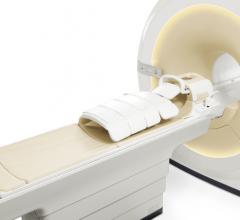
Technology
December 20, 2012 — At the 98th annual meeting of the Radiological Society of North America (RSNA), Royal Philips Electronics continued the Imaging 2.0 journey by showcasing several new features for existing image modalities that deliver clinical benefits to customers while simultaneously answering the economic challenges clinicians face worldwide.
December 20, 2012 © Copyright Wainscot Media. All Rights Reserved.

Subscribe Now