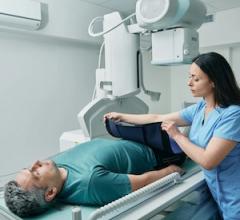
March 12, 2013 — Many physicians have long believed that the use of intravenous contrast agents for computed tomography (CT) scans can cause acute kidney injury. New Mayo Clinic research questions the strength of the causal link between the two. The findings from two tandem studies are published online in the journal Radiology.
The first study examined all previous research that compared patients who did or did not receive contrast agents, while the second paper represented a new retrospective study of over 100,000 CT scans performed at Mayo Clinic from 2000 to 2010, the largest published study to date examining the effect of contrast-enhanced imaging on renal function. In the retrospective study, researchers performed statistical analyses to study causality and mimic a randomized controlled trial to better match patients who received contrast agents to those patients who did not. These techniques had not been performed in any prior studies of renal function following contrast administration.
“These studies have significant clinical ramifications with regard to who is eligible to receive contrast media during CT exams,” says lead co-author Bob McDonald, M.D., Ph.D., a radiologist at Mayo Clinic. “Despite limited clinical evidence, contrast is commonly withheld during CT exams of individuals with even modest renal impairment due to concern for kidney injury, often at the expense of diagnostic accuracy of the exam. Our goal for these studies was to provide better evidence regarding the true incidence of renal injury following intravenous contrast administration and better define the ‘at-risk’ patient population.”
In both studies, Mayo Clinic researchers found that patients who received intravenous contrast agents and those who didn’t had a similar risk of developing acute kidney injury.
“Our findings suggest that, if contrast-induced nephropathy exists at all, it is likely rare and cannot be easily identified from unrelated causes of renal injury,” says lead co-author Jennifer McDonald, Ph.D., a radiology associate at Mayo Clinic. “Hopefully our findings can promote additional research to help redefine the safety window of contrast media and, in turn, improve patient care through more frequent use of appropriate clinical imaging.”
For more information: www.mayoclinic.org/about, www.mayoclinic.org/news

 October 07, 2026