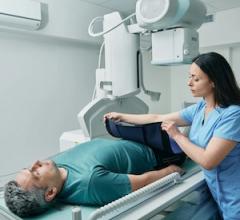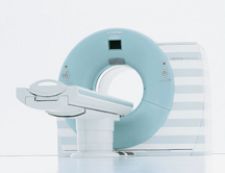
Northwestern Memorial Hospital installed a Siemens SOMATOM Sensation 64 CT scanner in its ED.
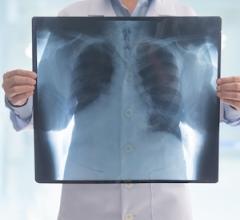
Chest pain is a common complaint among ED patients, yet failure to diagnose acute myocardial infarction in the trauma unit occurs in as many as 20 percent of cases, according to some estimates.
Serious conditions that are occasionally misdiagnosed in the ED include: acute myocardial infarction, stroke, pulmonary embolism, meningitis and appendicitis. Standard protocol for chest pain is an echocardiogram (ECG); however, physicians may rely too heavily on this test, which does not rule out a heart attack if results are normal.
In a recent study presented at the 2006 American College of Cardiology (ACC), physicians compared patients with acute chest pain who were immediately examined on a 64-slice CTA with those who received a standard of care evaluation, including serial cardiac enzymes, ECGs and sestamibi rest-stress nuclear scanning. The results showed that CT angiography (CTA) rapidly and definitely excluded coronary artery disease as the cause of acute chest pain in less time, and at a lower cost, than stress imaging.
“The emergency room is an area where CTA could be used to its advantage,” said James Carr, M.D., Northwestern Memorial Hospital (NMH), radiology, located in Chicago. “Many patients come in without obvious symptoms or with chest pain. The first thing we try to exclude is coronary disease. If you could do a CTA on that group of patients and exclude coronary disease, you could send those patients home early.”
A year ago, NMH installed a 64-slice CT scanner, Siemens’ SOMATOM Sensation 64; however, Dr. Carr explained that the hospital does not routinely use it for cardiac patients in the ED.
“One of the advantages of 64-slice CTA is its ability to visualize coronary arteries, and if the coronaries are normal, that effectively excludes coronary disease,” said Dr. Carr.
Accordingly, he believes CTA will give a very high specificity for disease, meaning that if the study is normal, nearly 98 times out of 100 the patient definitely does not have coronary artery disease.
“That same scan, however, does not rule out aortic dissection and pulmonary embolus because the technique is different,” noted Dr. Carr. “To be able to rule out all three on the same scan can be challenging because there are slightly different techniques. It is known as the ‘triple rule out’ study. We are going to investigate the triple rule out study in the context of the ER, so we’re working closely with ER physicians and cardiology physicians. We will do CTA to rule out coronary disease.”
To do that, NMH will install a new 64-slice scanner in the ED in the next few months.
Carr anticipates that CT, as well as MR, will become increasingly important in the ED for ruling out coronary disease.
“It’s a huge financial savings if you can discharge patients immediately and free up space in the ER,” said Dr. Carr.
Multislice CT dedicated to the ED may be just what the doctor ordered.
Cristen Bolan is the editor of Imaging Technology News magazine. She can be reached at [email protected]

 October 07, 2026